Turkey’s government says it expects consumer inflation to ease to 21% by end-2027, a target that puts price stability at the center of the 2027 budget even as Ankara prepares for another year of heavy spending and a still-wide fiscal gap.
Turkey budget targets 21% inflation by end-2027
Vice President Cevdet Yılmaz said the budget is built around “resilience, welfare and transformation,” with growth seen rising to 4.2% in 2027 on the back of a global recovery and stronger external demand. He also said the budget deficit will be 3.5% of GDP in 2027, after a projected 3.1% ratio in 2026, while spending is penciled in at 27.276 trillion lira and revenues at 23.408 trillion lira.
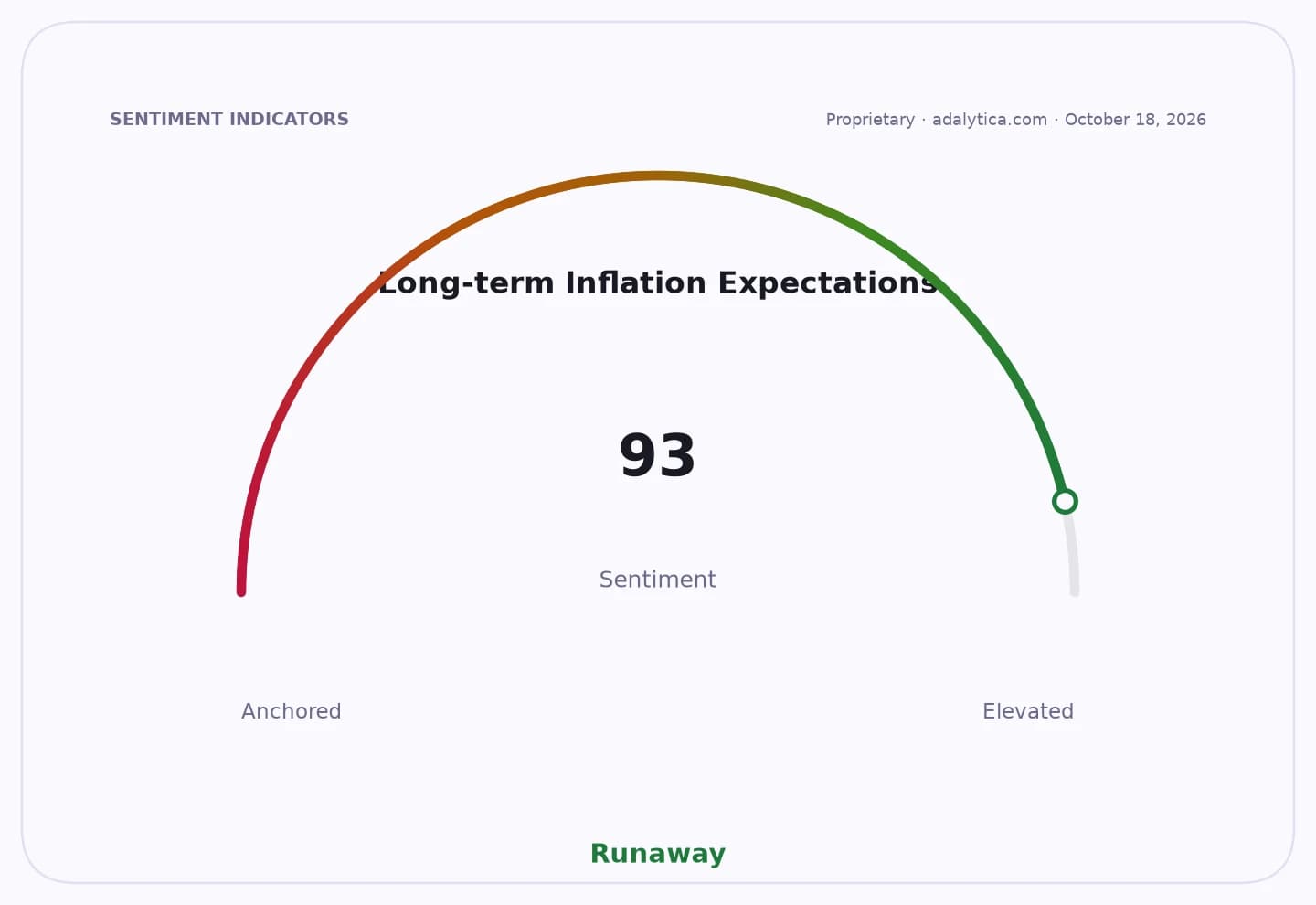
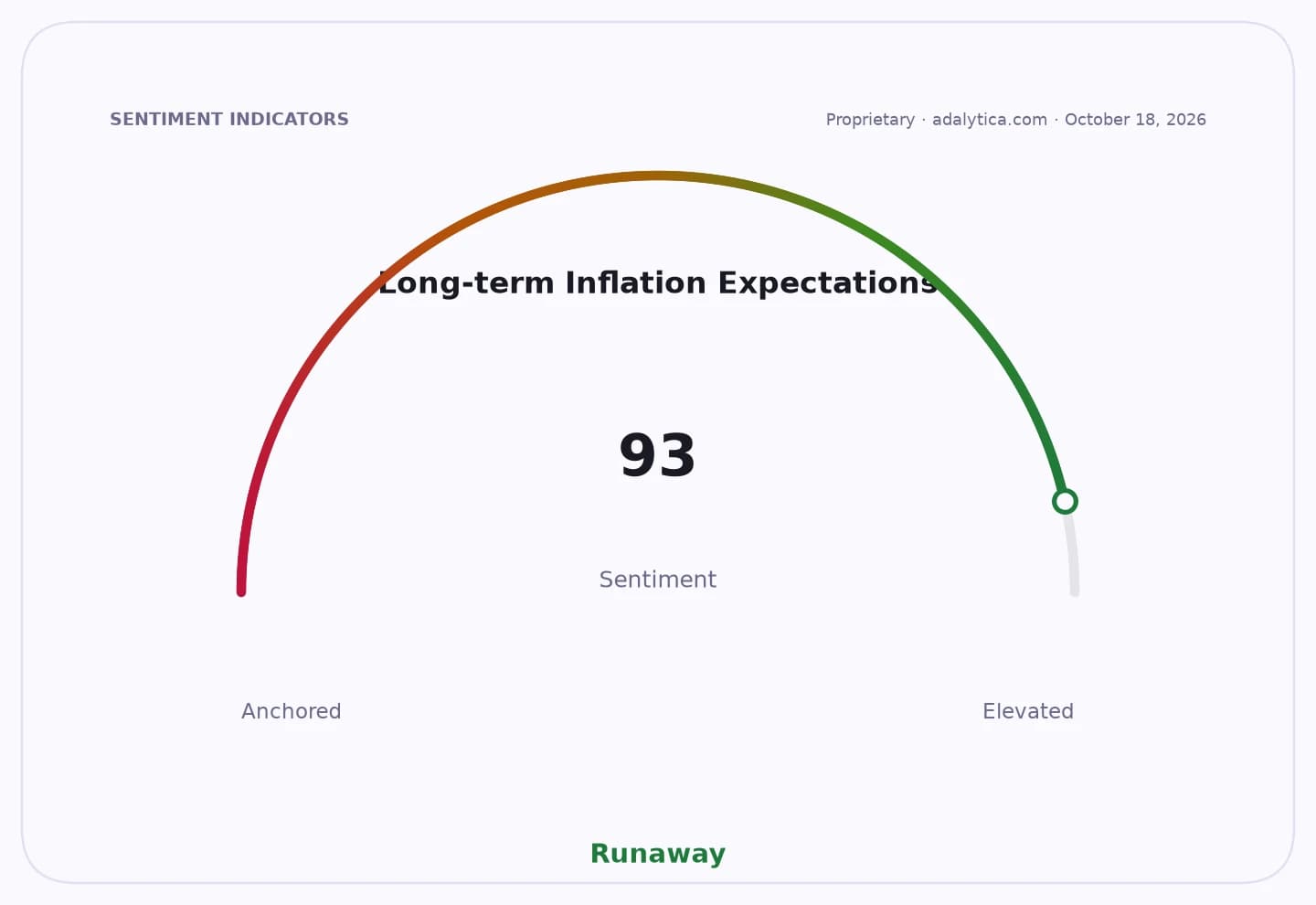
Sentiment IndicatorsⓘProprietary · adalytica.com · October 18, 2026
This is a snapshot — live sentiment, awareness and momentum for 130+ markets update continuously in the dashboard.Open AlphaPulse
The inflation outlook matters because Turkey’s economy has been defined by years of high prices, tight monetary policy and pressure on households’ real incomes. A fall to 21% would still leave inflation elevated by global standards, but it would signal progress toward Ankara’s longer-term goal of single-digit inflation, a benchmark that would shape interest-rate expectations, bond yields and the lira.
Markets will focus on whether the fiscal numbers support or conflict with that disinflation path. Higher urban transformation allocations, up 176% to 276 billion lira, and education taking the largest share of the central budget at 13.7% suggest the government is using spending to support activity and social goals while trying to preserve macro stability.
The deficit trajectory is also important for investors watching Turkey’s sovereign risk premium and funding needs. A 3.5% of GDP shortfall in 2027 still leaves room for borrowing pressure, especially if inflation remains sticky or growth underperforms the government’s forecast.
Yılmaz’s remarks also frame the budget as a test of policy credibility after the IMF recently raised its own estimate for Turkey’s inflation to 31.2%, underscoring how much work remains to bring prices down. The next focus will be the detailed budget debate and incoming inflation data, which will show whether the government’s forecasts are becoming more realistic or more aspirational.
| Entity | Gains | Losses |
|---|---|---|
| Turkish government | ▲Policy credibility if inflation eases | ▼Pressure if targets miss |
| Households | ▲Slower price growth over time | ▼Still-high living costs |
| Bond investors | ▲Lower inflation if delivered | ▼Fiscal slippage risk |
| Lira bears | ▲Less upside if disinflation gains traction | ▼More room if inflation stays sticky |