Türkiye’s inflation problem is still the country’s single most important economic issue, with a new survey showing 31.1% of respondents naming inflation and the cost of living as the top national agenda item, far ahead of justice at 10.2% and unemployment at 7.7%.
Türkiye inflation tops public agenda in new survey
That matters because it confirms that the erosion of household purchasing power remains the defining constraint on policy, consumption and politics, even as the central bank has begun cutting rates. For investors, the message is that Türkiye’s macro story is still being driven by inflation psychology rather than by growth alone, and that keeps pressure on the lira, local rates and consumer-sensitive assets.
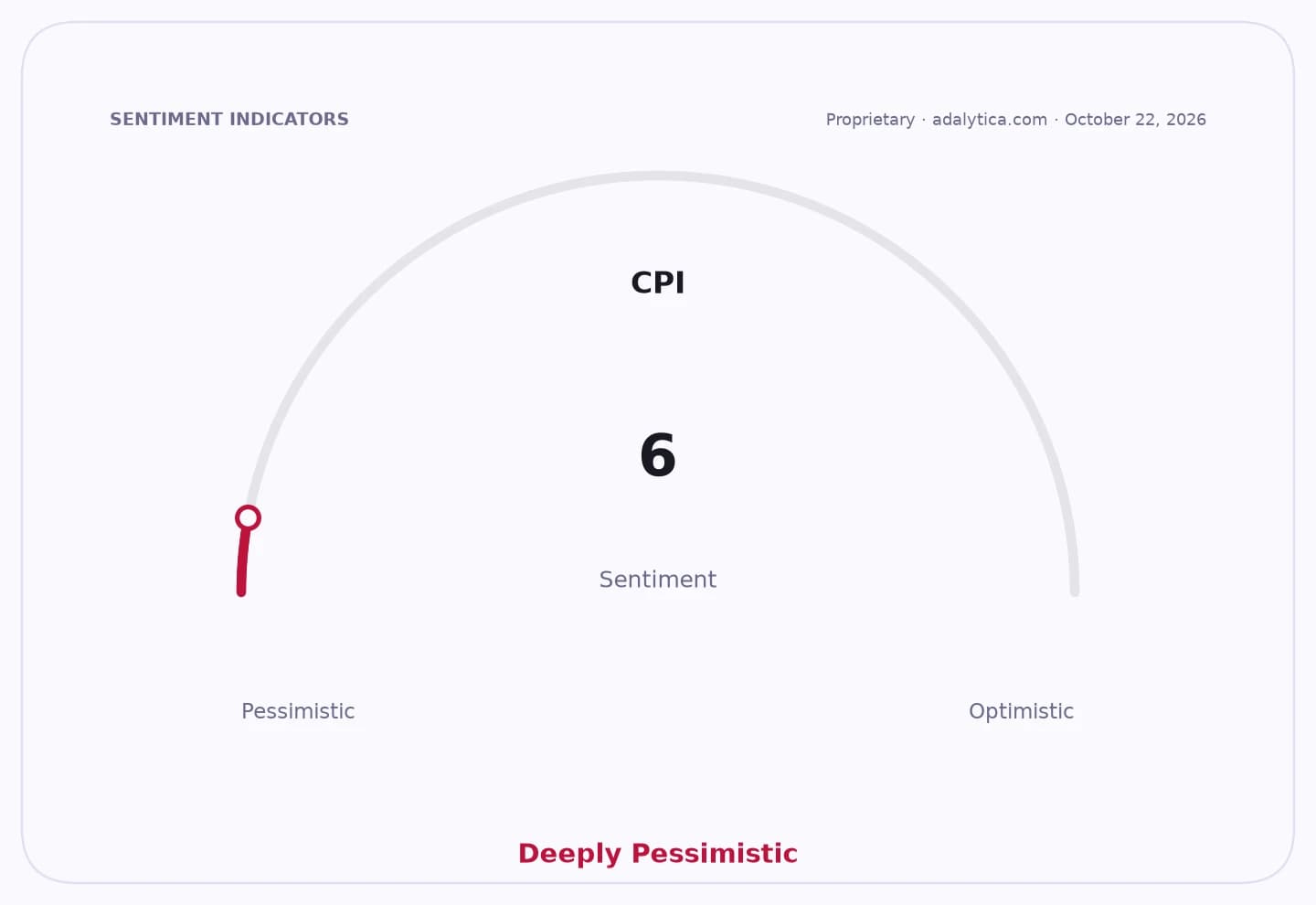
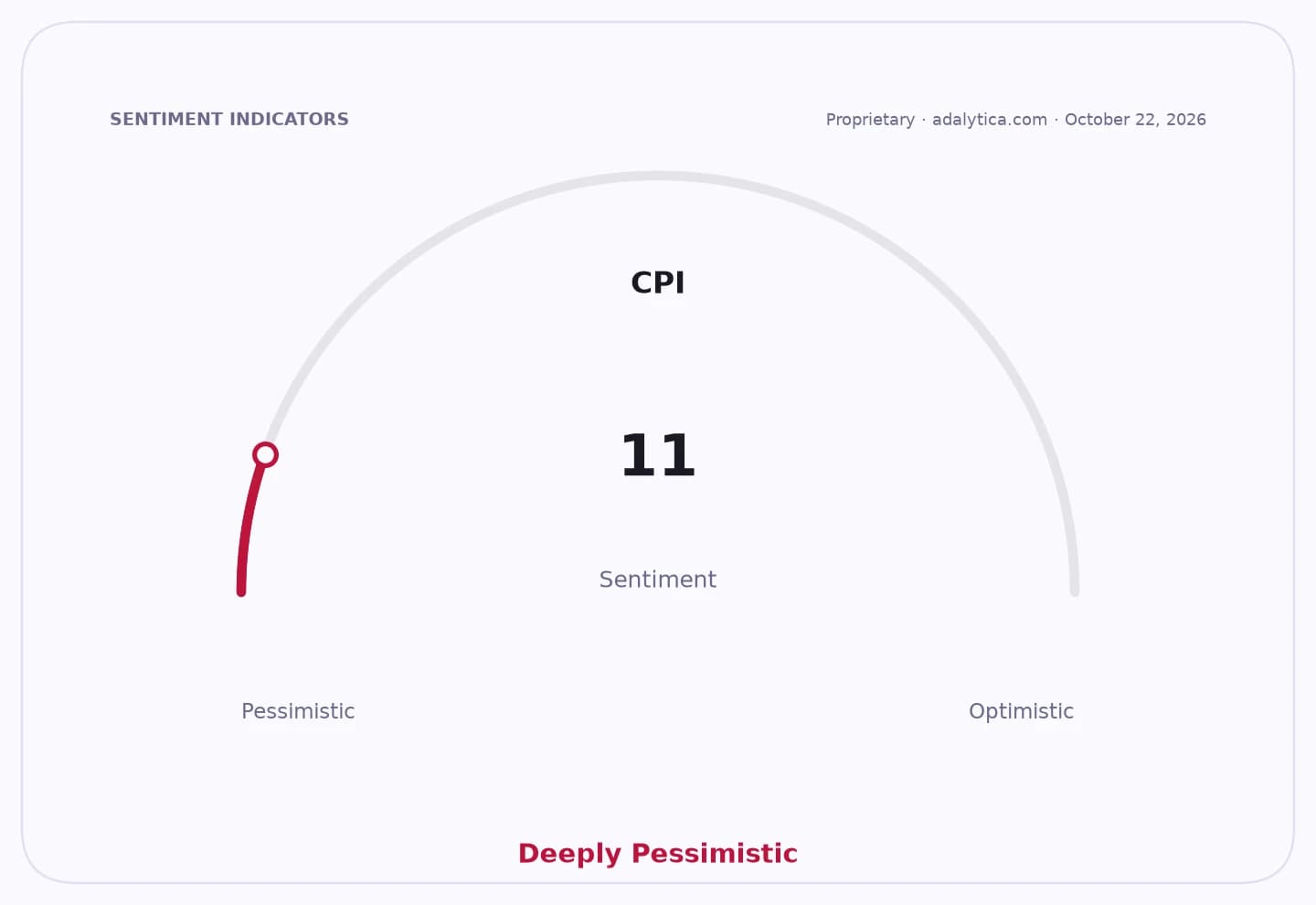
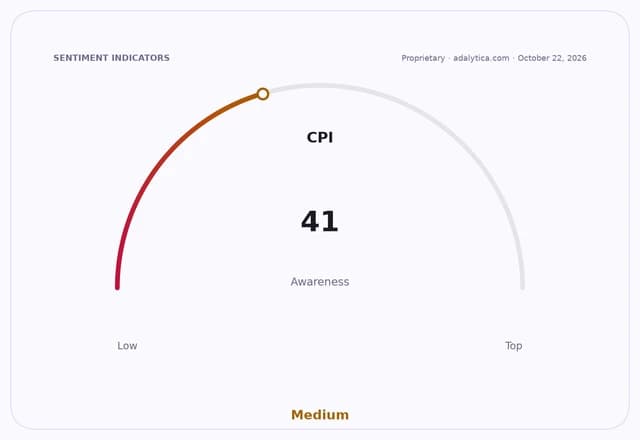
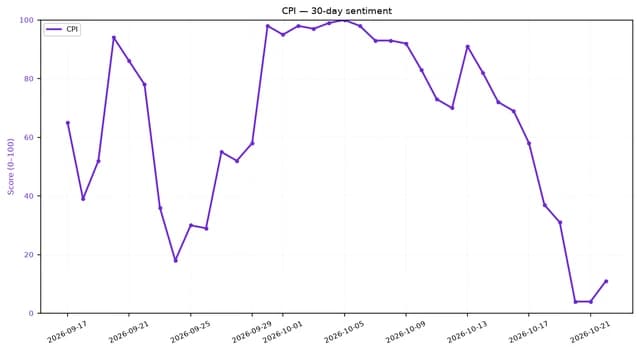
Sentiment IndicatorsⓘProprietary · adalytica.com · October 22, 2026
This is a snapshot — live sentiment, awareness and momentum for 130+ markets update continuously in the dashboard.Open AlphaPulse
The GENAR poll underscores how entrenched the issue has become. Education and schooling problems ranked fourth at 7.7%, while rule of law and judicial independence came fifth at 7.4%, but neither approached the salience of prices. In other words, voters are still responding first to the squeeze on real incomes rather than to longer-term institutional or labor-market concerns.
That political backdrop is important for markets because it limits the scope for policymakers to prioritize growth without triggering renewed inflation fears. Türkiye’s central bank recently cut its policy rate to 36% after holding it steady for five meetings, a sign it is willing to ease even though price pressure remains high. The risk is that lower borrowing costs may offer some relief to credit demand and activity, but also reinforce expectations that inflation will stay sticky.
The survey also shows how the inflation problem interacts with political fragmentation. GENAR said the former CHP base is leaning roughly 70% toward the New Party and 30% toward CHP, suggesting that economic dissatisfaction is feeding party realignment as much as policy debate. Separately, only 24% of respondents viewed the repositioning of opposition forces positively, although support rose to 80% among DEM voters, highlighting a divided electorate.
For investors, the near-term implication is that any improvement in Turkish assets still depends on a credible path to disinflation. Until households see relief in food, rent and basic goods, consumer confidence is likely to stay fragile, domestic demand uneven and political pressure on policymakers elevated. That argues for caution on duration-sensitive Turkish assets and for continued scrutiny of the lira, which remains vulnerable whenever inflation expectations drift higher.
The broader narrative is simple: Türkiye’s economic debate is not about growth versus austerity, but about survival versus stabilization. As long as inflation and the cost of living remain the dominant public concern, every policy decision will be judged through that lens.
| Entity | Gains | Losses |
|---|---|---|
| Households | ▲Political focus on prices | ▼Real purchasing power |
| Central bank | ▲Room to ease policy | ▼Credibility if inflation stays high |
| Consumer sectors | ▲Potential rate-cut support | ▼Demand remains weak |
| Opposition parties | ▲Protest vote opportunities | ▼Clear economic narrative gaps |