Azerbaijan's finance ministry says inflation surprises should have only a limited effect on the country's fiscal position through 2030, a sign that Baku believes its budget buffers are strong enough to absorb price shocks without derailing medium-term consolidation.
Azerbaijan says inflation shocks will have limited fiscal impact
The assessment matters because Azerbaijan remains highly exposed to swings in energy prices, exchange rates and imported inflation, yet its budget is still anchored by oil revenues and a gradual effort to narrow the non-oil deficit. In the ministry’s Medium-Term Expenditure Framework, deviations from the baseline inflation path were modeled at 0.4 to 1.5 percentage points in either direction, with the result that the non-oil primary deficit and consolidated budget balance would move only modestly from the baseline in the 2027-2030 period.
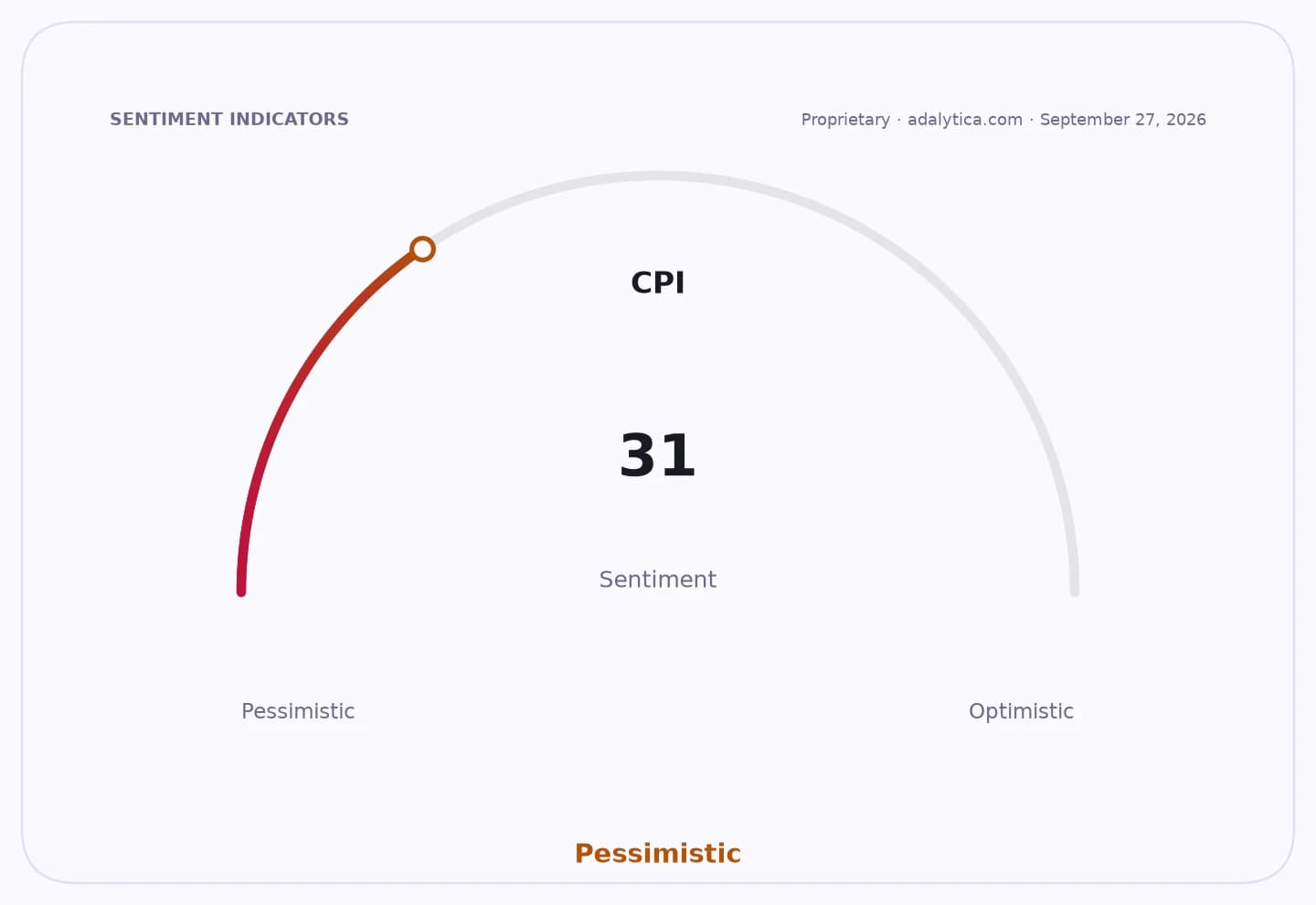
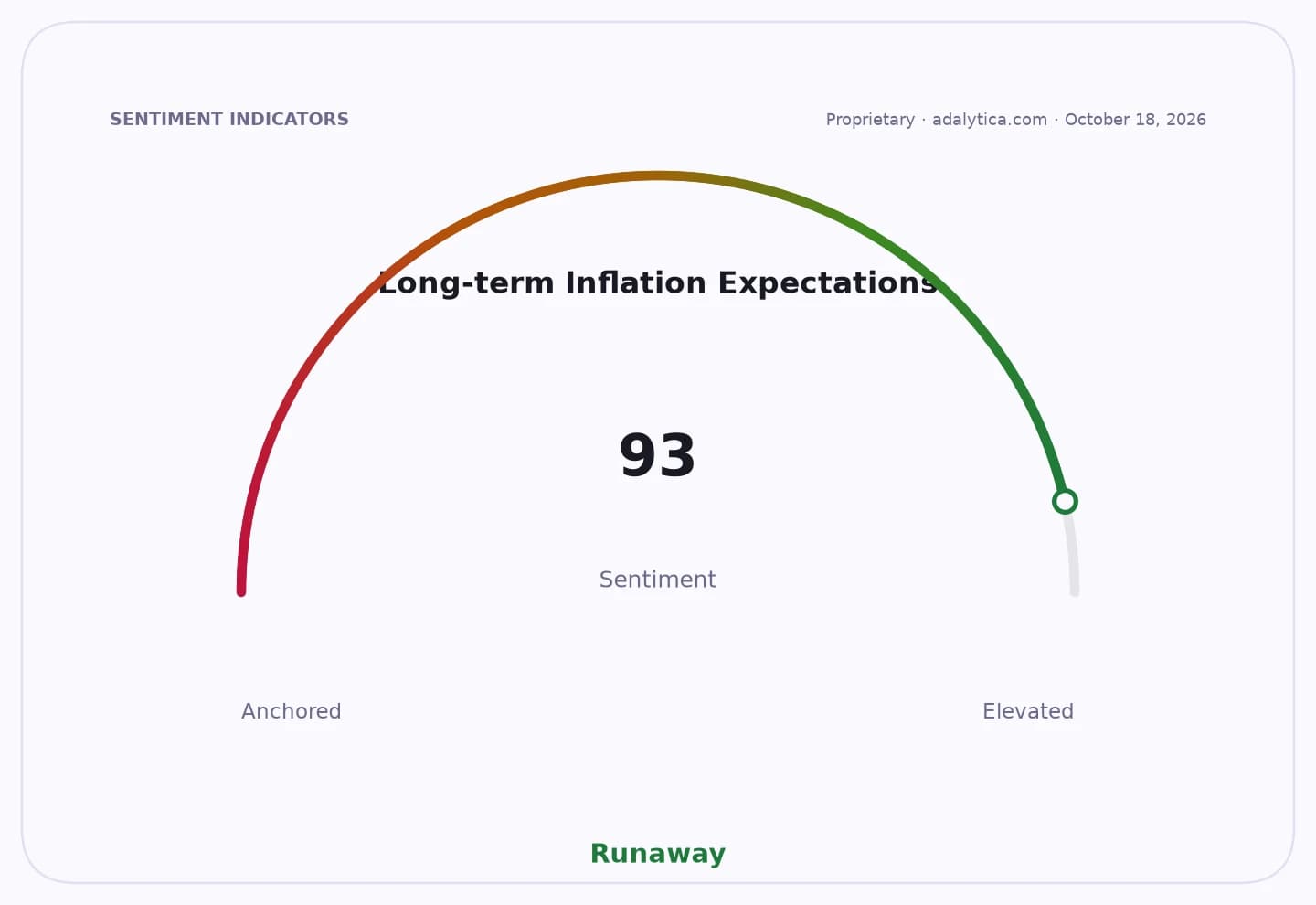
Sentiment IndicatorsⓘProprietary · adalytica.com · October 18, 2026
This is a snapshot — live sentiment, awareness and momentum for 130+ markets update continuously in the dashboard.Open AlphaPulse
That suggests the state’s fiscal arithmetic is less vulnerable to a one-off inflation shock than in the past, when faster nominal spending growth and weaker buffers could have amplified the budget impact of higher prices. Under the scenarios considered, the non-oil primary deficit would shift by 0.1 to 0.4 percentage points of non-oil GDP in 2027, while the consolidated balance would deviate by just 0.1 to 0.3 percentage points of GDP. Officials also say the risk that stronger domestic demand will stoke inflation is low under current fiscal and monetary settings.
The narrative is not that inflation no longer matters, but that the state believes it can manage the transmission. The ministry flagged continued geopolitical tensions in the Middle East, volatility in commodity markets and weaker exchange rates as the main external channels through which inflation could bite. Those are not trivial risks for a hydrocarbon exporter: a softer nominal effective exchange rate can quickly lift the cost of imports, while any spike in global energy or shipping prices feeds through to domestic prices and public spending.
Still, the budget path outlined in the framework points to a gradual strengthening of the fiscal position. The non-oil primary deficit, which stood near 22.5% of non-oil GDP in 2022, is projected to narrow to about 17.5% in 2027 and improve to roughly 10%-11% by 2030. The consolidated budget balance, which was around 6% of GDP in 2022 and 8% in 2023, is expected to remain in deficit in 2026-2027 before improving from 2028.
For investors, the significance lies in sovereign resilience. A fiscal system that can absorb moderate inflation surprises without major slippage is less likely to force abrupt borrowing, spending cuts or policy reversals. That helps support confidence in Azerbaijan’s macro stability, particularly at a time when global inflation readings remain sticky and markets are sensitive to renewed price pressure in the US and elsewhere.
The central question is whether the government can preserve that cushion if external shocks intensify. The ministry’s own assumptions rely on flexible budget management and targeted social support to blunt the effect of unexpected price increases. If energy markets or the exchange rate move sharply against Baku, the fiscal impact could still widen, but for now the official view is that inflation risk looks manageable rather than destabilizing.
| Entity | Gains | Losses |
|---|---|---|
| Azerbaijan government | ▲Budget stability | ▼Inflation shock risk |
| Fiscal policymakers | ▲Greater planning certainty | ▼Need for emergency measures |
| Consumers | ▲Targeted social support | ▼Higher import prices |
| Bondholders / investors | ▲Lower fiscal slippage risk | ▼Upside from tighter spreads limited |