Kazakhstan’s forecasters have lowered their view of the US dollar’s average value in 2027 to 527.1 tenge, a sign the market now expects a somewhat stronger local currency path than it did three months ago, even as the dollar remains expensive by historical standards.
Kazakhstan cuts 2027 dollar forecast to 527.1 tenge

The revised projection, published after the National Bank’s October macroeconomic survey, marks a meaningful downward adjustment from the previous 2027 estimate and underscores how expectations for the tenge have been changing alongside global dollar moves, oil prices and local monetary conditions. For households and companies that import goods, service foreign-currency debt or set budgets in dollars, the change implies less pressure on costs than previously assumed, though the currency pair still points to a weak tenge by any long-run comparison.
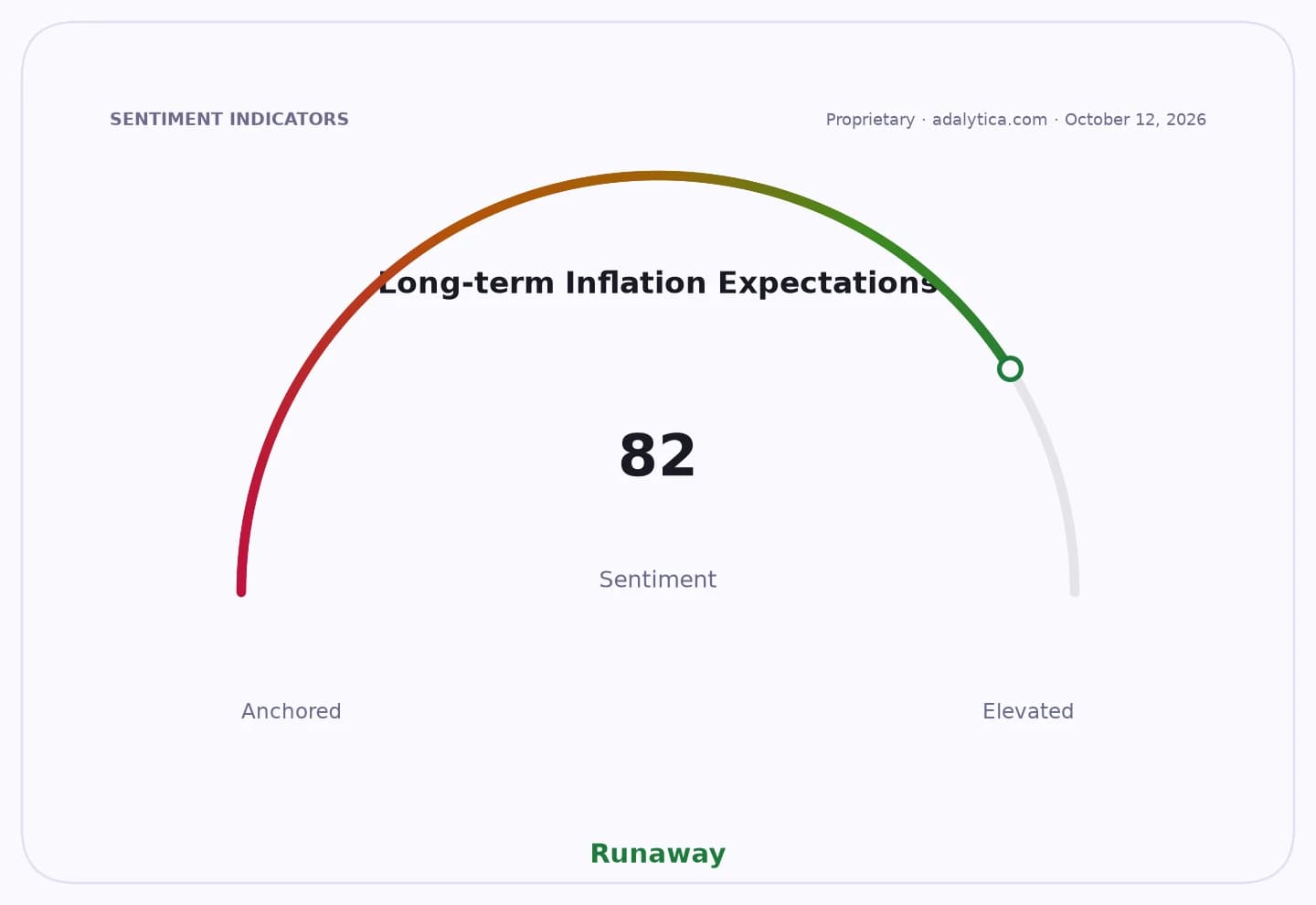
Sentiment IndicatorsⓘProprietary · adalytica.com · October 17, 2026
This is a snapshot — live sentiment, awareness and momentum for 130+ markets update continuously in the dashboard.Open AlphaPulse
The survey puts the 2026 average dollar rate at 479 tenge, down from 490, while the 2028 forecast was cut more sharply to 527.1 from 562.2. The 35.1-tenge reduction in the longer-term view is the biggest shift in the latest poll and suggests analysts see the balance of risks tilting modestly away from further rapid tenge depreciation.
That matters economically because Kazakhstan remains highly exposed to exchange-rate swings through its import bill, inflation path and fiscal accounts. A weaker dollar forecast typically eases imported inflation, helping the central bank contain price pressures and preserving household purchasing power. It can also reduce the local-currency burden on corporates with dollar liabilities. On the other hand, a stronger-than-expected tenge can weigh on exporters’ competitiveness and cut the budget value of foreign-currency revenues.
The National Bank said the survey included 14 professional market participants, research institutes, international organizations and rating agencies, but not the regulator’s own forecasts. It also stressed that the figures are annual averages, not year-end spot targets, limiting how directly investors should read them as a trading call.
Still, the direction of revisions is notable. The market is trimming its dollar assumptions even as the greenback remains broadly firm in global trading and the US 10-year Treasury yield holds above 5%, a backdrop that usually supports the dollar. The dollar index has also held near recent highs, suggesting Kazakhstan’s reassessment is more about local fundamentals and expectations than a decisive turn in global FX leadership.
For investors, the update is a reminder that the tenge’s path remains central to the outlook for Kazakh assets, especially domestic inflation-linked positioning, local-currency bonds and companies with foreign-currency revenue or debt. If the new forecasts prove accurate, pressure on consumer prices could ease faster than feared and the central bank may face less need to keep policy tight for as long.
But the currency outlook is still vulnerable to any reversal in oil prices, a widening in US-Russia or broader geopolitical risk, and fresh moves in the dollar driven by Federal Reserve expectations. The key question for 2027 is whether Kazakhstan can sustain enough external support and policy credibility to keep the tenge on a gentler depreciation path than forecasters had previously assumed.
| Entity | Gains | Losses |
|---|---|---|
| Tenge borrowers | ▲Lower FX debt burden | ▼— |
| Importers | ▲Softer import costs | ▼Exporters |
| Kazakhstan consumers | ▲Less imported inflation | ▼Dollar-linked sellers |
| Kazakhstan exporters | ▲— | ▼Weaker local-currency revenues |