Turkey’s central bank is set to lay out a more hawkish inflation path on Nov. 12, with its latest report expected to show that price pressures remain too hot for a clean policy pivot and too persistent for markets to ignore.
Turkey Central Bank Inflation Report Due Nov. 12

The key development is not the report itself — it is the direction of travel. Turkey’s inflation outlook has been revised up to 29.5% for end-2026, underscoring how geopolitics and energy costs are still feeding through the economy even as policymakers try to stabilize expectations. That matters because inflation remains the binding constraint on Turkey’s rate-setting cycle: the central bank may want to keep easing gradually, but a stickier price backdrop makes any aggressive cuts harder to justify.
Sentiment Indicators

For investors, the message is straightforward. When inflation stays elevated, real returns remain fragile, the lira’s credibility stays under scrutiny and Turkish equities trade more like a macro bet than a pure earnings story. The Istanbul-listed Turkey ETF, TUR, has already shown the strain of that backdrop, closing at 32.2 after sliding from above 41 in February and remaining below its 50-day and 200-day moving averages even after a recent rebound. The 14-day RSI near 60 suggests momentum has improved, but the broader trend still reflects a market waiting for proof that inflation is finally decelerating.
The central bank’s challenge is heightened by the external shock now hitting the global inflation complex. Brent-linked energy costs and Middle East tensions are making imported inflation harder to contain, while Turkey’s own inflation remains far above the levels seen in developed markets and much of emerging Europe. The latest read on U.S. inflation also shows the global disinflation story is not a straight line: the U.S. CPI is forecast to edge up again in November, a reminder that policymakers everywhere are operating with less room for error.
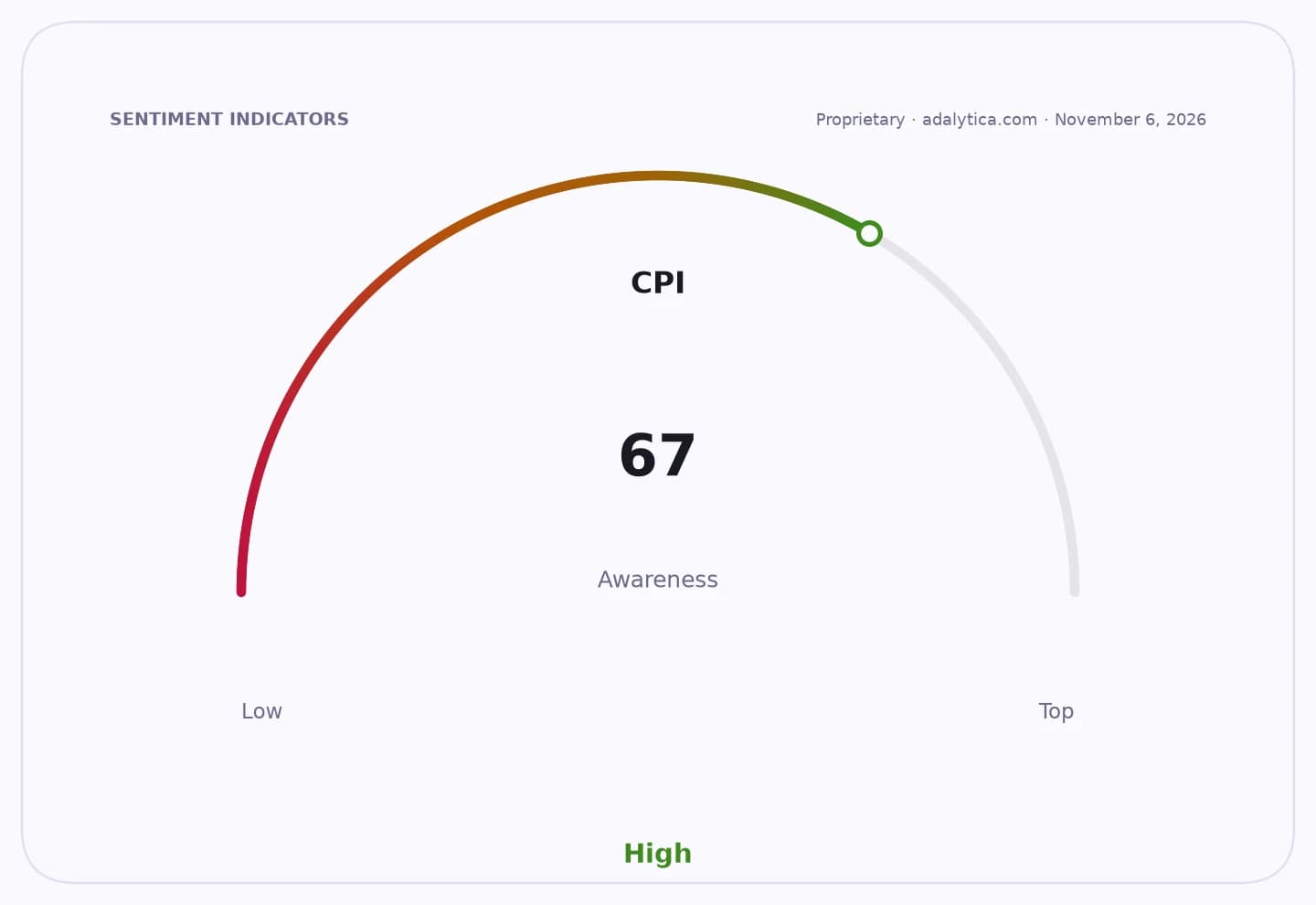
CPI — 30-day sentimentadalytica.com
Explore this data interactively — full history, time series and cross-market comparisons.
CPI
That is why this report matters beyond Turkey. It is a test of whether the central bank can preserve policy credibility while still delivering growth support. If it leans too hard toward easing, inflation expectations can re-accelerate. If it stays too tight for too long, the industrial sector and domestic demand will bear the cost. Either way, the investment case hinges on the same question: can Turkey engineer disinflation without choking off the economy?
Our view is that the market underestimates how long this tension can last. The best positioning is still selective: exporters with pricing power, firms with hard-currency revenue and balance sheets that can withstand a volatile rate path look better placed than purely domestic borrowers. Until the inflation report shows a genuine break in the trend, Turkey remains a tactical market, not a long-duration macro bet.
| Entity | Gains | Losses |
|---|---|---|
| Turkey exporters | ▲Hard-currency revenues | ▼Domestic cost inflation |
| Banks and lenders | ▲Higher nominal rates | ▼Credit demand pressure |
| TUR ETF bulls | ▲Any dovish surprise | ▼Sticky inflation outlook |
| Turkish consumers | ▲Lower inflation later | ▼Purchasing power now |