Turkey’s market-based year-end inflation forecast ticked higher to 29.63%, reinforcing the view that disinflation will remain slow and keeping pressure on the central bank to preserve a restrictive policy stance.
Turkey inflation expectations edge higher
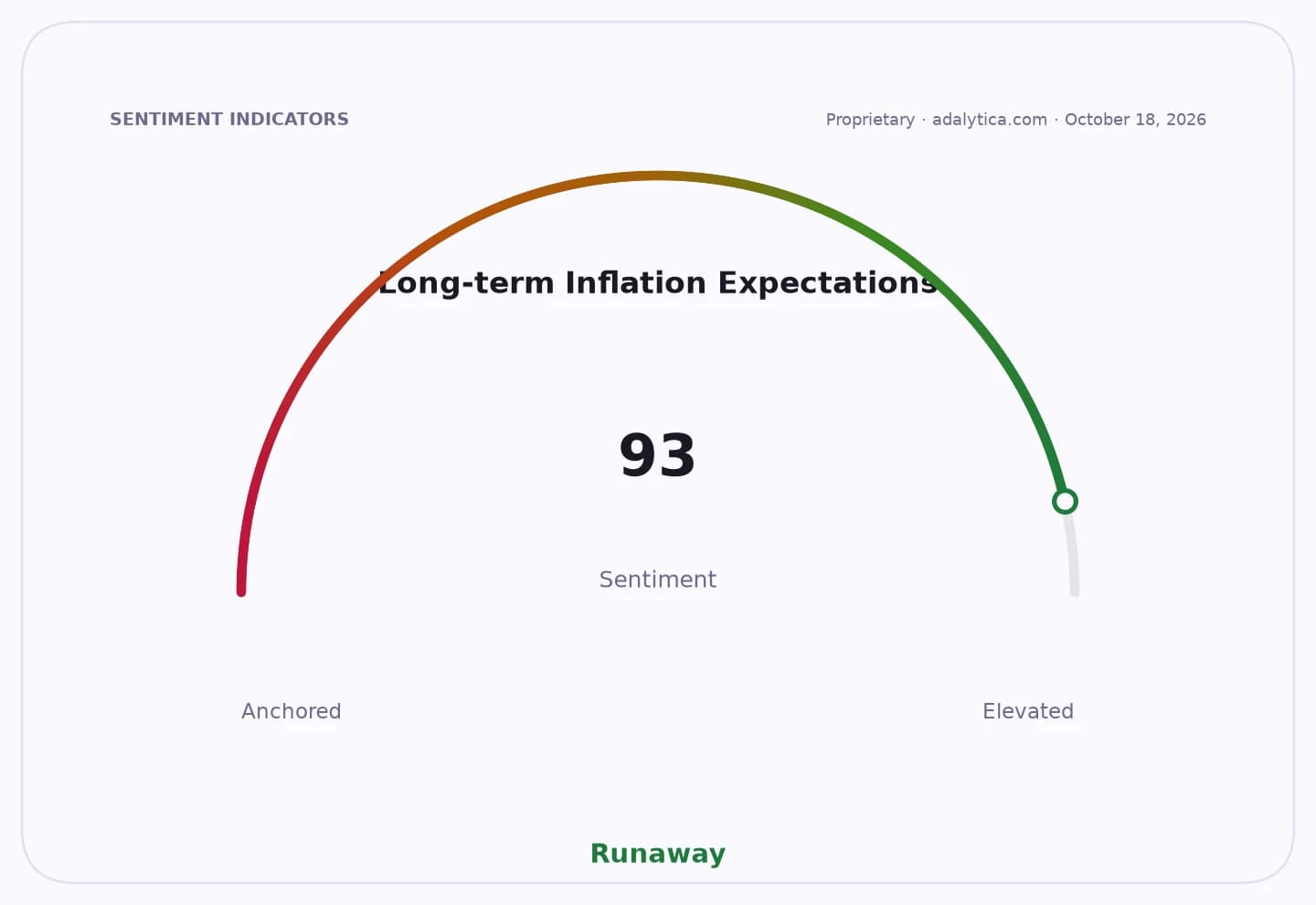
The move was small from 29.61% in the previous survey, but it matters because it shows investors and economists do not yet see a meaningful breakthrough in price stability. In a country that has spent years fighting elevated inflation, even a marginal increase in year-end expectations suggests the fight is far from won and that policy makers may have limited room to ease financial conditions.
Sentiment IndicatorsⓘProprietary · adalytica.com · October 18, 2026
This is a snapshot — live sentiment, awareness and momentum for 130+ markets update continuously in the dashboard.Open AlphaPulse
More important for the monetary outlook, the 12-month inflation expectation rose to 23.89% from 23.70%, pointing to still-sticky near-term price pressures. That is the read-through markets will focus on: if expectations are drifting higher over the next year, the central bank may need to keep rates elevated for longer to prevent second-round effects from feeding into wages, pricing and domestic demand.
The longer horizon was a little better. The 24-month inflation expectation fell to 17.94% from 18.32%, suggesting some confidence that the disinflation process can continue beyond the immediate term. That split — worse short-run expectations, slightly better medium-term ones — is typical of an economy where policy credibility is improving only gradually and where inflation momentum has not yet fully broken.
CPI — 30-day sentimentadalytica.com
Explore this data interactively — full history, time series and cross-market comparisons.Open AlphaPulse
For investors, the survey is significant because it shapes the path for Turkish assets. Higher short-term inflation expectations tend to weigh on local bonds and the lira by keeping real yields under scrutiny, while also limiting the case for aggressive monetary easing. At the same time, longer-term easing in expectations may support selective interest in lira assets if policy remains tight enough to anchor the curve.
The survey also matters because it will feed directly into the Central Bank of the Republic of Turkey’s next policy decisions. With expectations still above the central bank’s comfort zone, officials are likely to remain cautious about signaling victory too early. For now, the market message is that inflation is decelerating only gradually, and investors will keep watching whether tighter policy can turn the modest medium-term improvement into a broader disinflation trend.
| Entity | Gains | Losses |
|---|---|---|
| Turkey central bank | ▲Policy credibility if disinflation continues | ▼Room to cut rates quickly |
| Lira bondholders | ▲Higher real-yield support if rates stay tight | ▼Near-term inflation risk |
| Borrowers/consumers | ▲Possible medium-term price relief | ▼Continued high financing costs |
| Imported goods sellers | ▲Less price shock if expectations stabilize | ▼Demand if tight policy persists |