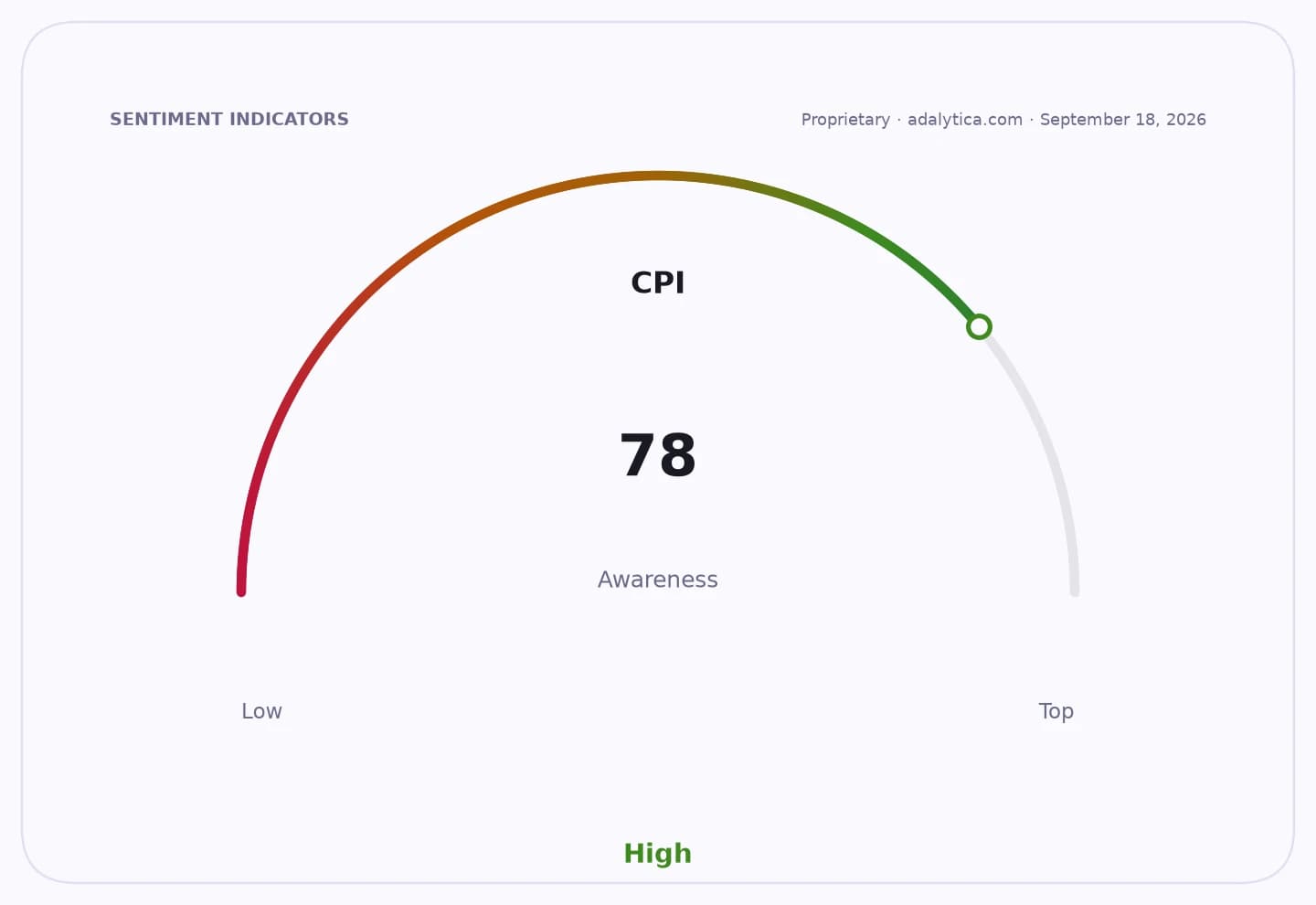
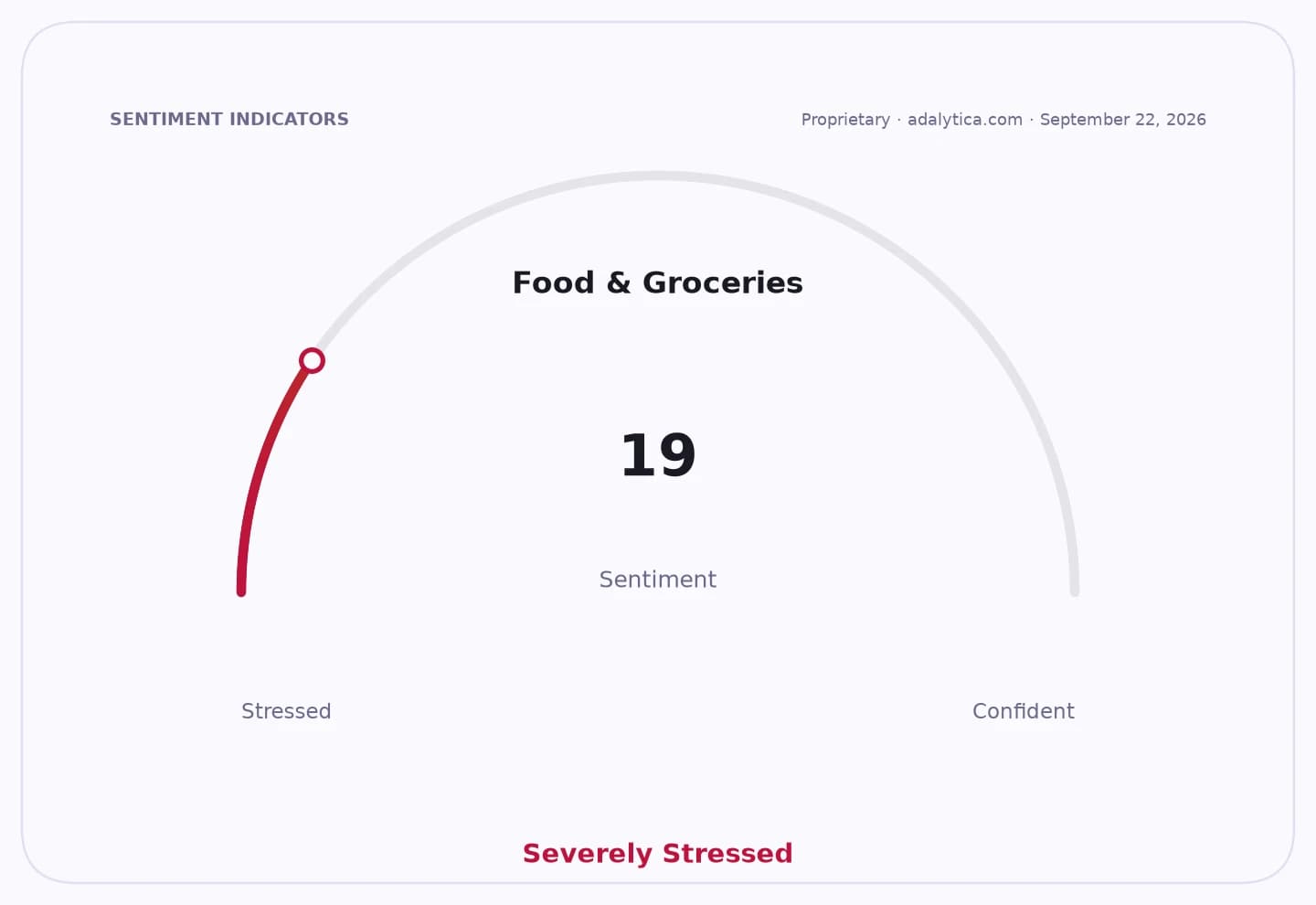
El Niño has helped depress prices for selected food items, but the bigger economic takeaway is that U.S. inflation remains contained enough to keep price pressures from re-accelerating.
U.S. inflation stays contained as food prices ease

That matters because food is one of the most visible channels through which weather shocks can spill into household budgets and central-bank policy. Even as global food markets have been jolted by Black Sea disruptions, poor harvests and climate stress, the U.S. consumer price backdrop has stayed relatively steady. The latest CPI reading for August rose 0.4% from a year earlier, while the Federal Reserve’s core gauge, which strips out food and energy, increased 0.29% on the month, pointing to modest underlying pressure rather than a broad-based inflation flare-up.
Sentiment IndicatorsⓘProprietary · adalytica.com · September 11, 2026
This is a snapshot — live sentiment, awareness and momentum for 130+ markets update continuously in the dashboard.Open AlphaPulse
Producer prices tell a similar story. The U.S. producer-price index for all commodities rose 0.96% in August, but the move was not enough to suggest a new inflation wave. The food disinflation effect from El Niño is helping offset some of the cost pressure that has built elsewhere in the supply chain. For policymakers, that is important: it reduces the risk that weather-driven food spikes in one part of the world will immediately translate into a U.S. inflation shock.
For investors, the message is more nuanced. Lower or stable food inflation tends to support consumer spending power, which is helpful for retailers, packaged-food companies and discretionary names. It also reinforces the view that the Fed can keep a steady hand on rates unless broader price measures re-accelerate. That has fed into a softer inflation-risk tone in markets, even as global agricultural prices remain volatile.

Agricultural markets reflect the tension between short-term relief and longer-term supply risk. The Invesco DB Agriculture Fund, a broad measure of farm commodity exposure, has climbed to $28.96 from around $25.62 in mid-October 2025, while the Teucrium Wheat Fund and Teucrium Corn Fund have also traded higher over the period, suggesting investors still expect weather and geopolitics to keep crop prices unstable. But the recent move in U.S. consumer inflation shows that commodity strength does not always pass straight through to the shelf.
The bull case for inflation-sensitive assets is that benign domestic price data leave room for policy stability and support real incomes. The bear case is that the current calm could prove temporary if El Niño-related weather shocks deepen, Black Sea supply remains impaired or food-cost pressure spreads from wholesale markets into retail prices.
| Entity | Gains | Losses |
|---|---|---|
| U.S. consumers | ▲steadier grocery bills | ▼less downside protection if food prices spike later |
| Federal Reserve | ▲easier inflation path | ▼fewer excuses for cuts if core prices firm |
| Food retailers | ▲better margin visibility | ▼margin pressure if farm costs rebound |
| Grain exporters | ▲firmer crop prices | ▼weaker demand if inflation stays subdued |