The United Arab Emirates has opened its second retail treasury sukuk sale at a 5.06% annual return, a move that deepens domestic capital markets while giving households and smaller investors a rare route into a sovereign instrument backed by the state.
UAE launches second retail sukuk at 5.06%

The offering matters because it arrives in a higher-rate world where fixed-income yields are once again competitive and investors are looking for income, safety and liquidity. By pricing a five-year Sharia-compliant security for individuals at 5.06%, the UAE is effectively channeling stronger household savings into local debt markets while broadening the investor base for future government funding needs.
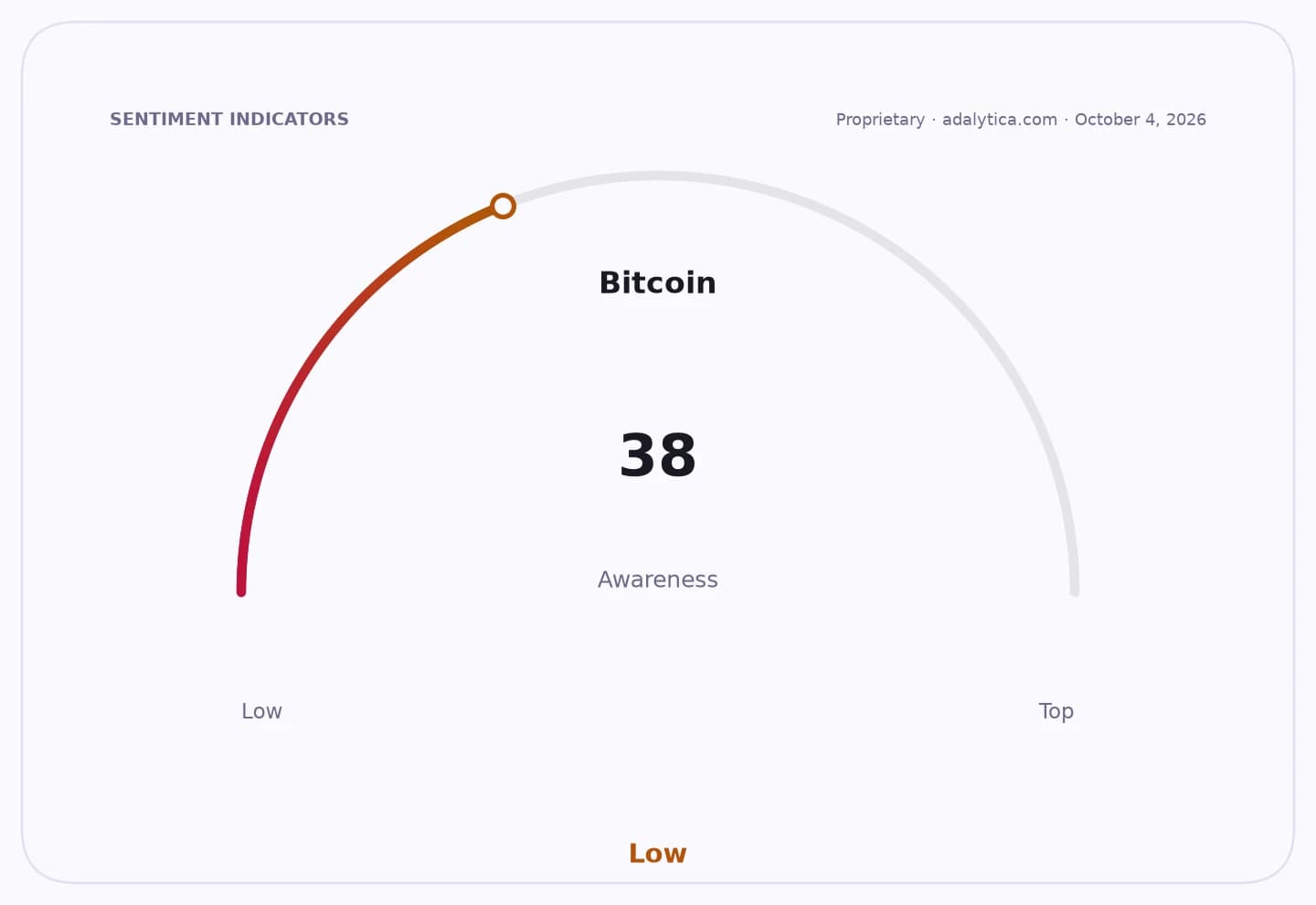
Sentiment IndicatorsⓘProprietary · adalytica.com · September 27, 2026
This is a snapshot — live sentiment, awareness and momentum for 130+ markets update continuously in the dashboard.Open AlphaPulse
The Ministry of Finance said the target size is 50 million dirhams, with subscriptions open from Sept. 23 to Sept. 28, 2026 through approved digital channels. The sukuk, which will pay semiannual distributions, is due to be listed on Nasdaq Dubai on Oct. 1 after allocation and settlement. The minimum subscription is 1,000 dirhams, making the product accessible to retail buyers in the UAE, including citizens and residents.
For policymakers, the issuance is more than a financing exercise. It is part of a broader effort to build a deeper dirham-denominated capital market and to normalize sovereign paper as a household asset class. That can help reduce reliance on bank deposits and property as the dominant savings vehicles, while also providing the state with a more diversified funding channel over time.
The timing is also important. Global bond markets remain volatile and sovereign borrowing costs across the Gulf have been influenced by elevated U.S. yields and shifting expectations for Federal Reserve policy. Against that backdrop, the UAE’s retail sukuk offers a local-currency instrument with government backing and Islamic-compliance features, which should appeal to investors seeking predictable income without taking on corporate credit risk.
The 5.06% return also sits well above the UAE’s base rate environment, underscoring how the rise in global and domestic rates has made fixed income attractive again after years of ultra-low yields. That supports demand, but it also raises the government’s cost of locking in medium-term funding if rates eventually decline, a trade-off that many sovereign issuers are weighing now.
For investors, the appeal is straightforward: sovereign credit, modest minimum ticket size, and secondary-market trading on a recognized exchange. The risk is less about credit than about opportunity cost and liquidity, since retail buyers will be comparing the sukuk’s return with bank deposits, money-market products and other Gulf sovereign paper.
The UAE is also using the issuance to advance a broader policy goal of financial inclusion. By tying the sale to digital subscription platforms and established banking channels, officials are trying to make government securities as easy to buy as any mainstream retail investment product. If the second sale repeats the first offering’s demand, it would strengthen the case for turning retail sukuk into a recurring funding tool rather than a one-off experiment.
The longer-term significance is that the Gulf’s sovereign debt market is moving beyond institutions and into households. That widens the buyer base, deepens liquidity and gives the UAE another lever for managing funding and savings behavior in a region where rising rates and persistent geopolitical uncertainty are reshaping investor preferences.
| Entity | Gains | Losses |
|---|---|---|
| UAE Ministry of Finance | ▲Wider funding base | ▼Higher fixed borrowing cost |
| Retail investors | ▲5.06% sovereign income | ▼Limited upside vs risk assets |
| Banks and digital platforms | ▲More client activity | ▼Deposit competition |
| Existing bondholders | ▲New benchmark clarity | ▼Potential spread pressure |