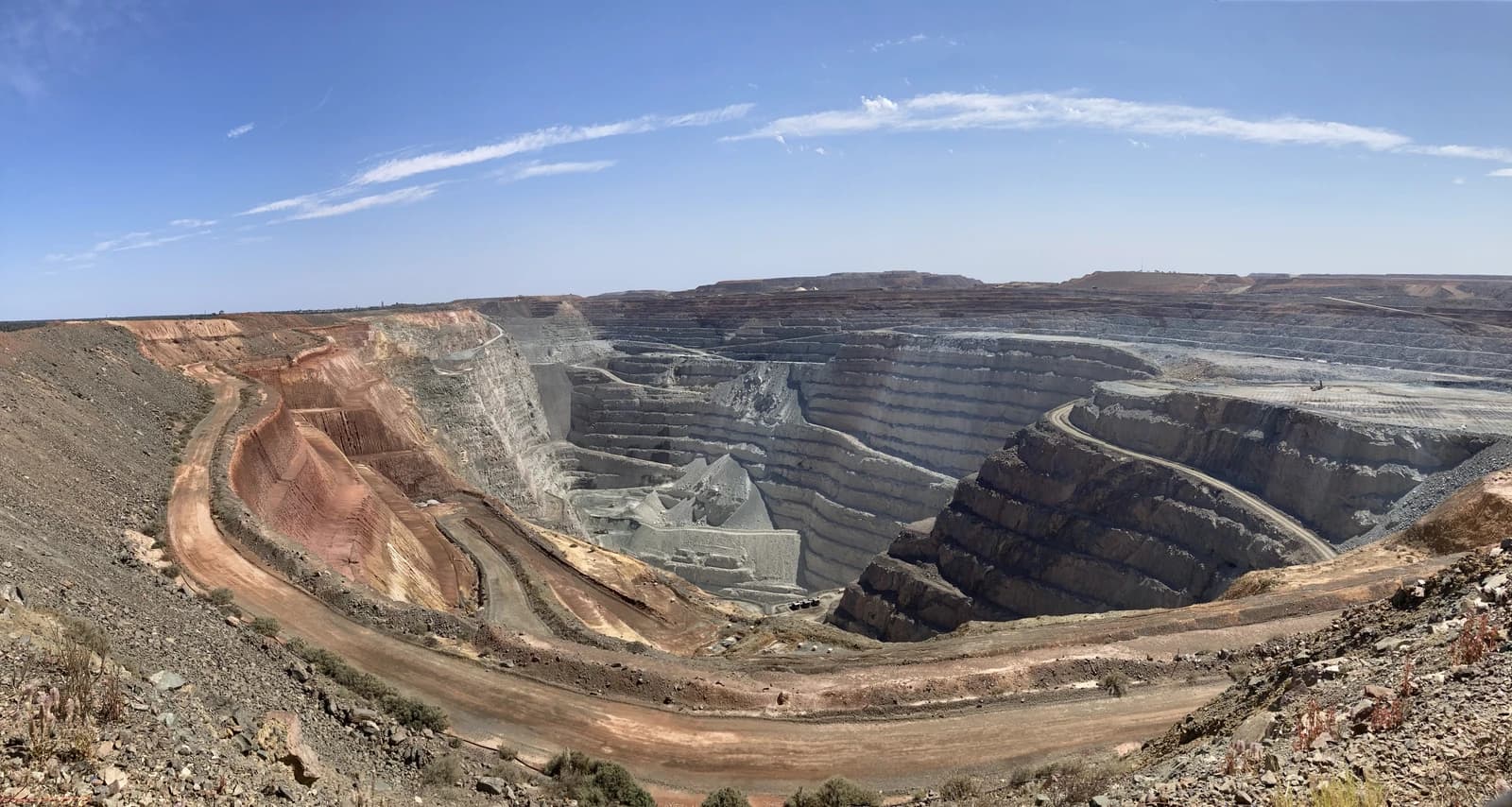
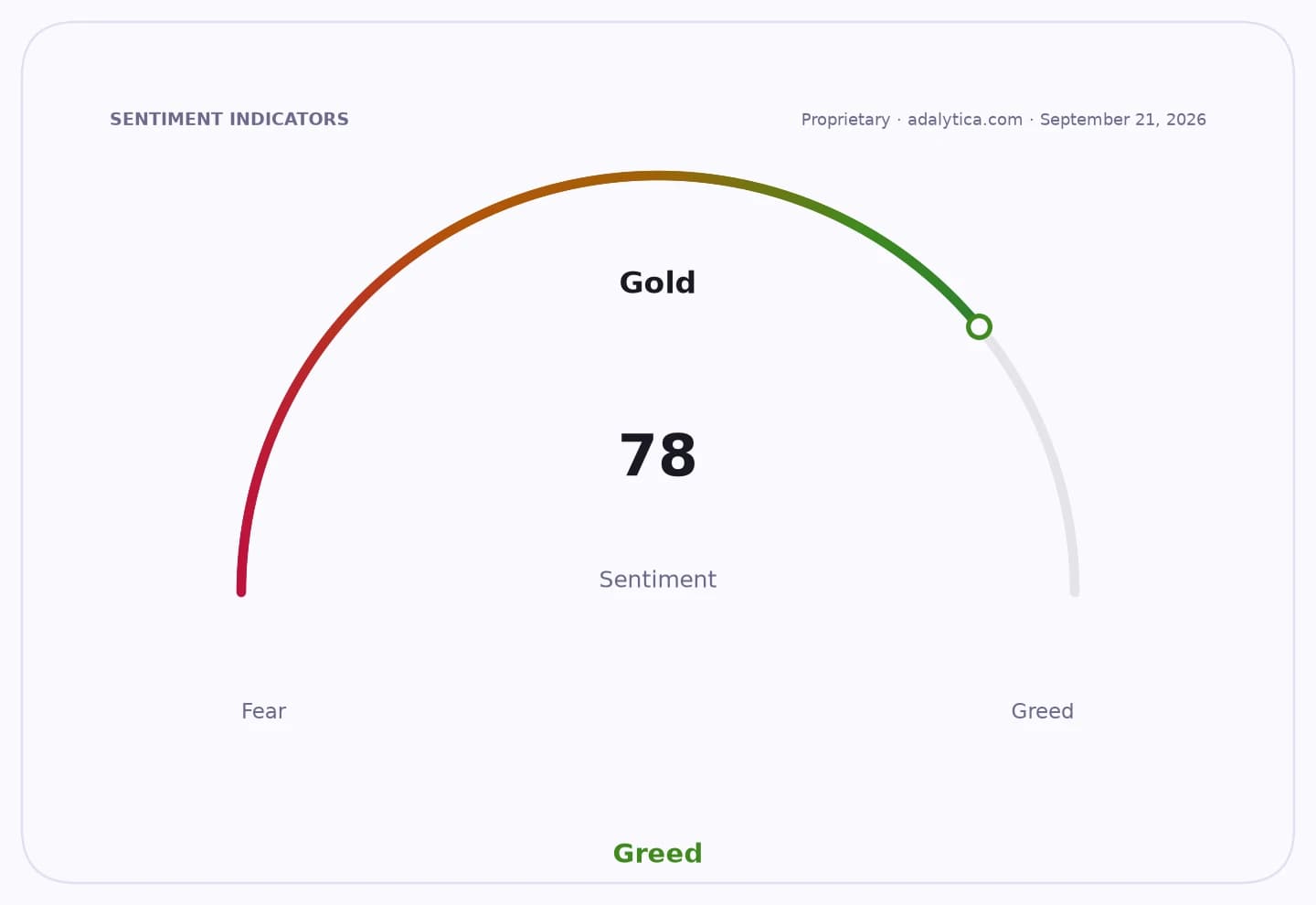
Gold miners may still be printing cash above $4,000 an ounce, but UBS is warning investors that 2027 will be shaped less by bullion and more by operating costs, making stock selection in the sector more important than the metal itself.
UBS prefers Newmont, Barrick and Franco-Nevada
That is the key shift for a group that has already delivered violent swings this year. Gold has retreated from a January 2026 peak near $5,400 an ounce to about $4,176, while mining shares have moved with far greater leverage; the VanEck Gold Miners ETF has at times fallen 40% and risen 50% this year. UBS says margins remain attractive as long as gold stays above $4,000, but higher energy and operating expenses are set to lift unit costs in 2027, raising the risk that even a strong gold price will no longer be enough to protect earnings.
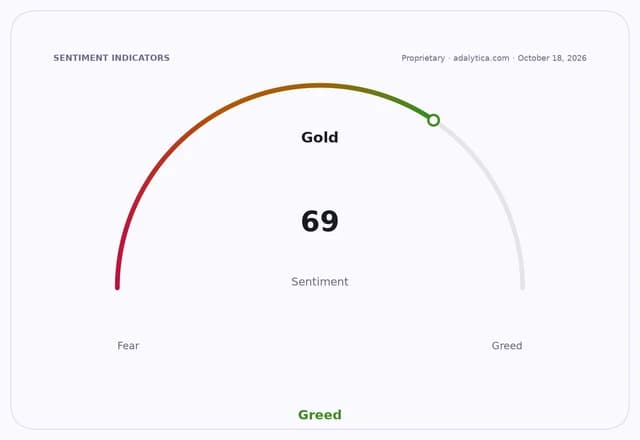
Sentiment IndicatorsⓘProprietary · adalytica.com · October 18, 2026
This is a snapshot — live sentiment, awareness and momentum for 130+ markets update continuously in the dashboard.Open AlphaPulse
The bank’s preferred names reflect that split. Newmont is UBS’s top large-cap pick, followed by Barrick, Endeavour Mining, SSR Mining, Skeena Resources and Franco-Nevada. The list spans diversified producers, a high-cash-flow operator with country risk, a portfolio reshaping story, a single-asset developer and a royalty company, underscoring that the industry is no longer trading as one macro bet. Investors are being pushed toward balance-sheet strength, capital returns and execution rather than simple exposure to bullion.
Newmont stands out because UBS sees a cleaner operational and capital-return profile, less risk of a major takeover and a slightly improving production outlook after earlier disappointments. The Nevada Gold Mines settlement with Barrick removed a longstanding overhang, with Newmont agreeing to pay $1.95 billion while the two companies folded additional projects into the joint venture under a revised agreement. UBS says that transaction clears a burden and adds long-term optionality.
Barrick, meanwhile, looks better value than the market suggests. UBS argues the less favorable parts of the Nevada deal are already reflected in the shares, while the company still offers improving operations, near-term support from distributions and a low probability of large acquisitions. That makes the stock less of a pure rerating story than Newmont, but still a way to play bullion with more balance-sheet discipline than in earlier cycles.
The rest of UBS’s list highlights the market’s growing preference for business models that can absorb cost pressure. Endeavour Mining is viewed as already pricing in higher jurisdictional risk, yet still capable of producing more than a 10% free cash flow yield at current gold prices and lifting payouts further. SSR Mining’s thesis has shifted after the Turkey asset sales to execution and capital deployment. Skeena is the most levered to project delivery, but also the most exposed to delays or overruns. Franco-Nevada looks insulated from direct mining inflation because its royalty model does not carry operating costs, and UBS says the market still underappreciates the restart of Cobre Panama.
The economic logic is straightforward. If gold stays above $4,000, miners can still generate substantial cash. But if the metal slips while 2027 cost inflation materializes as UBS expects, the sector’s operating leverage turns against shareholders just as quickly as it worked in their favor this year. For investors, that means the next phase of the gold trade is likely to reward royalty names, disciplined majors and companies with visible free cash flow more than broad sector exposure. The next test is third-quarter results, but the real catalyst will be 2027 cost guidance, when the market will find out which miners can defend margins without relying on another leg higher in gold.
| Entity | Gains | Losses |
|---|---|---|
| Newmont | ▲clearer capital returns | ▼takeover premium speculation |
| Barrick | ▲valuation support | ▼Nevada deal upside |
| Franco-Nevada | ▲cost insulation | ▼direct leverage to gold |
| Higher-cost miners | ▲elevated gold prices | ▼2027 margin pressure |