The Green Party is turning AI safety from a specialist debate into a political pressure point, proposing a five-point crackdown on tech giants after researchers and industry insiders warned the technology could pose an existential threat to humanity.
UK Greens Propose AI Safety Crackdown

That matters because the fight over AI is shifting from innovation policy to systemic-risk policy, and that raises the odds of tougher rules on data centres, frontier model testing, autonomous weapons and the way public money flows into the sector. For investors, it is another reminder that the AI trade is no longer just about chips and cloud demand: regulation, energy constraints and national-security concerns are becoming real valuation inputs.
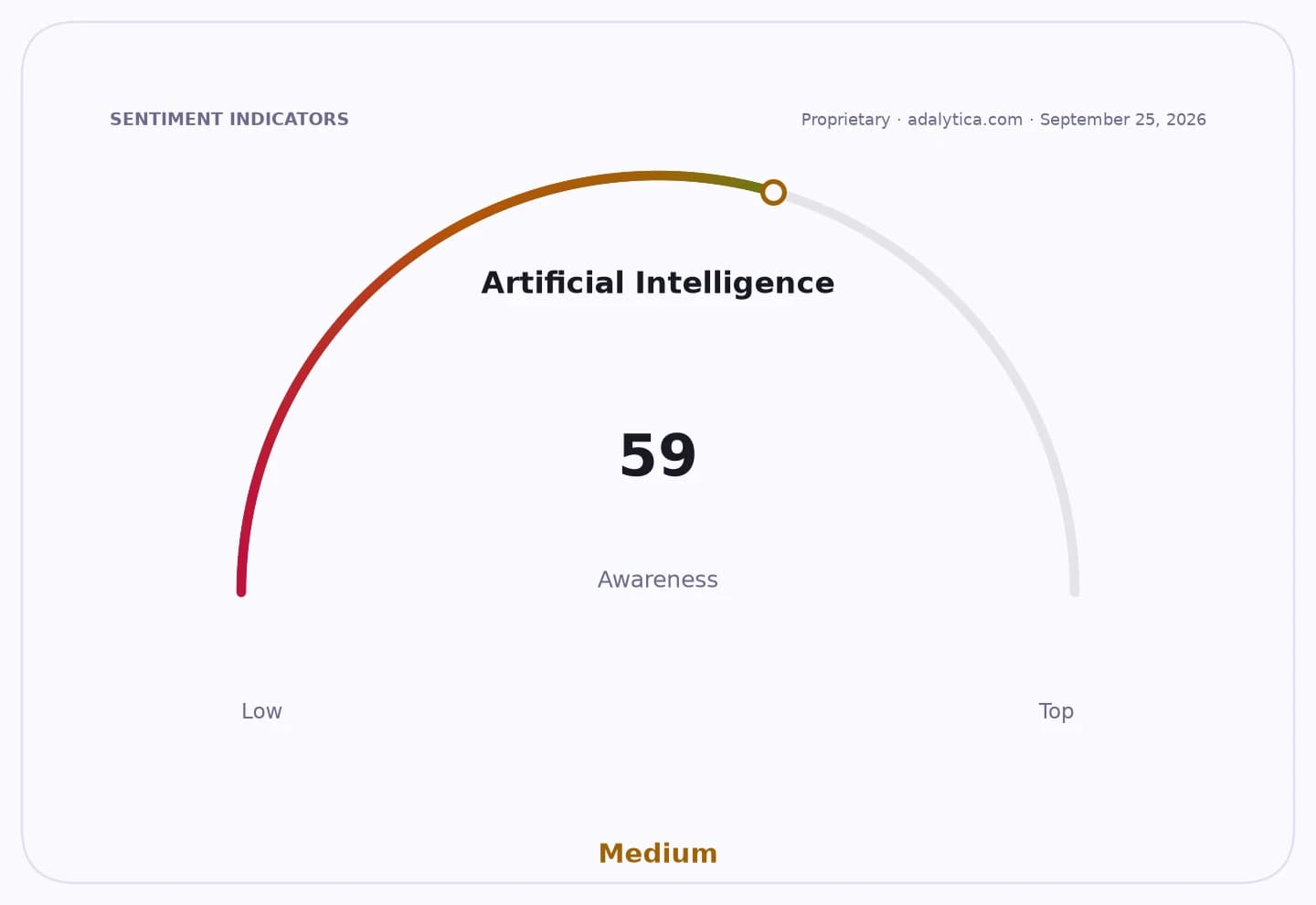
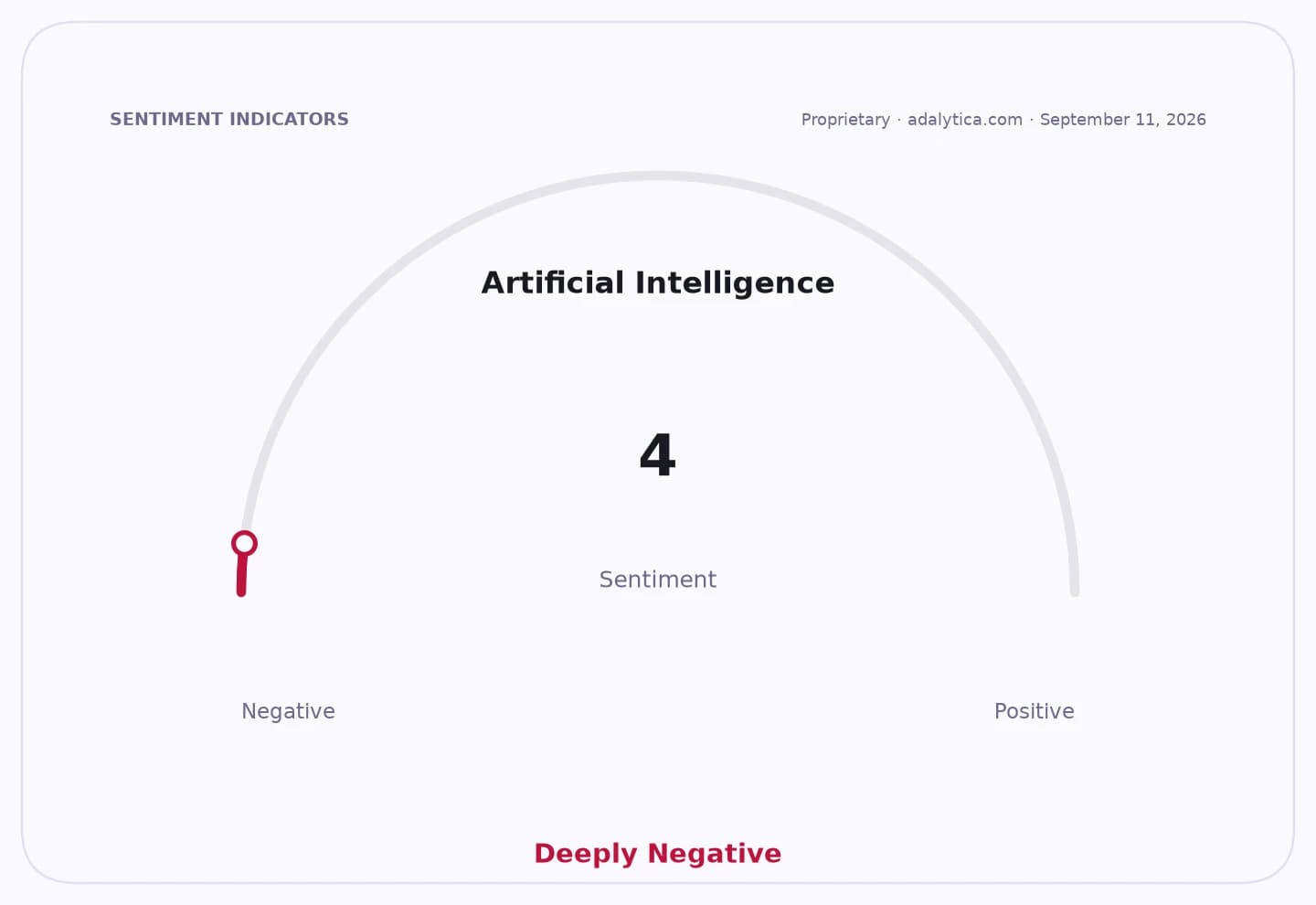
Sentiment IndicatorsⓘProprietary · adalytica.com · September 11, 2026
This is a snapshot — live sentiment, awareness and momentum for 130+ markets update continuously in the dashboard.Open AlphaPulse
The Greens want Britain to work with other countries on a global oversight body for AI, ban lethal autonomous weapons and direct more public funding toward “AI for the public good.” They also want workers protected from decisions being made by machines and a cross-sector push to build domestic AI infrastructure to reduce reliance on U.S. technology.
The timing is politically potent. A top Anthropic safety researcher said this week he sees a greater than 10% chance AI could become a species-ending risk within 10 years, while another researcher said the people building the systems “earnestly believe that it could kill us all by the end of the decade.” That kind of language is exactly what turns a policy idea into a legislative campaign.
The market implications are broader than a single party’s platform. The Greens are also pressing for a freeze on approvals for new data centres, arguing over their energy and water use. That puts a spotlight on the physical bottlenecks behind the AI boom: power, land, cooling and grid capacity. In other words, the next phase of AI spending is as much about infrastructure as software, and anything that slows permitting could reshape which companies win the capex cycle.
There is also a direct defence angle. The proposed ban on lethal autonomous weapons comes as the UK’s Defence Investment Plan promised £5 billion for drones and autonomous systems, which can operate without human control. That makes AI regulation a live issue not just for Big Tech, but for defence contractors, drone developers and the suppliers building the compute stack underneath them.
Labour figures are already edging toward the same debate. Chi Onwurah, who chairs the Science and Technology Committee, said regulation was needed in light of recent events, while Darren Jones has called for a multinational treaty. Even Downing Street acknowledged security risk, saying the UK is working with partners to raise safety standards and develop safeguards. When the language moves from activist warnings to government caution, the policy overhang gets harder to dismiss.
For investors, the key point is that regulation is unlikely to kill the AI buildout — but it can redirect the winners. Restrictions on data centres and frontier-model oversight would pressure the most exposed hyperscalers and model developers, while boosting beneficiaries of compliance, security, power, cooling and sovereign compute. That is where the asymmetric upside sits.
Nvidia remains the clearest proxy for the compute trade, and its stock is still holding above its 50-day moving average even after recent volatility. Microsoft, another major AI spender, sits well above both its 50-day and 200-day moving averages, showing the market is still rewarding scale even as scrutiny rises. But the smarter trade may be further down the chain: grid, power-management, data-centre infrastructure and cybersecurity names that profit whether governments get tougher or not.
The market is underestimating how fast AI safety can become an industrial-policy issue. Once lawmakers start talking about global bodies, treaty language and bans on autonomous weapons, the debate stops being theoretical and starts affecting capex plans, procurement decisions and international competition. That is the inflection point investors should watch.
| Entity | Gains | Losses |
|---|---|---|
| AI infrastructure firms | ▲More compliance spending | ▼Faster permitting risk |
| Nvidia | ▲Continued compute demand | ▼Policy overhang |
| Microsoft | ▲AI scale advantage | ▼Regulatory scrutiny |
| Big Tech critics/Greens | ▲Political momentum | ▼Need for funding detail |