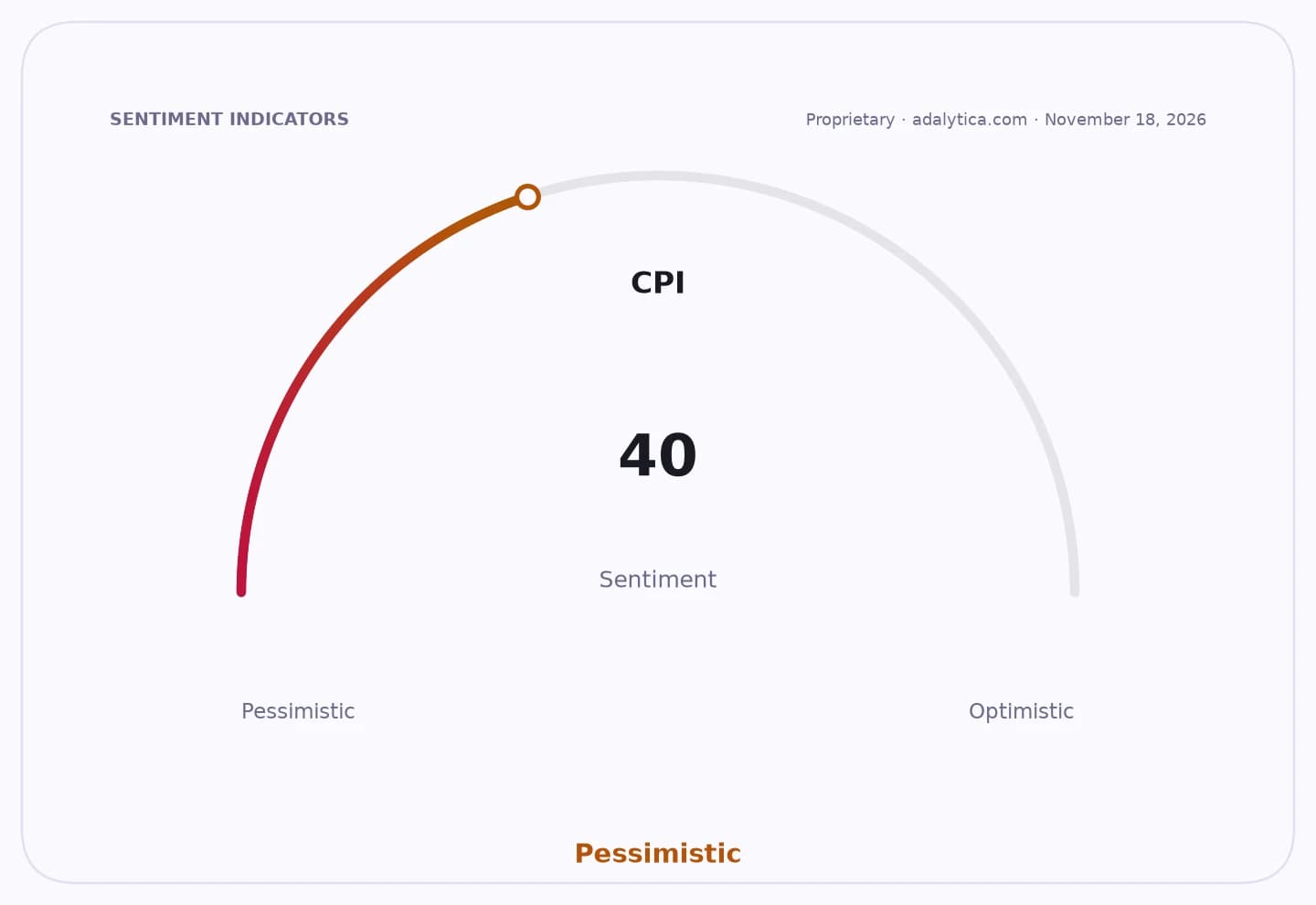
Britain’s return to 2% inflation is looking more distant, and that matters because every extra month above target is another month the Bank of England risks losing credibility with households, businesses and markets.
UK inflation keeps Bank of England cautious
October consumer prices rose 3.6%, the fastest pace in a year, according to the data context, with energy and transport doing much of the damage. That is not the profile of a disinflationary economy ready for comfort. It keeps the pressure on policymakers to stay restrictive even as growth remains fragile and unemployment sits at 4.1%, a level that still suggests a relatively tight labor market by UK standards.
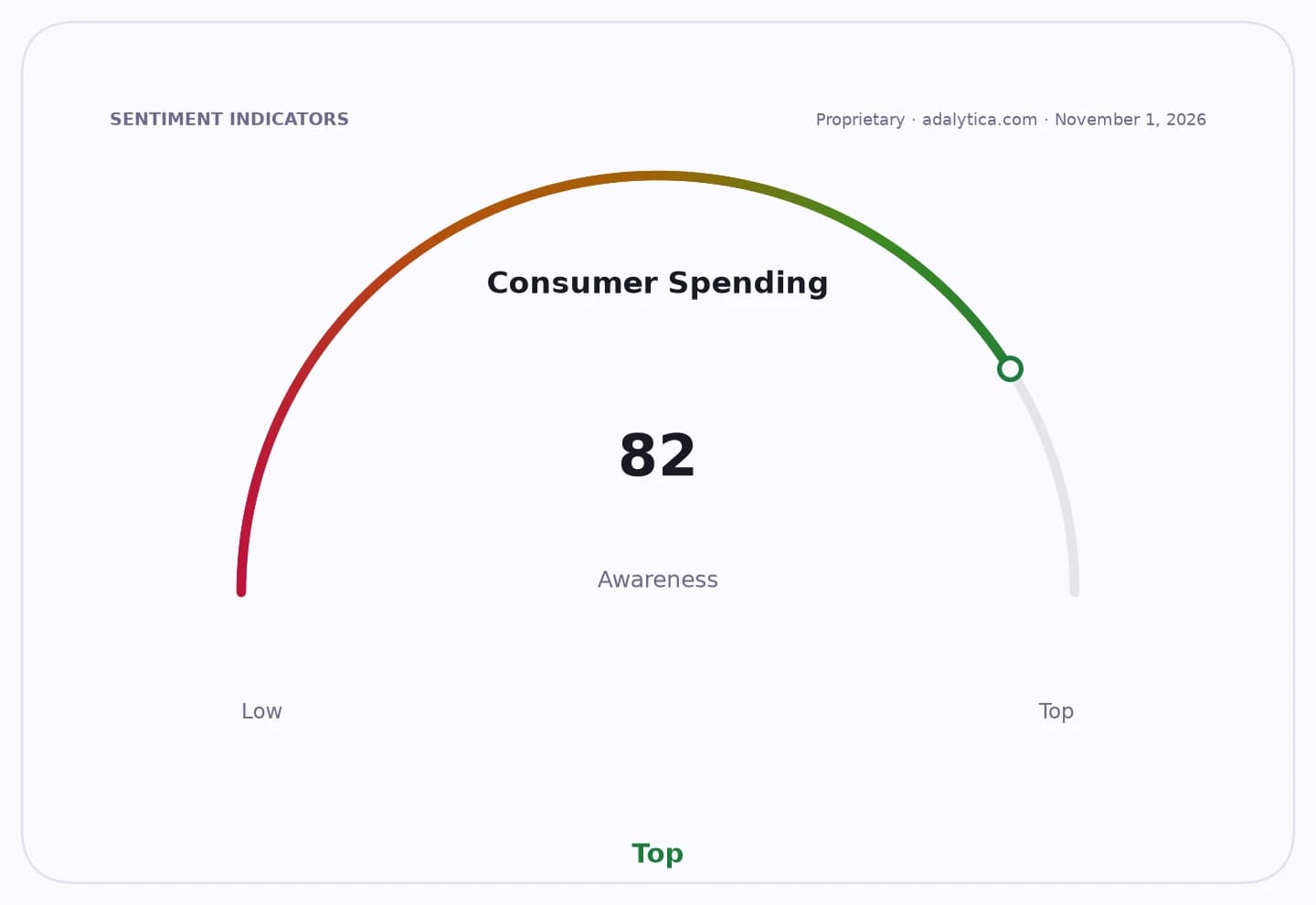
Sentiment Indicators
For investors, the economic significance is straightforward: sticky inflation narrows the room for the Bank of England to pivot quickly, and that keeps UK borrowing costs elevated for longer. The 10-year gilt yield is hovering around 5.1%, a punishing level for rate-sensitive assets and a reminder that bond markets are not pricing a clean victory over inflation. The longer inflation remains above target, the more the UK faces a damaging mix of slower growth, higher debt service costs and pressure on household spending power.
The market impact is already visible in sterling. FXB, the currency proxy for the pound, has been trading around 126.55 to 127.11, with the 50-day moving average and 200-day moving average tightly clustered near current levels, a sign of a market waiting for a policy catalyst rather than committing to a sustained trend. The recent price action also shows hesitation: relative strength has faded from mid-November strength, while the MACD has slipped back below the signal line. In plain English, sterling is not yet pricing a convincing breakout on the back of inflation alone.
That is where the broader narrative turns important. The Bank of England is not just fighting one month of hot data; it is trying to preserve public faith in a 2% target that has already been missed for too long. If inflation keeps hovering in the mid-3% range while households feel the squeeze in energy and transport, the central bank risks looking reactive rather than authoritative. That kind of credibility gap can become expensive, because once wage setters and pricing power start to assume higher inflation, the adjustment back down becomes slower and harsher.
The investment thesis is to focus on the second-order effects. Persistent UK inflation supports higher-for-longer rates, which favors cash-generating businesses and exporters more than domestic consumer cyclicals and heavily leveraged names. It also argues for caution on UK duration exposure and rate-sensitive equities, while keeping an eye on sectors that can pass through costs or benefit from elevated input prices, such as utilities and select energy-linked businesses.
The market may be too eager to assume the inflation problem is largely solved. I think that is the wrong read. The real story is not one bad print; it is that Britain still has not convincingly re-established price stability, and until it does, the Bank of England will have to keep policy tighter than growth bulls want. For investors, that means positioning for a longer period of policy restraint, a firmer pound only if inflation cools decisively, and continued outperformance from businesses that can live with expensive money while others cannot.
| Entity | Gains | Losses |
|---|---|---|
| Bank of England hawks | ▲policy credibility | ▼growth support |
| Pound sterling | ▲higher-rate support | ▼weak inflation backdrop |
| Utilities/energy names | ▲pricing power | ▼consumer backlash |
| UK consumers and borrowers | ▲none | ▼higher living costs |