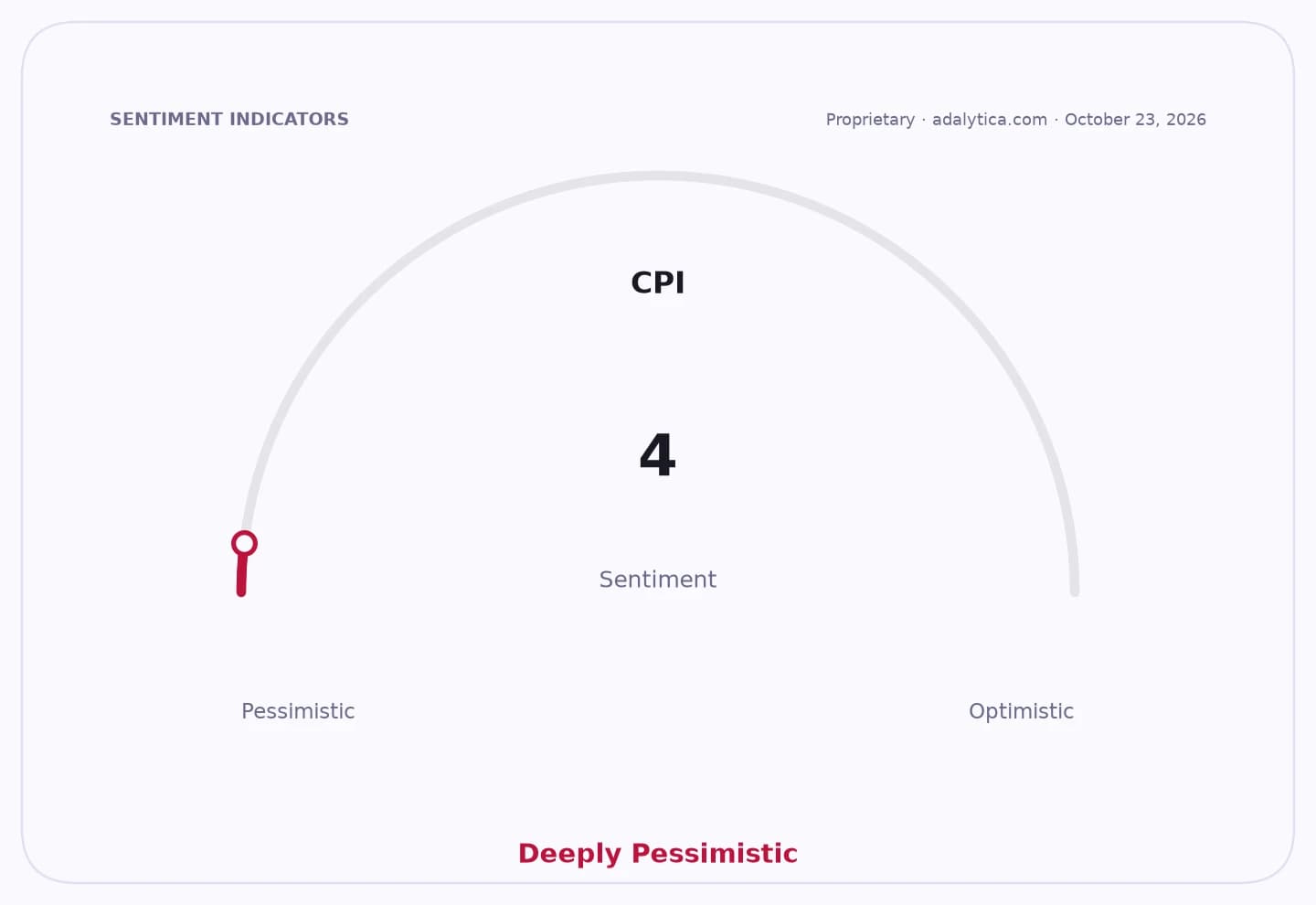
UK consumer price inflation accelerated to 3.5% in September, stronger than expected and enough to keep the Bank of England under pressure to tighten policy again as borrowing costs stay elevated.
UK inflation rises to 3.5% in September
The print matters because it arrives with the economy already slowing and public borrowing running above forecasts, leaving policymakers with less room to support growth without risking another inflation flare-up. Investors now have a clearer signal that the BoE may be forced to keep rates higher for longer, even as activity weakens.
Sentiment IndicatorsⓘProprietary · adalytica.com · October 26, 2026
This is a snapshot — live sentiment, awareness and momentum for 130+ markets update continuously in the dashboard.Open AlphaPulse
The yield backdrop reflects that tension. The 10-year U.S. Treasury yield was last around 5.01%, while UK-listed FXB, which tracks sterling against the dollar, traded at 128.62, with its 50-day moving average at 128.69 and RSI at 61.2, suggesting the market is still pricing a firmer pound despite the rate-sensitive outlook.
UK equities, however, remain sensitive to the policy path. The iShares MSCI United Kingdom ETF, EWU, finished at 47.72, above both its 50-day and 200-day moving averages, but the move leaves banks, retailers and rate-sensitive domestic sectors exposed if the central bank follows through with another hike.
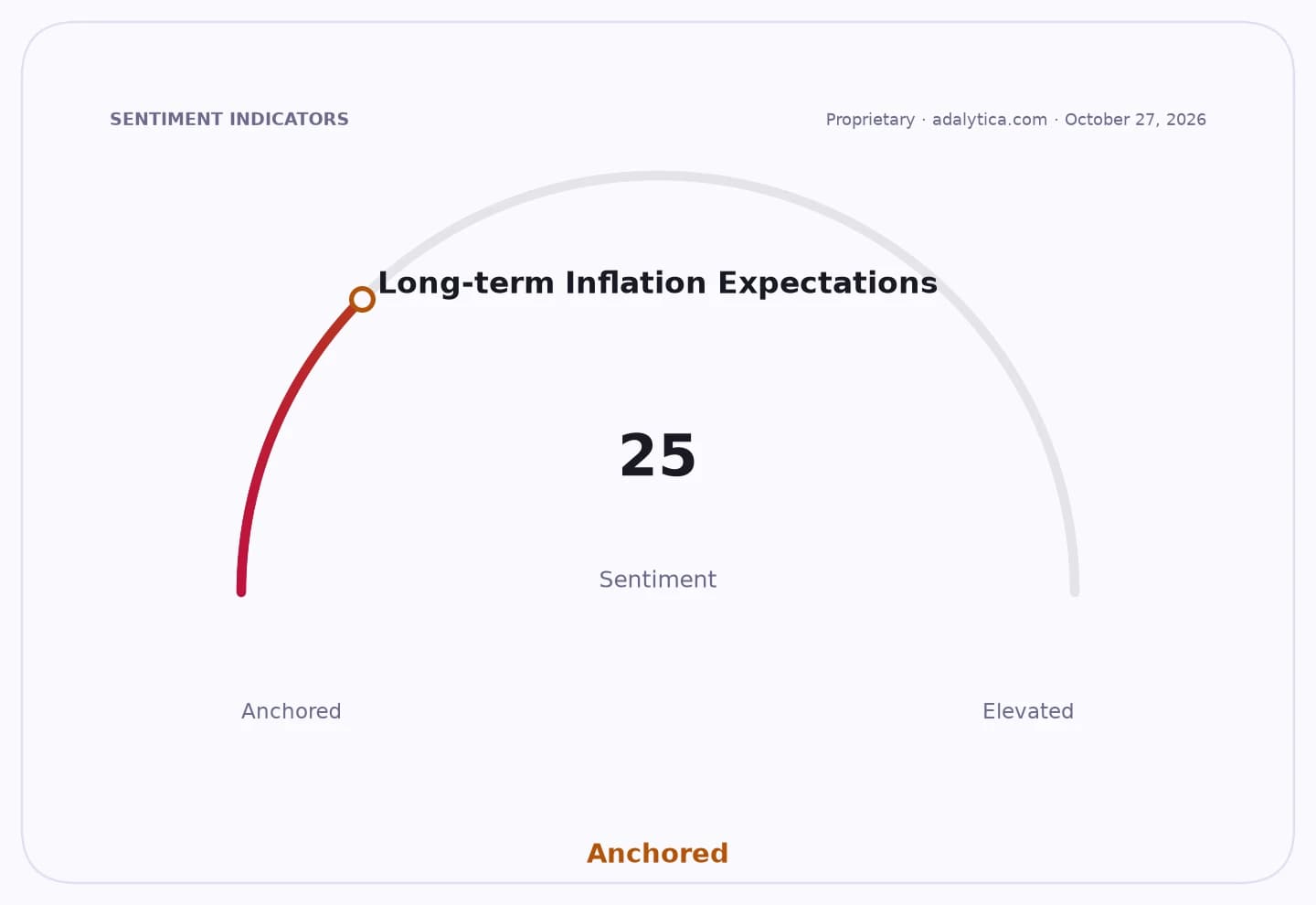
Adalytica’s gauge on wage inflation shows sentiment at 82, while confidence in the Fed’s 2% inflation target is at 100, underscoring the broader market concern that sticky prices can keep central banks restrictive longer than expected. Long-term inflation expectations remain subdued, but the immediate reaction to the UK data suggests traders are more focused on near-term policy tightening than on any quick relief for borrowers.
For investors, the key question is whether the Bank of England treats this as a one-off spike or the start of another inflationary leg. That decision will shape UK gilt yields, sterling and the relative performance of domestic cyclicals into the next policy meeting.
| Entity | Gains | Losses |
|---|---|---|
| Bank of England | ▲More room to hike | ▼Growth credibility |
| Sterling | ▲Support from higher rates | ▼Borrowers and homeowners |
| UK banks | ▲Wider rate environment | ▼Rate-sensitive consumers |
| UK retailers/homebuilders | ▲--- | ▼Demand pressure |