Britain’s labor market is showing a fresh crack as job security weakens to its lowest level since 2023, while consumer confidence slips, a combination that points to softer household demand heading into the second half of the year.
UK labor market weakens as consumer confidence slips

The shift matters because UK growth is already being driven by cautious consumers rather than robust wage-led spending. When workers start to feel less secure in their jobs, they typically pull back on discretionary purchases, delay big-ticket spending and become more price sensitive, which quickly feeds through to retailers, travel, leisure and other consumer-facing sectors.
Sentiment IndicatorsⓘProprietary · adalytica.com · August 17, 2026
This is a snapshot — live sentiment, awareness and momentum for 130+ markets update continuously in the dashboard.Open AlphaPulse
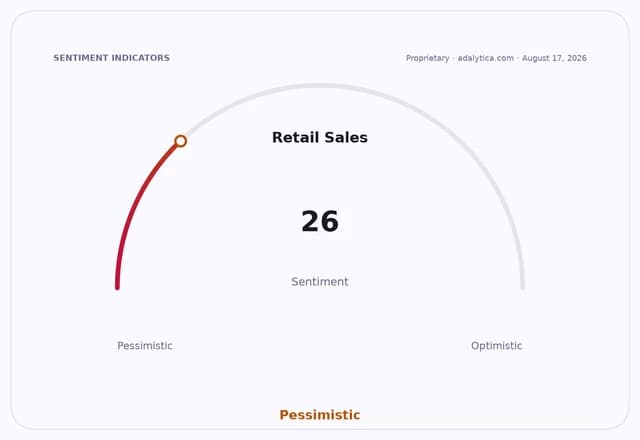
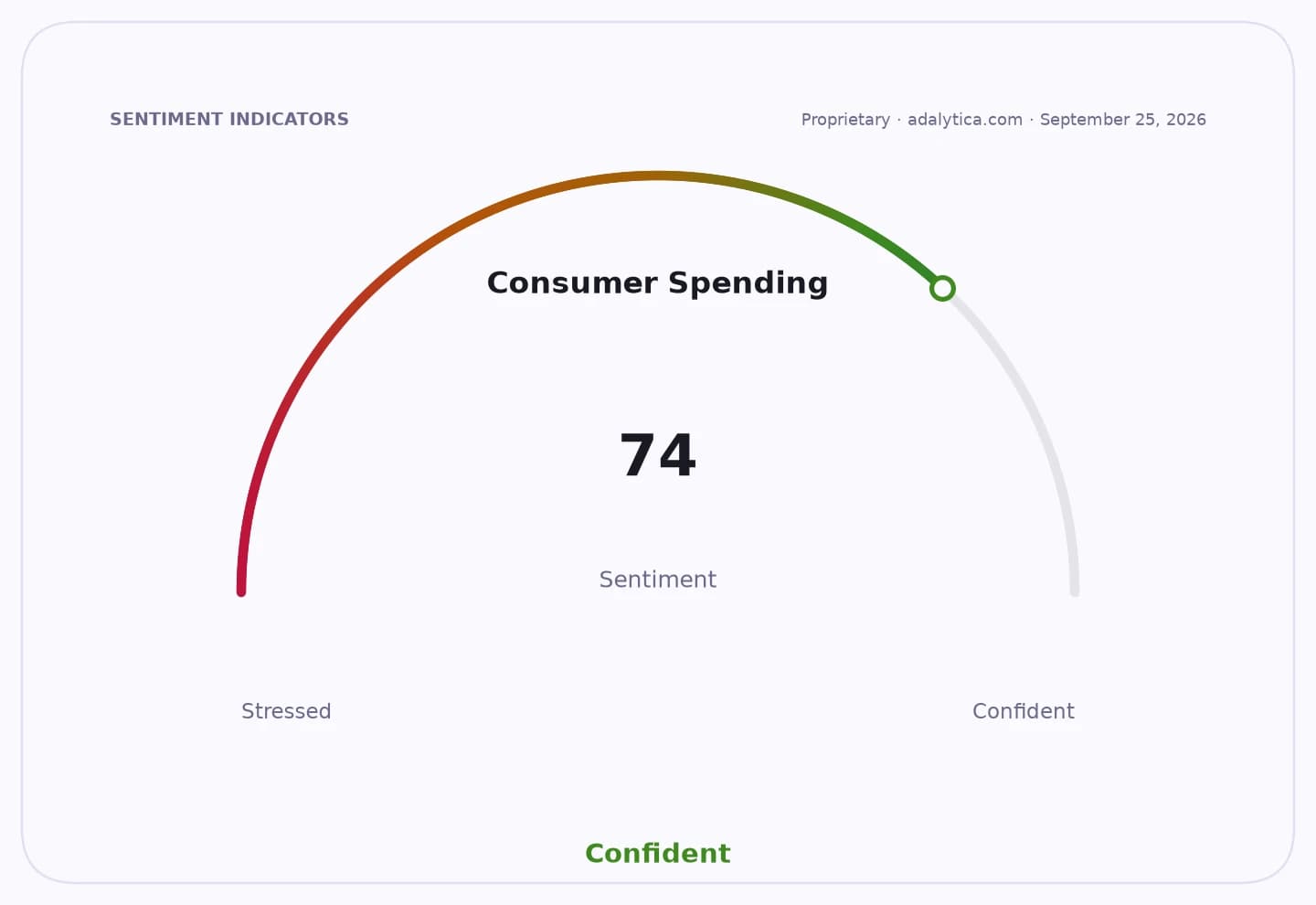
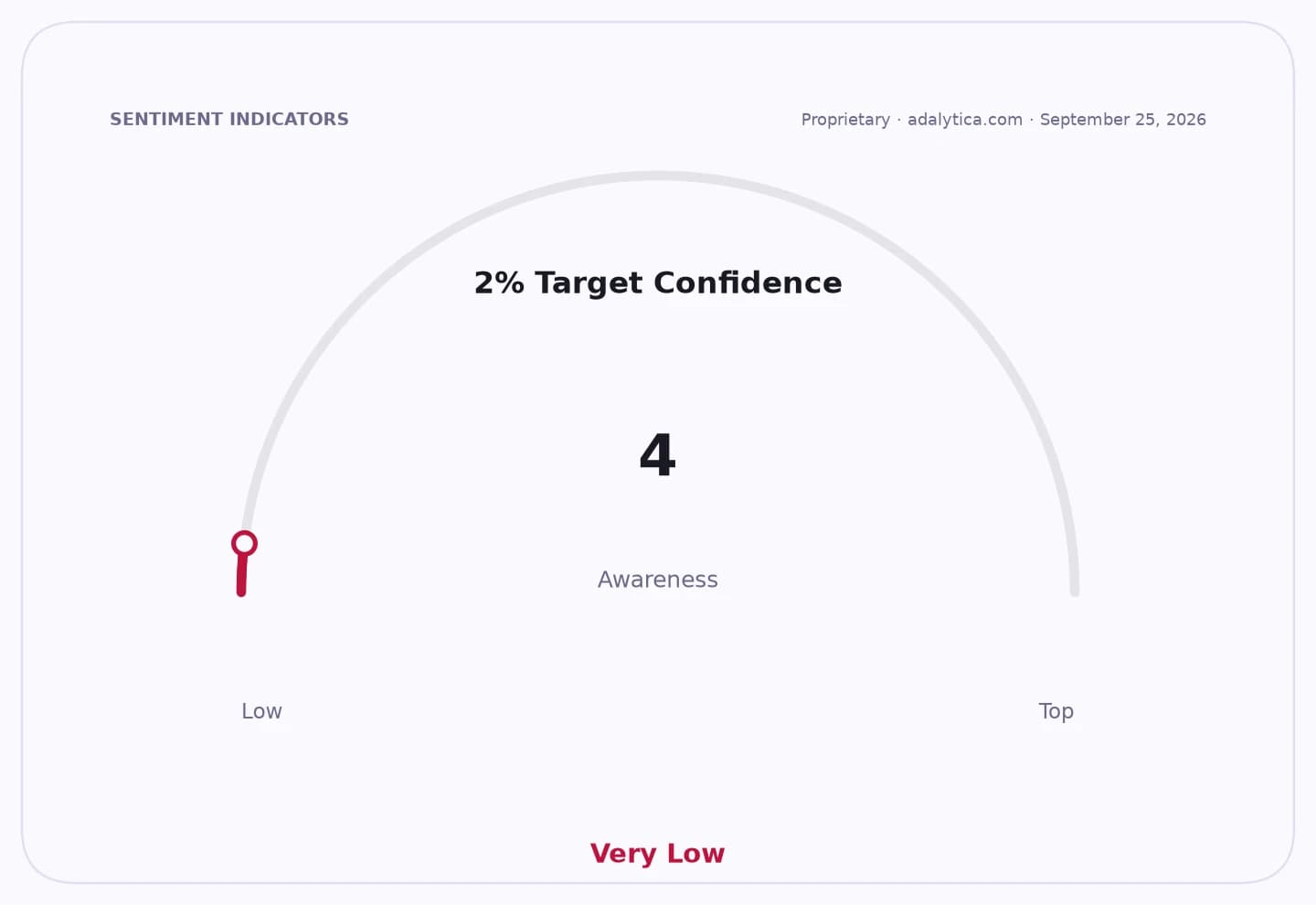
That deterioration is visible in sentiment gauges for household spending and retail activity. Adalytica’s consumer spending sentiment remains in “Greed” territory at 75, but has been volatile over the past few weeks, while retail sales sentiment sits in “Fear” at 26, underscoring a split between willingness to spend and confidence in actual retail demand. For investors, that combination is rarely constructive: it often means households want to keep spending, but do so selectively and defensively.
The economic backdrop also suggests the weakness is not isolated. UK employment conditions are softening at a time when inflation has already eroded real incomes for years, leaving less room for consumers to absorb a further hit to confidence. If job security keeps easing, the risk is not only slower spending growth but a more persistent drag on the broader economy, because consumer demand remains the main support for output.

For equities, the implications are clearest in domestically exposed names. UK retailers, grocers, leisure operators and housing-linked businesses are likely to face more pressure on volumes and pricing power if households turn more cautious. Companies with higher exposure to essential spending may hold up better than those reliant on discretionary outlays, while import-heavy businesses could still benefit if consumers trade down to cheaper goods.
The market’s focus now turns to whether the confidence decline becomes self-reinforcing. A weaker labor outlook can depress spending, which in turn hurts company revenues, hiring plans and margins. If that loop tightens, it strengthens the case for policy support from the Bank of England, but also raises questions about how much monetary easing can do if households are primarily reacting to job insecurity rather than borrowing costs.
| Entity | Gains | Losses |
|---|---|---|
| UK consumers with secure jobs | ▲Cautious spending choices | ▼Rising anxiety over income |
| UK retailers focused on essentials | ▲Defensiv e demand | ▼Discretionary chains |
| Bank of England | ▲More room to ease policy | ▼Inflation-fighting credibility if cuts come too soon |
| Domestic growth outlook | ▲Slower import demand may aid trade balance | ▼Household consumption and GDP momentum |