AI is reshaping Britain’s labour market into a two-speed system, with employers paying up for senior workers who can deploy the technology while demand for junior and routine roles cools.
UK labour market splits as AI lifts senior roles
That matters because it points to a broader allocation of capital and hiring power: firms are not simply cutting jobs, they are changing the mix of work they want done. For investors, the shift suggests higher wage pressure in scarce AI-skilled roles, weaker bargaining power for entry-level staff and a steady re-pricing of labour across sectors exposed to automation.
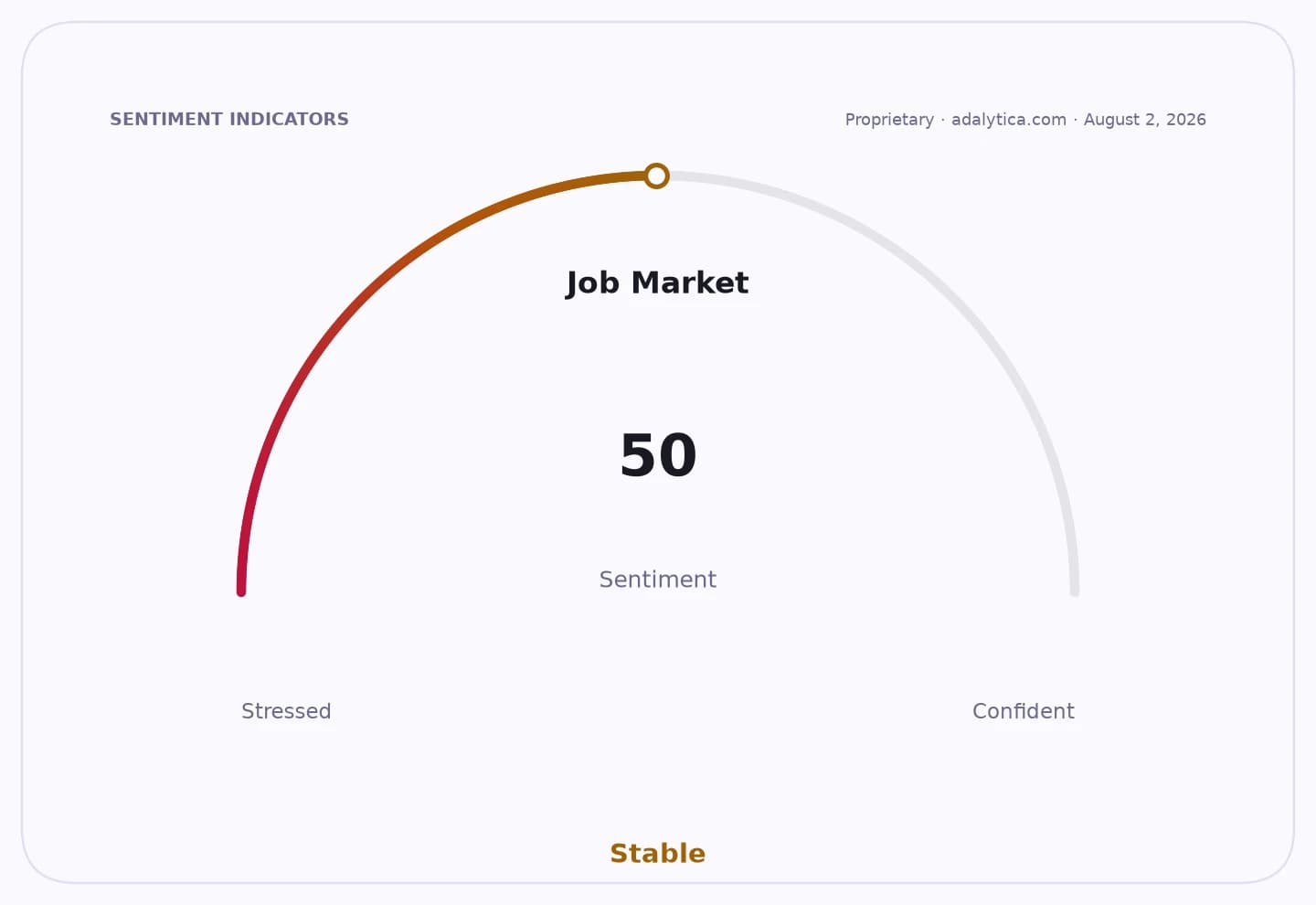
Sentiment IndicatorsⓘProprietary · adalytica.com · August 2, 2026
This is a snapshot — live sentiment, awareness and momentum for 130+ markets update continuously in the dashboard.Open AlphaPulse
The data in the wider economy still point to a relatively resilient jobs backdrop, with the UK unemployment rate near 4.2% in June and payrolls continuing to edge higher. But the composition of demand is changing fast, and that is the more important signal for corporate planning, wage growth and productivity.
Adalytica’s Job Market Sentiment gauge is neutral at 50, underscoring a market that is not in collapse but is being pulled apart by skill level. The clearest winners are senior engineers, AI specialists and managers who can oversee deployment, while the weakest positions are those that can be automated, outsourced or absorbed into fewer teams.
The change also has second-order effects outside tech. Builders, electricians, plumbers and other trades linked to AI infrastructure projects could see firmer demand as data-centre and computing investment ripples through the economy, adding another layer to the labour split.
That creates a stronger case for training and reskilling than for blanket job-loss fears. The near-term risk for employers is not mass unemployment but a mismatch between what companies need and what workers can supply, especially if recent graduates struggle to move into roles that now expect practical AI capability from day one.
For investors, the key question is whether this labour reordering supports productivity gains without forcing a new round of wage inflation in scarce roles. The next read on UK employment and wage data will help show whether AI is easing labour demand overall or simply making it more selective.
| Entity | Gains | Losses |
|---|---|---|
| Senior AI-skilled workers | ▲higher pay, stronger demand | ▼less from routine hiring |
| Entry-level graduates | ▲better if AI-literate | ▼fewer traditional openings |
| Employers | ▲higher productivity, leaner teams | ▼tougher hiring, wage pressure |
| Trades tied to AI infrastructure | ▲more project demand | ▼less direct exposure to AI hiring boom |