The UK is set to raise about £25 billion from a treasury bond sale this week, a large funding operation that will test demand for gilts just as government borrowing costs remain elevated and global bond markets are under pressure.
UK Treasury Set for £25 Billion Gilt Sale
The size of the offering matters because the government is financing itself at a time when the benchmark 10-year gilt yield is trading around 5.2%, while the 2-year yield is near 4.7% — levels that keep debt service expensive and narrow the room for fiscal flexibility. For the Treasury, strong take-up would show it can place large volumes of debt without forcing yields materially higher. A weak result would add to concern that investors are demanding a bigger premium to absorb long-dated sovereign supply.
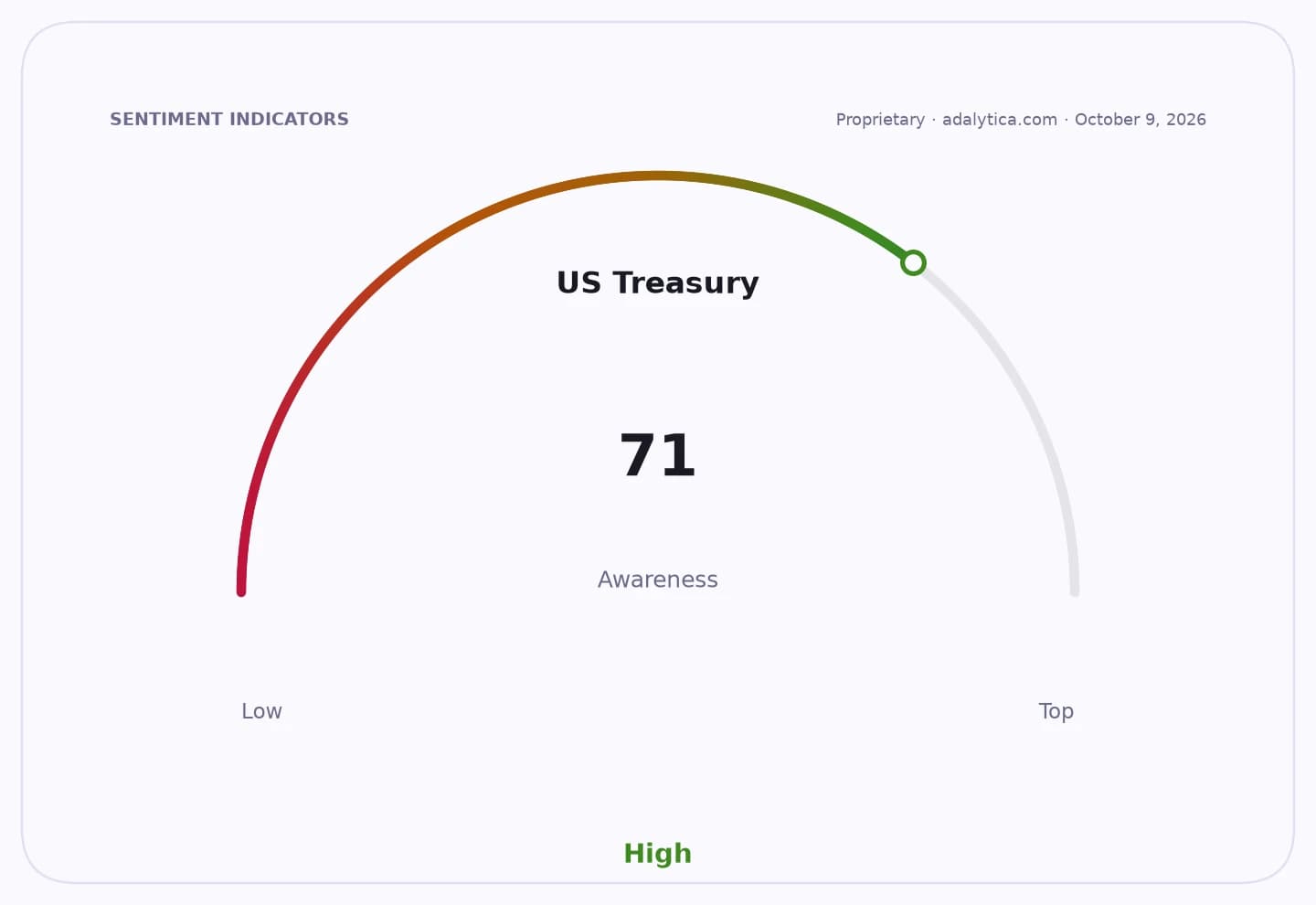
Sentiment IndicatorsⓘProprietary · adalytica.com · October 13, 2026
This is a snapshot — live sentiment, awareness and momentum for 130+ markets update continuously in the dashboard.Open AlphaPulse
The backdrop is also uncomfortable for markets more broadly. UK gilts have been repricing alongside a global selloff in duration, with long-dated bonds under particular strain as traders weigh persistent inflation risk, sticky policy rates and heavy sovereign issuance. In the US, the 10-year Treasury yield has also climbed above 5%, underscoring that the issue is not isolated to Britain but part of a wider reset in fixed-income pricing.
That makes this week’s auction important for investors well beyond the gilt market. A strong bid would likely stabilize UK bond yields and ease pressure on rate-sensitive assets such as investment-grade credit, utilities and real estate. It would also support sterling by signaling that foreign and domestic buyers still see value in UK government paper despite the higher supply and fiscal strain. A poor result, by contrast, would risk pushing gilt yields higher again and reinforcing the view that the market is still demanding compensation for macro and fiscal uncertainty.
The latest trading pattern already shows how cautious positioning has become. The iShares 10-20 Year Treasury Bond ETF, TLT, has fallen sharply, while the shorter-duration VGSH has been far steadier, a sign that investors continue to prefer less interest-rate risk. Conventional technical indicators on TLT and IEF still point to weakness, with both funds trading below recent highs and their 50-day averages in the case of TLT materially higher than the latest close. That reflects a market still uncomfortable with duration exposure until inflation and policy expectations settle.
There is a bull case for the auction. Large sovereign sales can still clear if yields compensate enough and if pension funds, insurers and overseas reserve managers see value in locking in income at current levels. There is also a bear case: with deficits still sizable and supply heavy, buyers may increasingly demand concessions, especially if they think central banks will keep rates restrictive for longer.
For investors, the key question is whether this £25 billion sale passes smoothly or becomes another signal that the cost of government borrowing is entering a more difficult phase. If demand is solid, gilts may regain some stability. If not, this week’s auction could extend the move higher in yields and keep pressure on UK rate-sensitive assets into the final quarter.
| Entity | Gains | Losses |
|---|---|---|
| UK Treasury | ▲Funds borrowing needs | ▼Pays higher debt costs |
| Gilt buyers | ▲Lock in elevated yields | ▼Face mark-to-market risk |
| UK taxpayers | ▲Stable funding if demand is strong | ▼Larger interest burden if yields rise |
| Rate-sensitive assets | ▲Benefit from strong auction demand | ▼Suffer if yields climb |