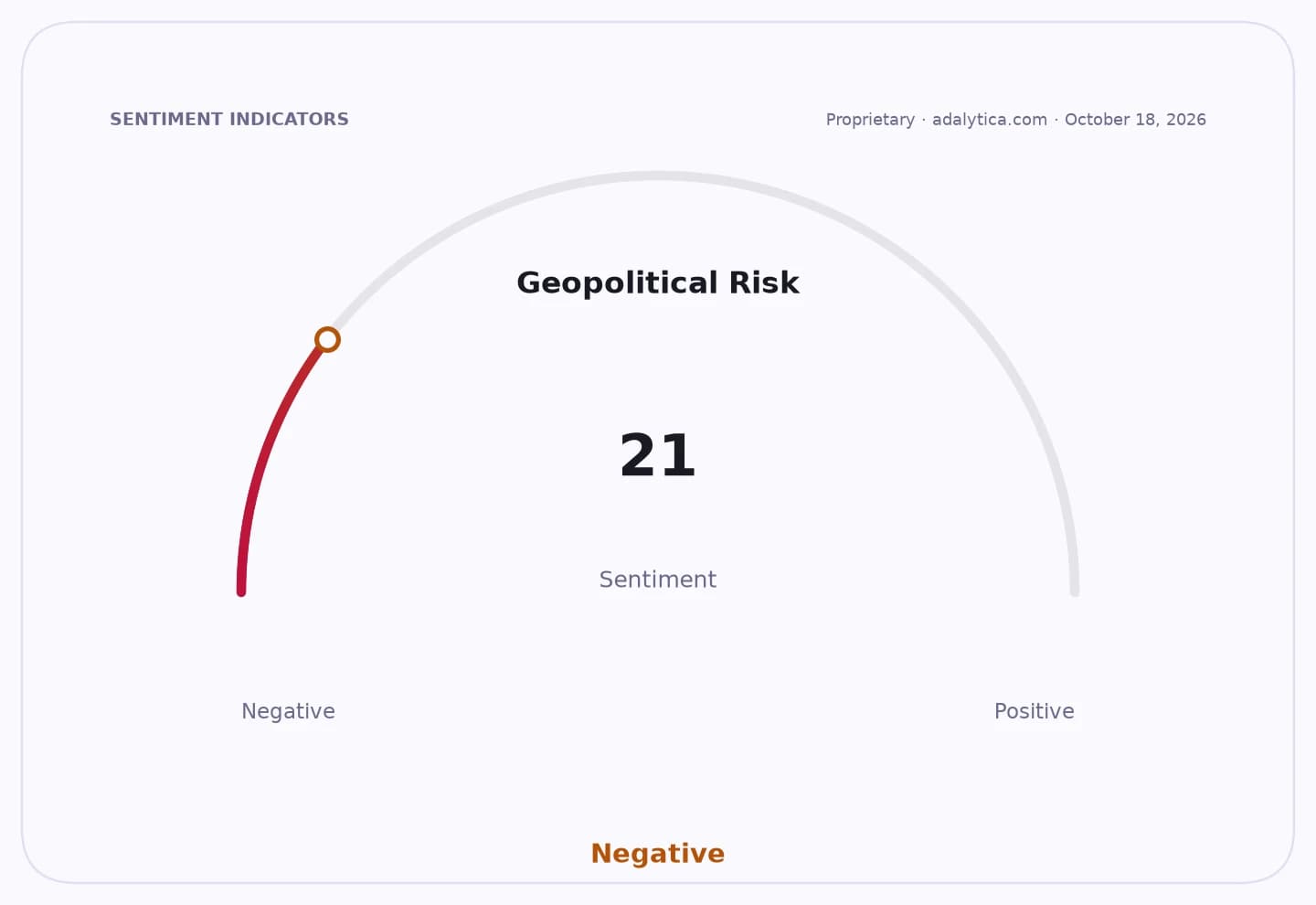
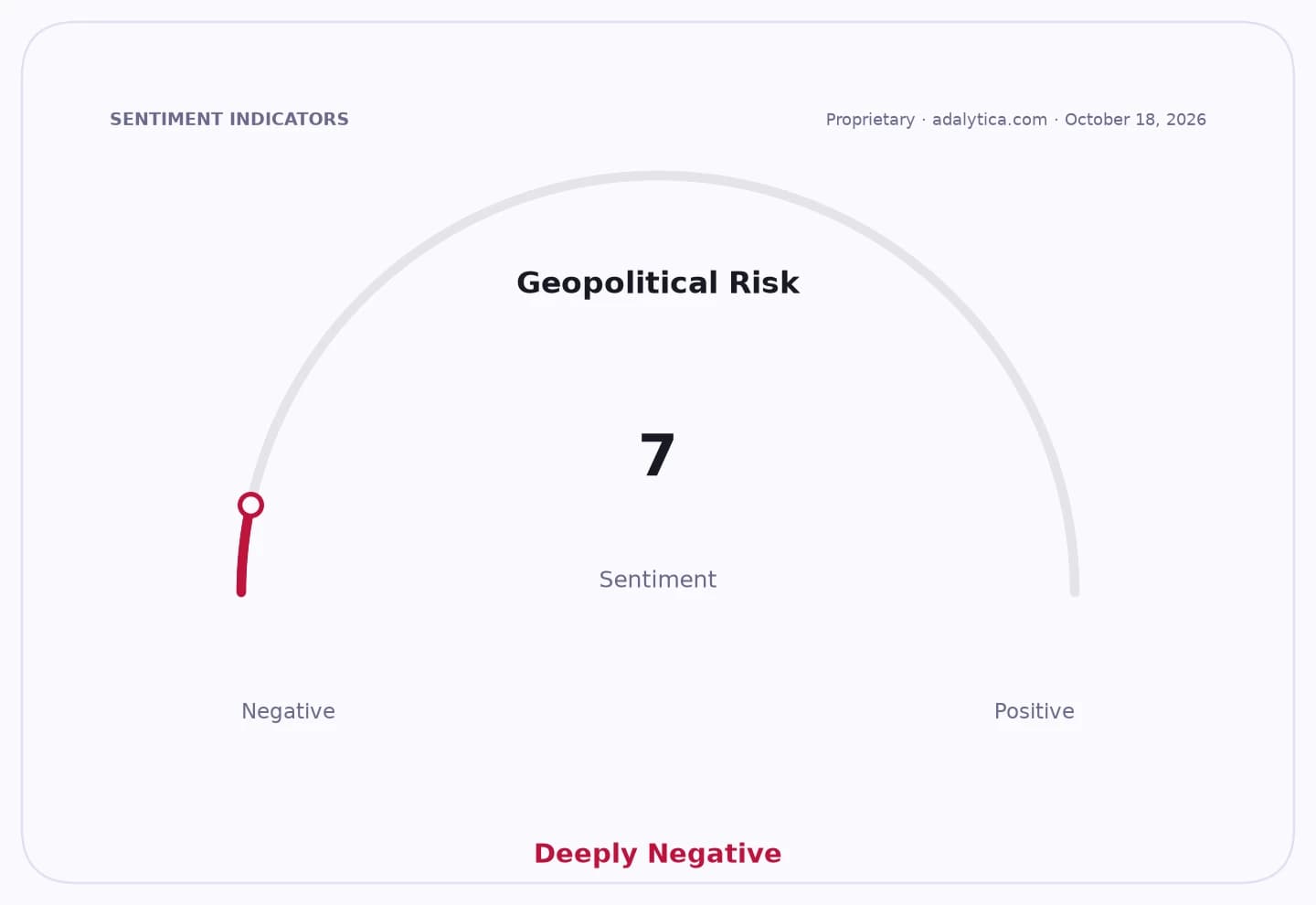
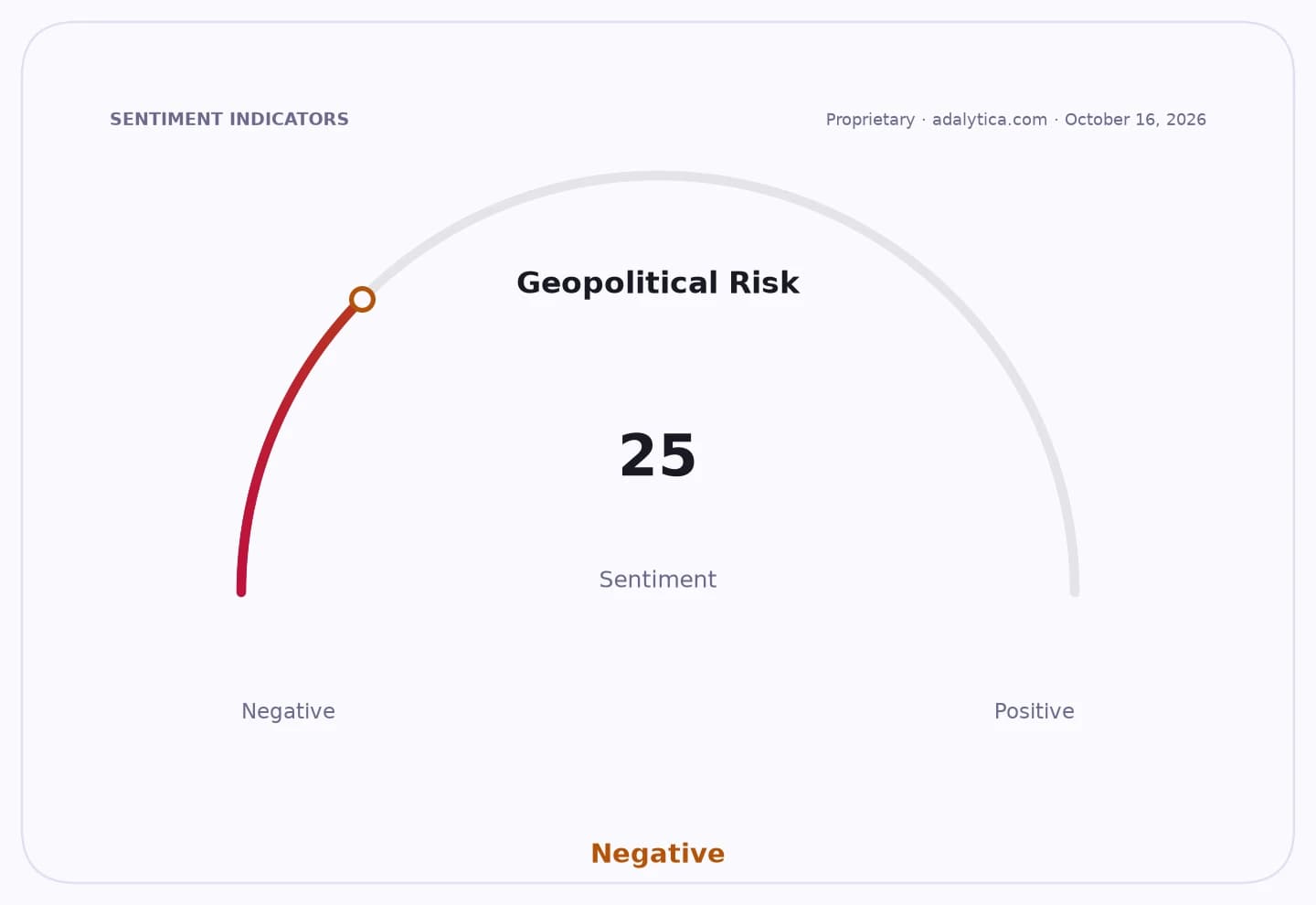
Ukraine is preparing a new fleet of specialized AI-guided drones for a more aggressive campaign against Russia, a shift that could raise the cost of war for Moscow by disrupting airports, air traffic and digital infrastructure far inside the country.
Ukraine AI drones target Russian airports and data centers
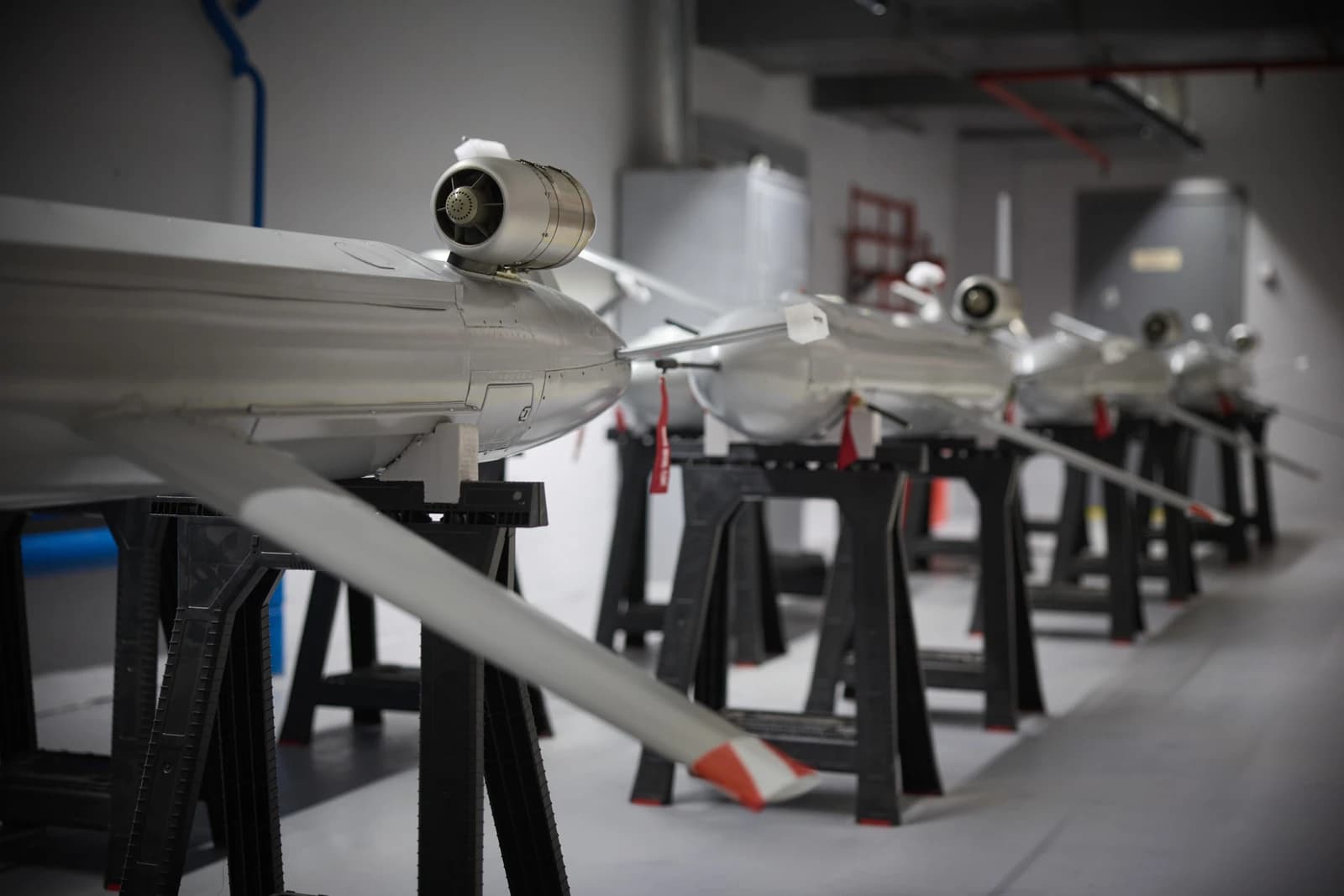
The significance is less about a single attack than about a change in the shape of the conflict. Kyiv has already shown it can force repeated flight suspensions in Moscow and elsewhere by sending drones into Russian airspace; the next phase would use machines designed to navigate around air defenses and pick targets with artificial intelligence, making those interruptions more frequent, more scalable and harder to stop.
Sentiment IndicatorsⓘProprietary · adalytica.com · October 17, 2026
This is a snapshot — live sentiment, awareness and momentum for 130+ markets update continuously in the dashboard.Open AlphaPulse
According to The Atlantic, Ukrainian planners say the campaign is still in its early stages. Since Oct. 8, at least four Russian data centers have been hit, and Russia’s authorities canceled 345 flights at Moscow airports in a single day last week after a drone attack. Ukrainian officials cited by the magazine said that was “just the beginning.”
The broader economic impact comes from the way airspace disruption ripples through a large country at war. Repeated airport closures do not just inconvenience travelers; they raise logistics costs, unsettle domestic transport, pressure insurers and create a persistent sense of vulnerability around critical infrastructure. Hitting data centers adds a second layer of risk, because it threatens the digital backbone that supports communications and commerce.
The reported plan, known internally as “M&Ms,” had originally envisioned launching as many as 1,000 drones a day against Moscow airports to paralyze civilian flights. President Volodymyr Zelenskiy initially judged that too dangerous, but the report says he later authorized continued development of the specialized drones while keeping tight controls to reduce risks to travelers. Ukrainian officials now say the fleet is being built for broader use, not only to close airspace around airports but also to hit targets in Moscow and other cities.
That matters for investors because the war is increasingly intersecting with defense technology, autonomous systems and electronic warfare. The reported use of AI to compare maps, identify targets and decide when to strike underscores the push toward cheaper, more adaptable weapons that can overwhelm conventional defenses through volume and software rather than only through range or payload. Western defense contractors tied to drones, sensors, command-and-control systems and air defense could benefit if the conflict accelerates procurement and battlefield innovation.
Shares of U.S. defense groups have reflected that backdrop. Lockheed Martin, Northrop Grumman and RTX have all traded with elevated volatility this year as markets reassess the durability of defense spending and the pace of weapons replenishment. Northrop’s stock has swung from a peak near $761 in March to below $500 in October before recovering, while RTX has been volatile around the $190 level after an earlier run above $225. Those moves suggest investors are still sorting out whether the new warfare cycle is a one-off Ukraine story or a longer procurement trend.
There is also a geopolitical risk embedded in the escalation. The Atlantic report says the White House under Donald Trump has not publicly objected to the airport and data-center attacks, even as Trump previously pressed Zelenskiy to stop strikes on Russian refineries. If Washington is seen as less focused on containing escalation, Ukraine may have more room to widen the campaign — but Russia is also likely to answer with heavier strikes on Ukrainian cities, infrastructure and energy assets.
For markets, the immediate question is not whether Ukraine can field more AI drones, but whether this marks a durable shift toward sustained deep strikes on Russian critical infrastructure. If it does, the war will become more disruptive to Russian civil aviation, more demanding for air defenses and potentially more supportive for defense suppliers tied to autonomous systems, missile defense and battlefield software.
| Entity | Gains | Losses |
|---|---|---|
| Ukraine | ▲Deeper strike options | ▼Higher escalation risk |
| Russia | ▲ | ▼Airport operations, data infrastructure |
| Defense contractors | ▲Higher demand for drones and air defense | ▼ |
| Civil aviation/travelers | ▲ | ▼Flight disruptions, insurance costs |