The worsening clash between Washington and Kyiv is beginning to matter less as a diplomatic spat than as a direct constraint on Ukraine’s war economy, with any move to curb U.S. military support risking a slower, costlier fight against Russia.
Ukraine aid risk lifts U.S. defense stocks

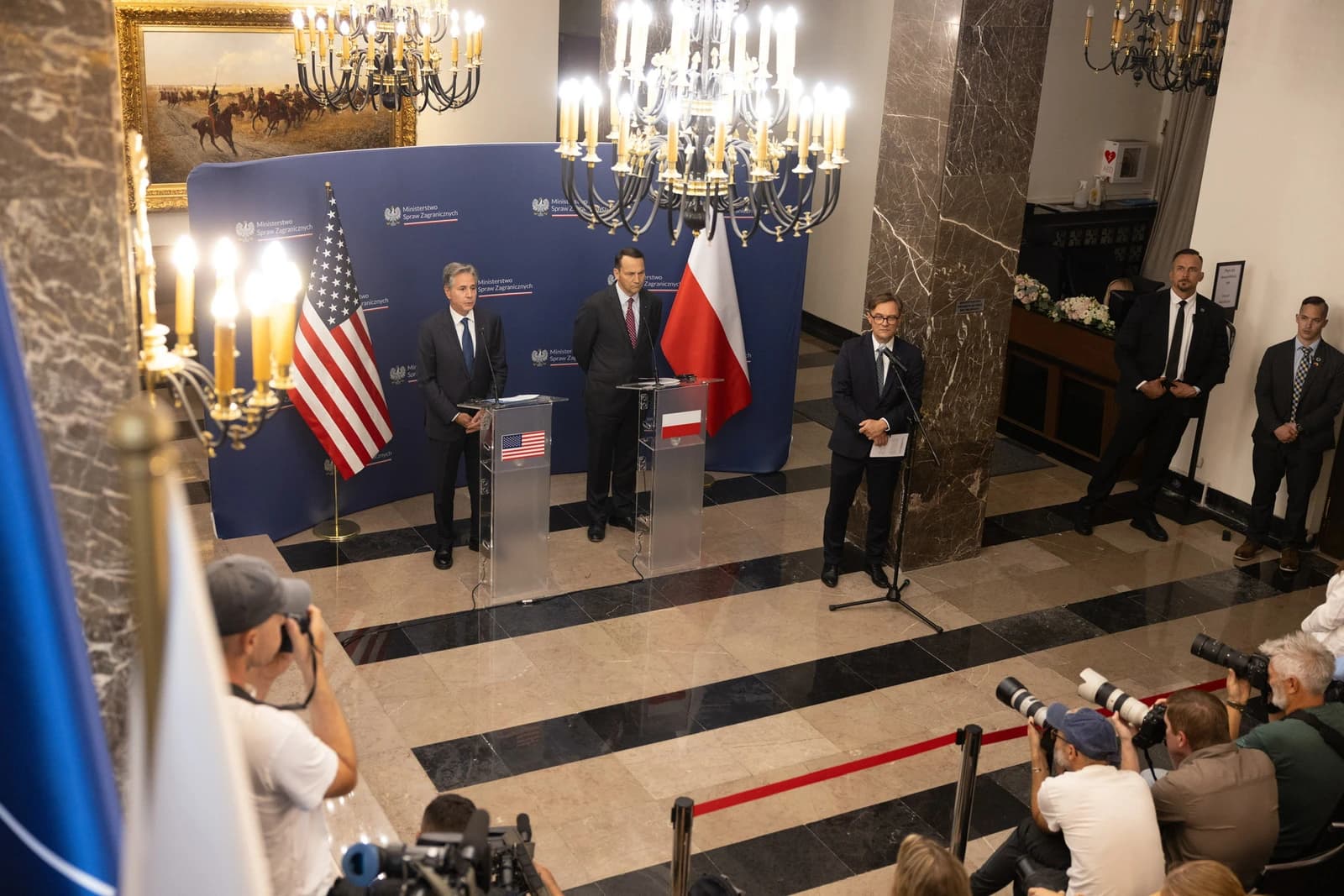
President Donald Trump’s latest posture has sharpened that risk. After striking an agreement with Russia this month on diesel fuel supply, he said Ukraine should stop attacking Russian oil facilities, a position Kyiv sees as tilting toward Moscow. Ukraine has accused the U.S. of effectively handing Russia a political gift, while Washington has intensified moves to limit military aid. For Ukraine, which depends on the U.S. as its single most important security backer, even a partial reduction in support would hit battlefield logistics, air defense and ammunition stocks.
The economic stakes are substantial because military aid is not just a geopolitical variable but a funding stream that keeps Ukraine’s defense apparatus functioning. U.S. weapons, interceptors, intelligence sharing and logistics have helped compensate for Ukraine’s smaller industrial base and fiscal capacity. If that flow slows, Kyiv would face a harder choice between rationing munitions, preserving territory and leaning more heavily on Europe, which is itself under strain from budget pressure, military stockpile limits and political resistance in some member states.
Investors are already pricing a more volatile geopolitical backdrop. Shares of U.S. defense contractors have been buoyant on expectations that Europe will need to spend more if Washington steps back. Lockheed Martin has gained sharply in recent months, with its stock closing at $604.18 on Oct. 23, well above its 50-day moving average of $539.29, while Northrop Grumman ended at $551.44, also above its 50-day average of $521.83. Raytheon parent RTX has been more mixed, finishing at $191.01, just below its 50-day average of $197.11. The moves suggest markets continue to expect sustained demand for air defense, missiles and replenishment orders even as the diplomatic setting deteriorates.
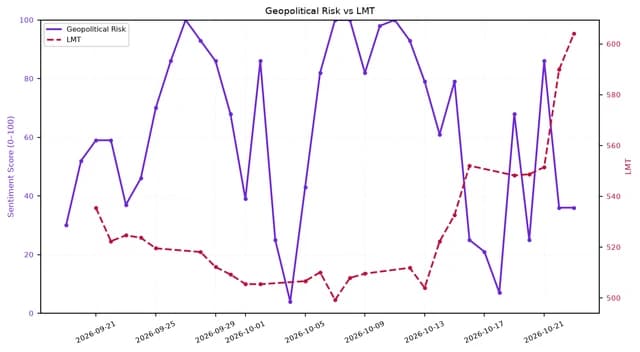
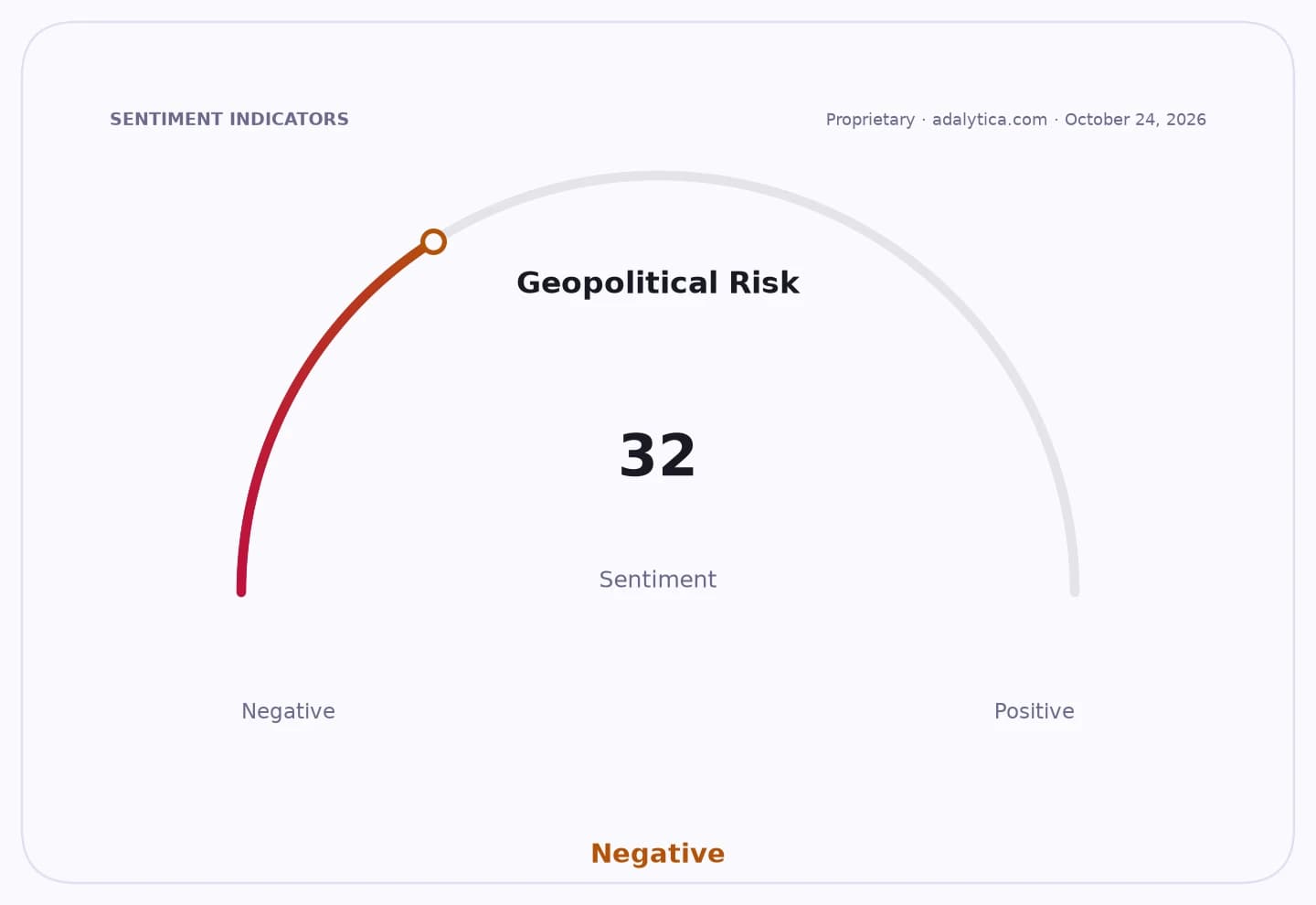
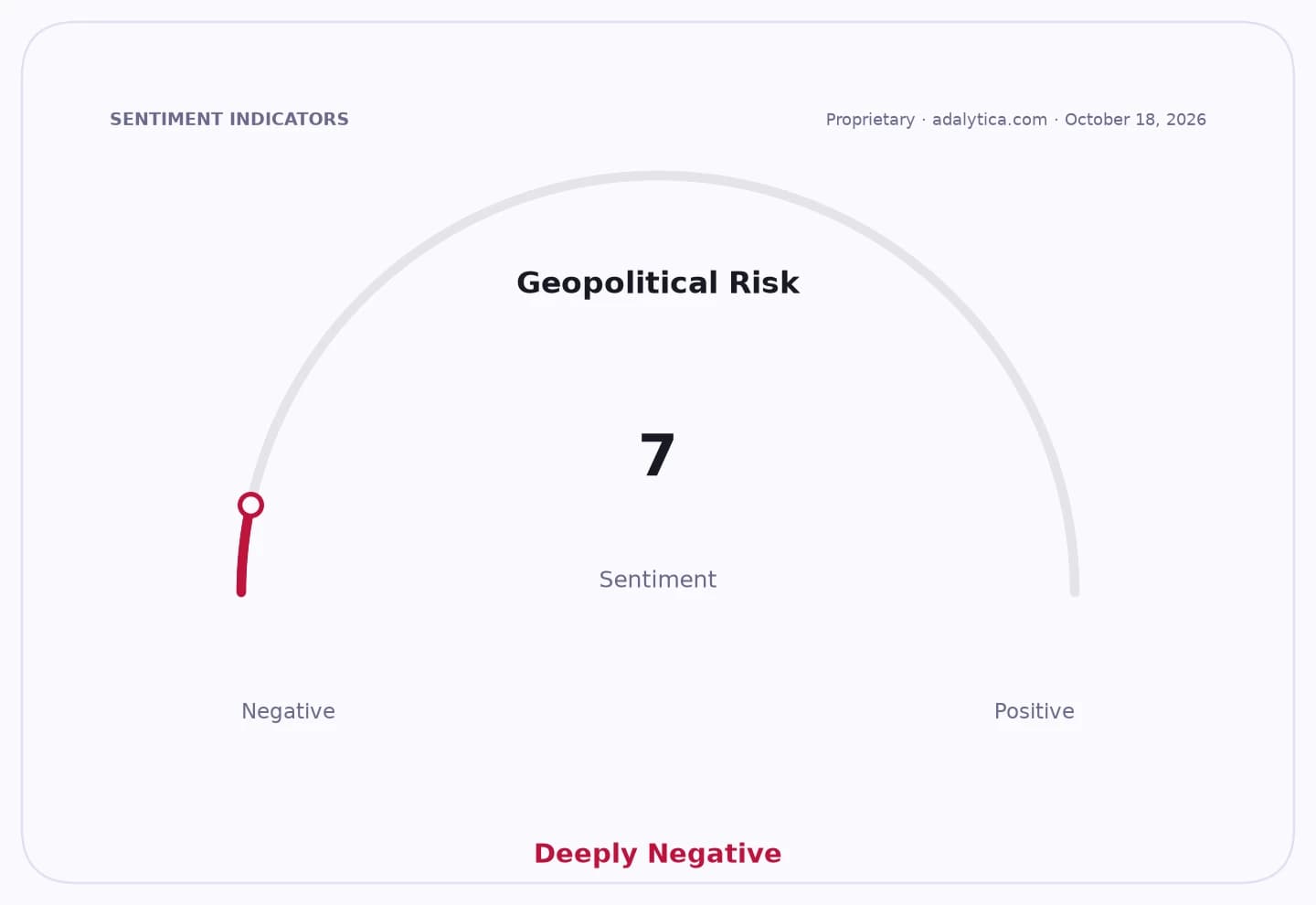
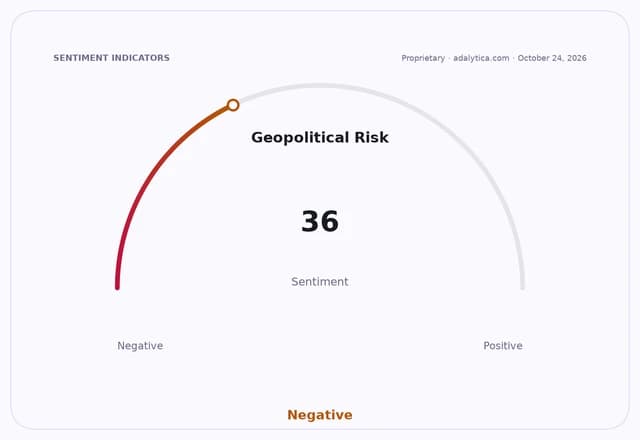
At the same time, the broader risk environment is deteriorating. Adalytica’s Global Stability Sentiment gauge stands at 36, a neutral reading, but its awareness measure is at 11, classified as extreme fear, underscoring how quickly investors can move from complacency to caution when war-related policy shifts hit the tape. That matters for sectors exposed to Europe, energy and defense, as well as for currencies and sovereign risk across the region.
The immediate bull case for defense stocks is straightforward: less U.S. direct support could force Europe to order more air defense, missiles and surveillance systems, and refill inventories faster. The bear case is that an aid slowdown could prolong the war but reduce the pace of new procurement decisions if allies become more fragmented or if Washington uses assistance as leverage in a broader settlement push.
For Ukraine, the most important near-term question is whether the rift stays rhetorical or becomes operational. If military aid is constrained, the battlefield effect could show up first in air defense coverage, artillery availability and Ukraine’s ability to sustain strikes deep into Russian logistics. For investors, that means the conflict is no longer only a headline risk; it is a driver of defense demand, European fiscal stress and market volatility.
| Entity | Gains | Losses |
|---|---|---|
| US defense contractors | ▲More Europe orders | ▼Policy uncertainty |
| Ukraine | ▲None immediate | ▼Aid, battlefield depth |
| Russia | ▲War leverage | ▼Stricter sanctions risk |
| European allies | ▲Stronger rearmament case | ▼Budget strain |