Ukraine’s path to the European Union is shifting from political deadlock to a more technical, faster-moving phase, with Kyiv betting that softer tensions with Hungary and a warmer tone from Poland will let it open the next two negotiating clusters and push ahead on rule-of-law reforms that are tied to billions of euros in EU funding.
Ukraine EU accession shifts to technical phase
That matters because the accession process is no longer just a diplomatic trophy. It is now a financing and reform engine for a wartime economy that still faces a large external shortfall, including about 4 billion euros in unfilled defense needs in 2026 and around 70 billion euros in broader financing gaps in 2027, according to Ukrainian officials. Progress on the EU track unlocks not only political momentum but also access to the interim assessments, or IBARs, that determine whether Ukraine can close chapters and keep drawing support from the bloc’s Ukraine Facility.
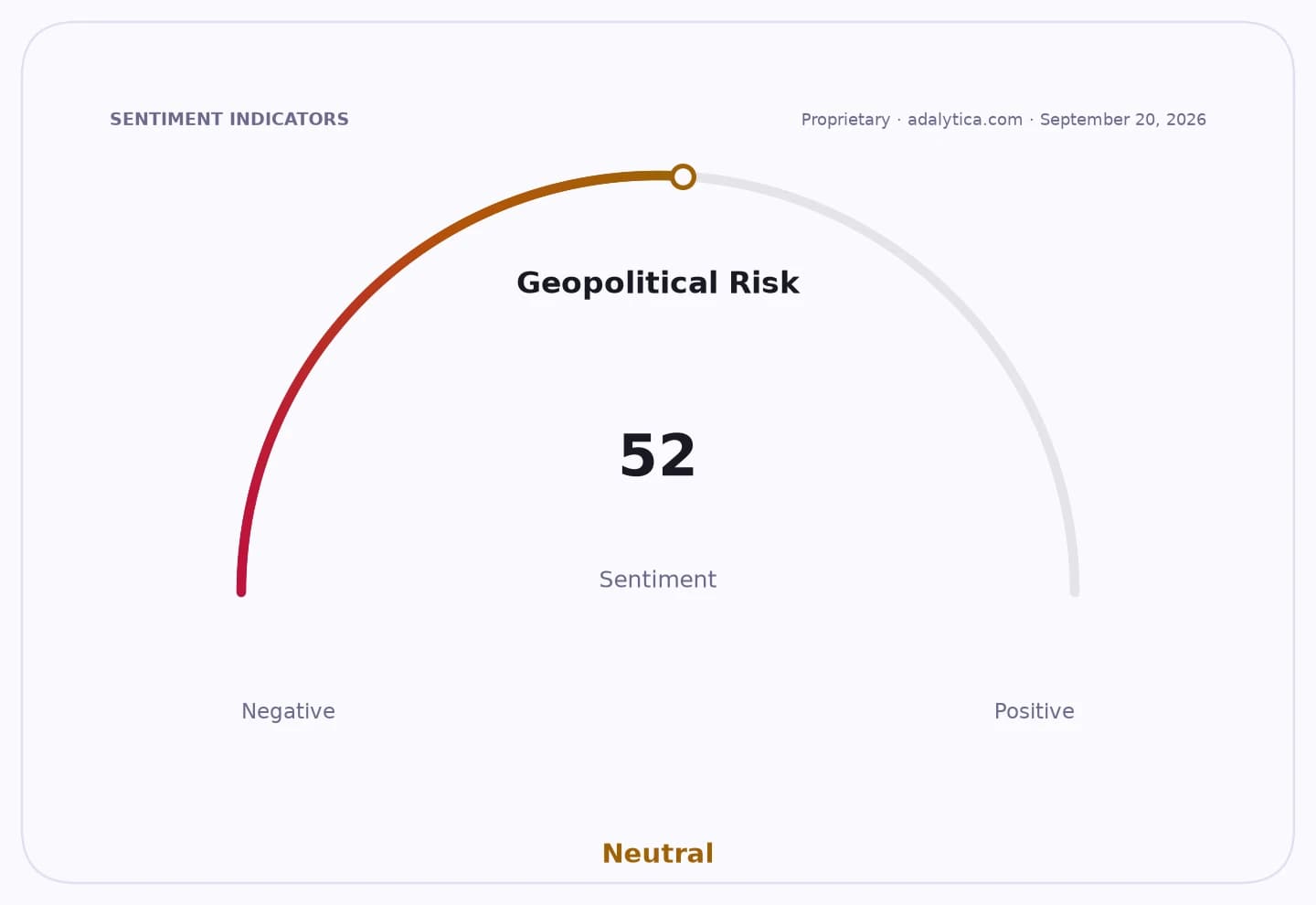
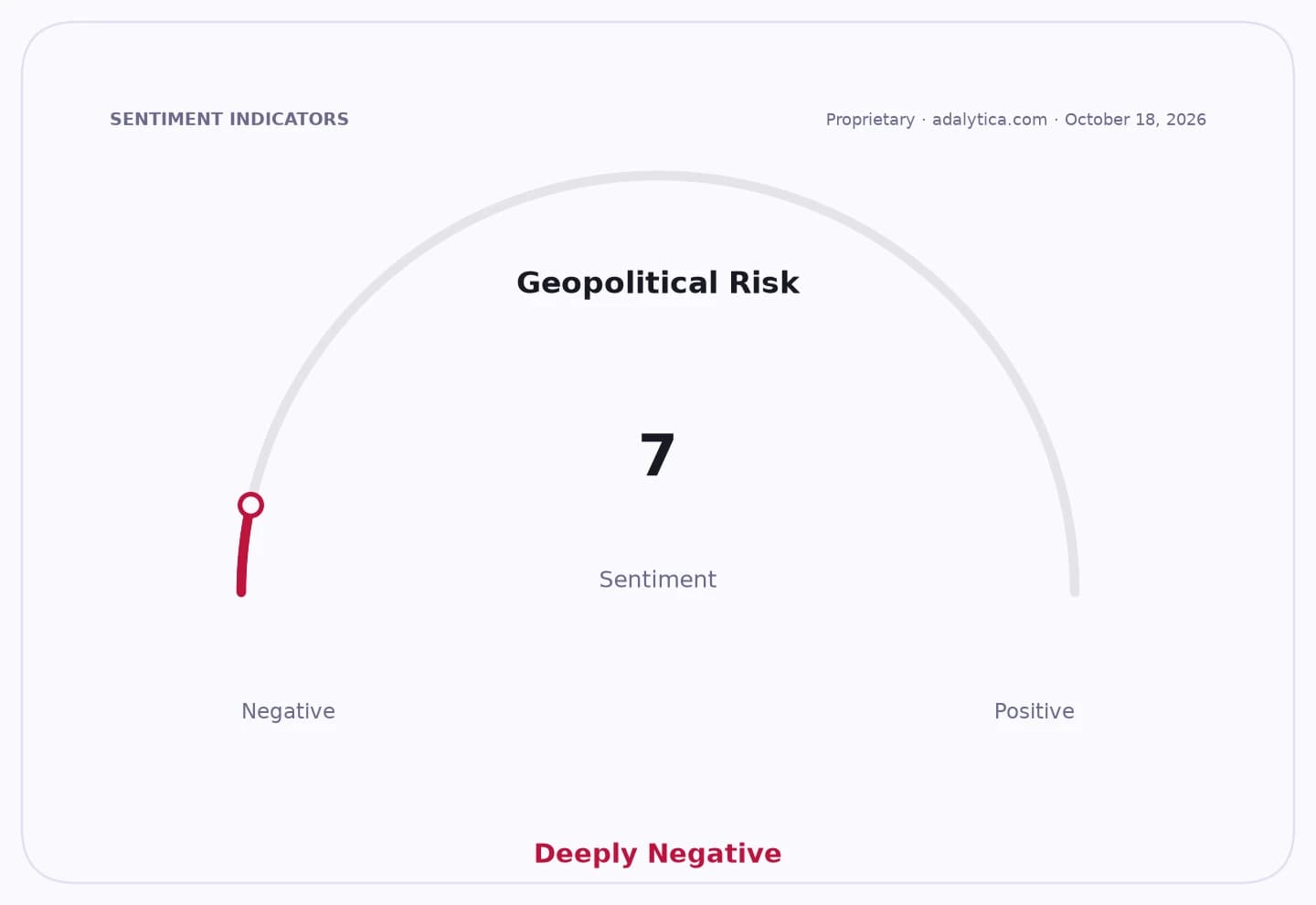
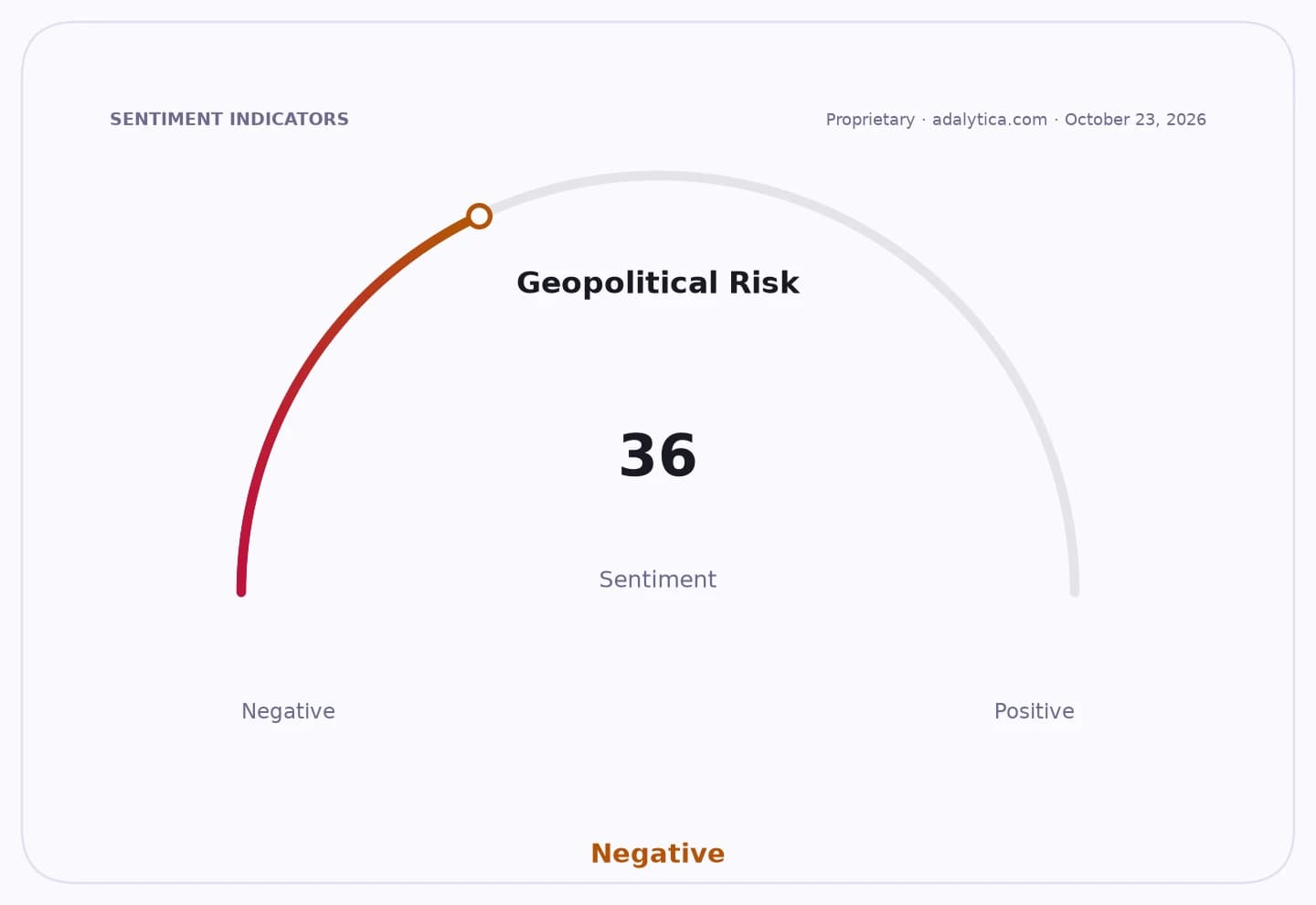
Sentiment IndicatorsⓘProprietary · adalytica.com · October 23, 2026
This is a snapshot — live sentiment, awareness and momentum for 130+ markets update continuously in the dashboard.Open AlphaPulse
Deputy Prime Minister for European Integration Vsevolod Chentsov said in his first interview since taking office in July that the dispute with Budapest has effectively been reset after a meeting between President Volodymyr Zelensky and Hungarian Prime Minister Peter Magyar. He said Kyiv expects to move ahead with opening the next two clusters and does not see the education-law changes demanded by Hungary as a uniquely “Hungarian” issue, but as a broader minorities framework agreed with Brussels and other neighbors.
That distinction matters for investors and policymakers because it suggests Ukraine is trying to de-risk accession by reframing bilateral political disputes as technical compliance questions. If successful, that can reduce the chance that a single member state derails the process late in the game, as happened repeatedly under Hungary’s veto. It also improves the odds that Brussels treats Ukraine’s reforms as credible enough to justify larger and more predictable funding streams.
Poland’s role is equally important. Chentsov argued that Warsaw remains fundamentally supportive even if public rhetoric occasionally turns hostile, and he pointed to deep trade ties as a reason Polish business should ultimately favor Ukrainian membership. In the first nine months of 2026, Ukraine exported more than 860,000 tons of feedstock to Poland worth nearly $270 million, while importing almost $200 million of Polish livestock products. The message is that enlargement is not just a geopolitical project but a reordering of agricultural and industrial supply chains inside the EU.
The broader narrative is that Ukraine is trying to turn accession from a slow, symbolic process into an operational one. Chentsov said Kyiv and the European Commission are creating a joint task force to work intensively on rule-of-law and anti-corruption benchmarks, starting with the first cluster, which must be assessed before chapters in other clusters can be closed. He described that as an attempt to bring forward the sort of close-quarters technical work that usually only happens much later in accession talks.
For investors, the implications run beyond the obvious geopolitical premium on the euro and Central and Eastern European assets. A more credible accession path supports Ukraine’s financing story, its reconstruction theme and the regional trade case for Poland, Romania and other nearby EU economies. It also keeps alive the possibility that frozen Russian assets, or at least parts of them, could be mobilized for Ukraine’s defense and reconstruction, a debate that remains politically difficult in Belgium and other EU capitals.
The main risk is that the reform timetable outruns political reality. Chentsov acknowledged that some EU-imposed tasks are difficult to implement as written and that Kyiv will seek “reasonable solutions” rather than literal compliance where rules and state capacity clash. That flexibility may help in Brussels, but it also leaves room for delays if member states decide Ukraine’s progress is too slow or too politically sensitive. The next few months, and the first IBAR assessment, will show whether the new task-force approach can convert goodwill into measurable progress.
| Entity | Gains | Losses |
|---|---|---|
| Ukraine | ▲Faster accession track | ▼Less room for delay |
| European Commission | ▲More direct control | ▼More workload and risk |
| Poland | ▲Bigger market access | ▼More agri competition |
| Hungary | ▲Lower isolation risk | ▼Less veto leverage |