Ukraine’s fuel market is turning higher again, with autogas extending its climb at major chains on Nov. 6 even as some gasoline grades eased and diesel stayed unchanged, underscoring how volatile transport costs remain for households and businesses.
Ukraine fuel prices rise as autogas climbs
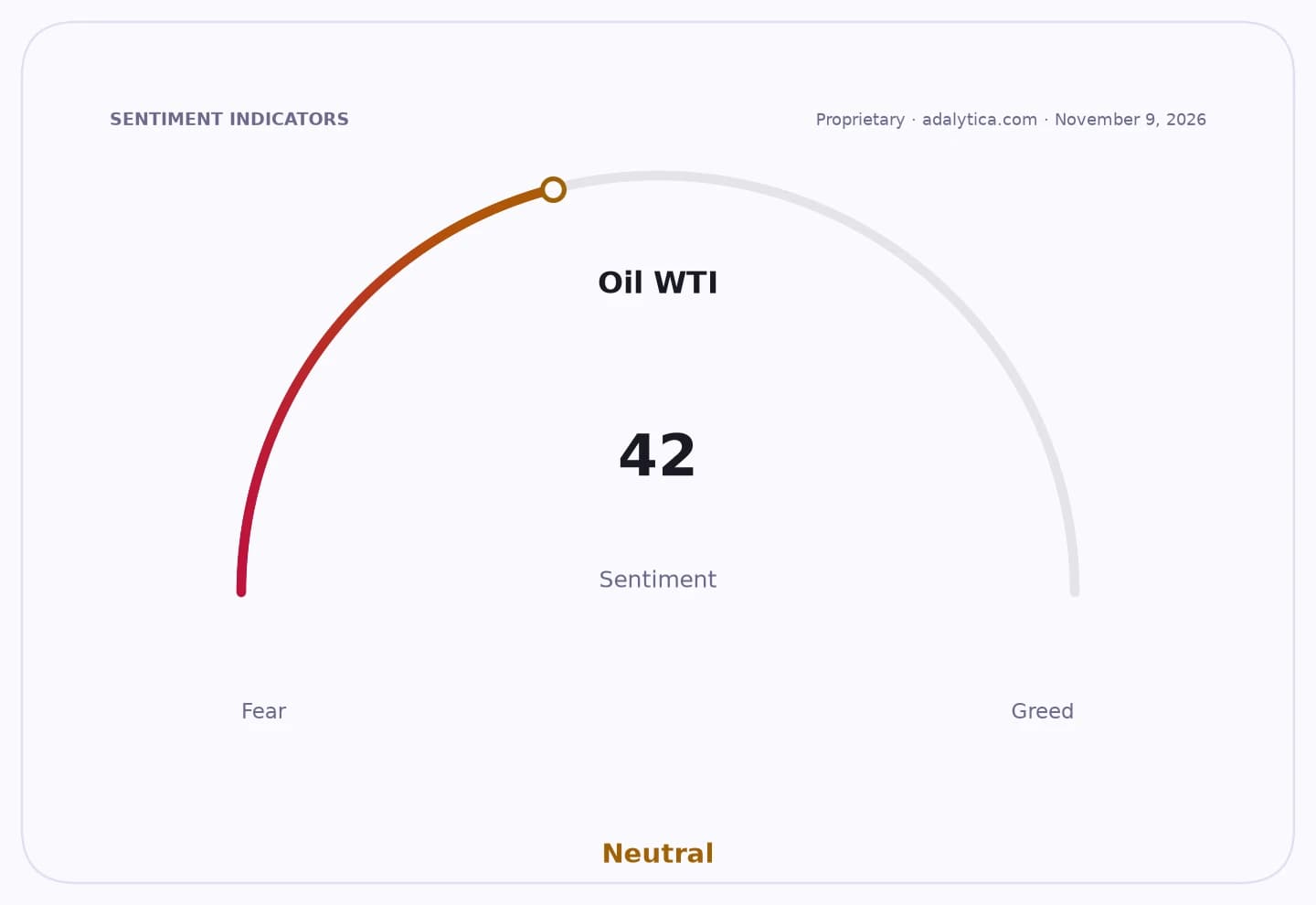
Oil WTI
The biggest move is in liquefied gas, which rose 1 hryvnia per liter at OKKO, WOG and UPG. OKKO now charges 61.90 hryvnias a liter, WOG 60.90 and UPG 59.90, while diesel prices across monitored networks were left unchanged.
Sentiment Indicators
Gasoline was more mixed. UPG cut A-95 and UPG 95 by 1 hryvnia a liter to 89.90 and 91.90, while SOCAR lowered premium NANO 100 by 2 hryvnias to 103 hryvnias. The state-run Ukrnafta held prices steady after a drop the previous day, with A-95 at 87.90 hryvnias and autogas at 57.90.
The dispersion matters because fuel prices feed directly into freight, retail logistics and consumer inflation. Ukraine’s average A-95 price has climbed from about 58 hryvnias at the start of the year to roughly 90 hryvnias in October, and premium fuels have already pushed above 100 to 111 hryvnias a liter.
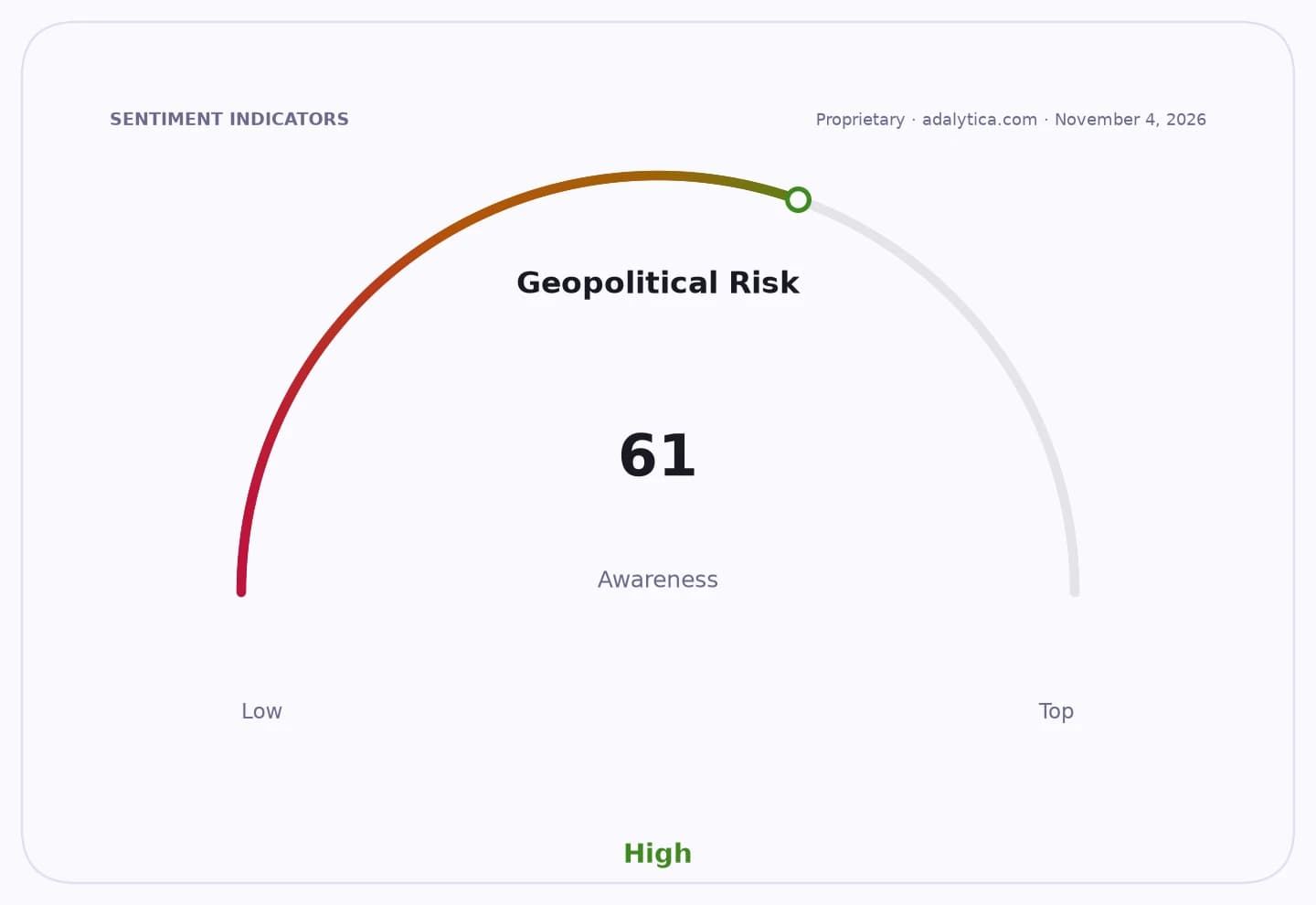
That keeps the focus on global oil and gas markets, where traders are watching Middle East risks, shipping security in the Strait of Hormuz and OPEC+ policy. U.S. crude benchmarks and energy equities have softened recently, but regional pump prices in Ukraine are still reacting to earlier spikes and local retail competition rather than moving in lockstep with the broader slide.
For investors, the story is less about one day’s sticker changes than about persistent pressure on household spending and business margins in an import-dependent fuel market. If global crude and refined-product prices stabilize, pump prices could cool; if geopolitical tensions flare again, Ukraine’s gasoline could move back toward 100 hryvnias a liter.
| Entity | Gains | Losses |
|---|---|---|
| OKKO, WOG, UPG gas buyers | ▲lower pump competition | ▼higher autogas costs |
| Drivers using gasoline | ▲small price relief at UPG and SOCAR | ▼risk of renewed increases |
| Ukrnafta | ▲steady pricing, price leadership | ▼margin pressure if rivals cut harder |
| Consumers and freight firms | ▲stable diesel | ▼higher transport and inflation costs |