Russia’s first diesel shipment to the United States since sanctions-era trade shifts is unlikely to move prices at Russian gas stations, with Deputy Prime Minister Alexander Novak arguing the export will be too small to affect domestic fuel costs.
Russia diesel shipment to U.S. unlikely to lift pump prices
That matters because the shipment is less a one-off trade oddity than a test of how much flexibility Moscow has in redirecting fuel flows while trying to keep its own market supplied. For investors, it points to a broader scramble in the diesel market, where shortages have kept refined-product margins volatile and made supply re-routing a key profit driver for refiners on both sides of the Atlantic.
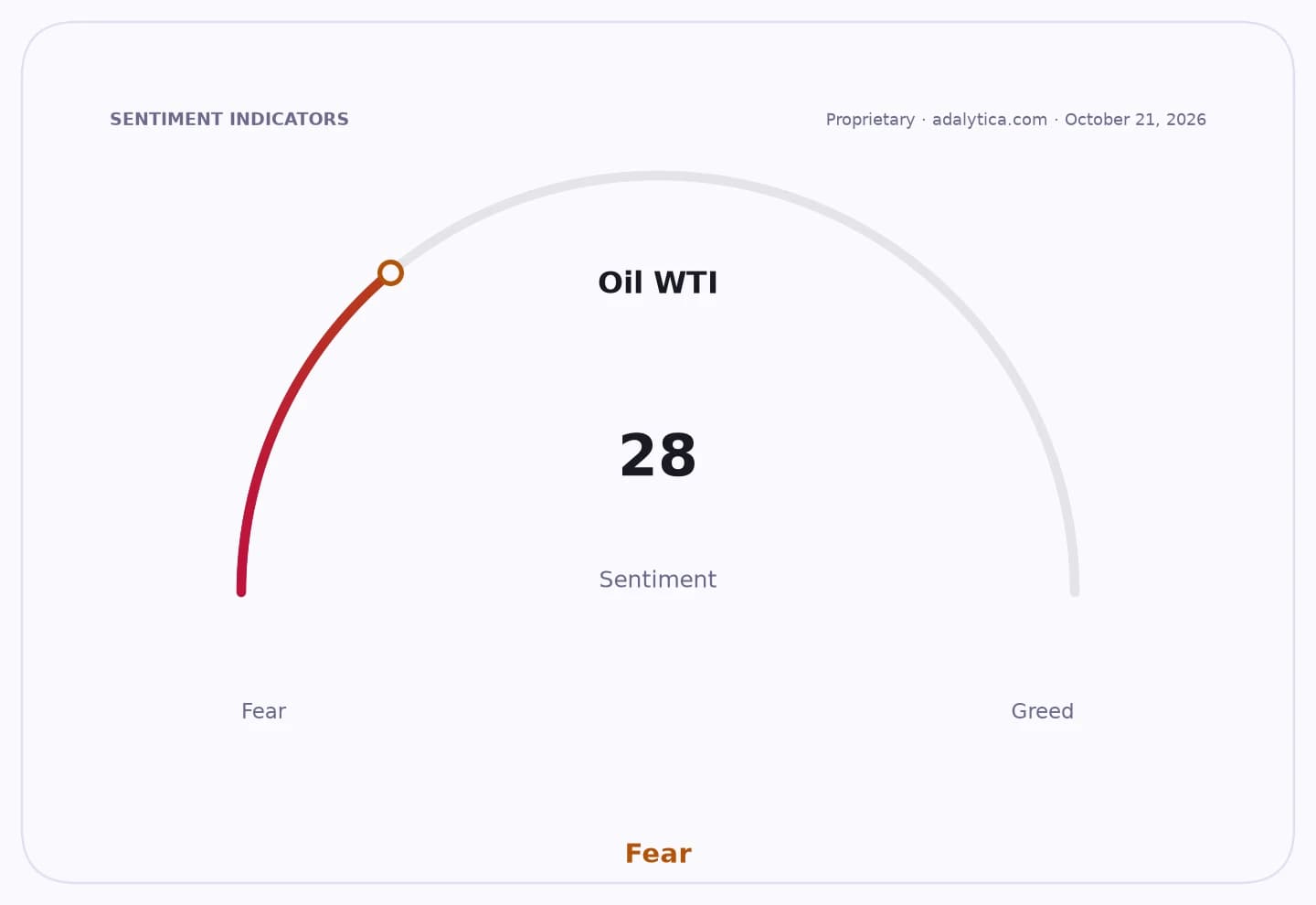
Sentiment IndicatorsⓘProprietary · adalytica.com · October 22, 2026
This is a snapshot — live sentiment, awareness and momentum for 130+ markets update continuously in the dashboard.Open AlphaPulse
The immediate economic issue is domestic Russian fuel inflation. Moscow has repeatedly had to balance export revenue against the political risk of higher pump prices, especially for a product as sensitive as diesel, which feeds freight, agriculture and industrial activity. Novak’s remarks are meant to reassure households and businesses that even if Russia resumes some product exports to the U.S., internal availability will not be squeezed enough to push prices higher.
The shipment also lands against a tight global diesel backdrop. Market participants have been dealing with a sharp reduction in export supply, forcing buyers to compete for barrels from a smaller pool of suppliers. That has supported refining economics for companies with access to flexible export channels, while import-dependent buyers have faced higher costs and more volatile pricing.
For refiners such as Exxon Mobil, Chevron and Marathon Petroleum, the bigger story is not Russia’s domestic pricing but the persistence of strong downstream economics. Shares of Exxon, Chevron and Marathon Petroleum have all advanced sharply over the past several months, reflecting a market that continues to reward integrated producers and refiners able to capture elevated product margins. Marathon Petroleum, in particular, has been one of the biggest beneficiaries of the refining upcycle, with its stock more than doubling from early-year levels.
Technical indicators in the sector also point to persistent strength. Exxon, Chevron and Marathon Petroleum are all trading above their 50-day and 200-day moving averages, with relative strength readings still elevated, suggesting investors are not yet pricing in a decisive easing in fuel market tightness. That leaves downstream earnings exposed to any surprise in diesel supply, but also preserves upside if shortages persist into the winter heating season.
The broader market signal is that Russian diesel exports to the U.S. may be symbolically important but economically modest in isolation. The larger price driver remains the global diesel balance, not a single cargo. If Russian flows expand further, the main effect may be on trade routes and arbitrage opportunities rather than on Russian pump prices.
For investors, the key watchpoint is whether the reopening of these flows marks the start of a more durable redistribution of refined products, or just a short-lived response to temporary shortages. If the former, refiners with export exposure could still benefit from resilient margins; if the latter, the impact on both Russian consumers and global fuel prices is likely to remain limited.
| Entity | Gains | Losses |
|---|---|---|
| Russian refiners | ▲export optionality | ▼domestic price pressure risk |
| U.S. buyers/importers | ▲extra diesel supply | ▼none if supply stays tight |
| Refining majors | ▲strong margins | ▼lower spreads if supply normalizes |
| Russian motorists | ▲stable pump prices | ▼higher fuel costs if exports grow |