Diesel markets are headed into a prolonged squeeze, and that matters because diesel is the lubricant of the global economy — the fuel that moves freight, powers heavy industry and sets the tone for inflation from shipping lanes to supermarket shelves.
Diesel markets face tight supply through 2027

In its October oil market report, the International Energy Agency said supply will remain tight well into 2027 after a sharp third-quarter drop in output and unusually large inventory draws left the world short on the stockpiles it needs for winter demand. The agency said global diesel exports fell by 700,000 barrels a day last month from a year earlier, with supply gains elsewhere only partly offsetting losses from Russia and the Middle East.
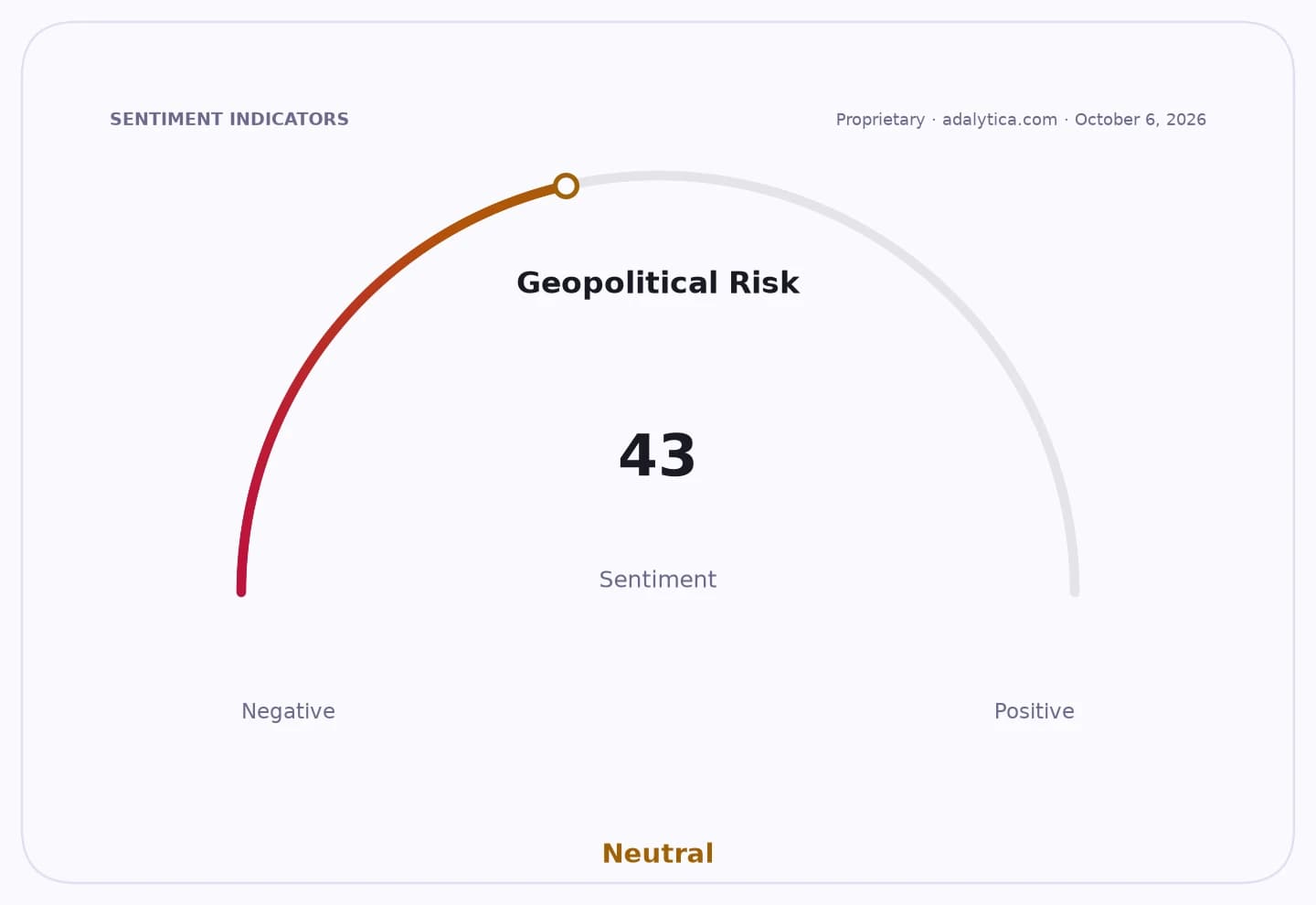
Sentiment IndicatorsⓘProprietary · adalytica.com · October 15, 2026
This is a snapshot — live sentiment, awareness and momentum for 130+ markets update continuously in the dashboard.Open AlphaPulse
Even if refinery runs recover quickly through year-end, the IEA said diesel still will not be sufficient to meet fourth-quarter demand and that rebuilding lost inventories may not be possible until the second half of 2027. That is a long horizon for a market that usually relies on prompt refinery restarts or trade rerouting to cool price spikes.
The price action already tells the story. Wholesale diesel in Singapore climbed above $200 a barrel in mid-September, while prices in Europe and the U.S. reached records near $220 a barrel, according to the IEA. Retail diesel prices have also jumped to all-time highs in most major economies, a painful development for trucking firms, manufacturers and consumers who eventually absorb higher transport and distribution costs.
For investors, the implications are immediate. Higher diesel prices tend to help refiners with strong middle-distillate exposure, but they squeeze transport operators, airlines, industrial users and import-dependent economies. The latest read-through is especially important for logistics groups and freight haulers, where diesel is a direct input cost and fuel surcharges only partly cushion the blow. It also reinforces the inflation risk around energy even if crude prices stabilize, because diesel tightness can keep upward pressure on goods pricing and central-bank policy expectations.
The geopolitics are not helping. The IEA said recurring attacks in the Gulf, including around Saudi Arabia, leave the recovery fragile, while tensions in Russia and the Middle East continue to distort trade flows. U.S. President Donald Trump said last week he had reached an agreement with Vladimir Putin to supply more than 4 million tons of diesel to the global market, but the arrangement faces political resistance in both the U.S. and Europe, and the U.S. Energy Information Administration said the amount would cover only about 10 days of U.S. demand and roughly one day of global consumption.
That is why this story matters beyond the energy patch. Diesel shortages do not just move refinery margins; they can ripple through inflation, trade balances and corporate earnings across the economy. For long-term investors, the best takeaway is to watch for winners in refining and integrated energy, and to stay cautious on businesses that cannot easily pass through fuel costs. This is a market worth watching closely, because diesel tightness can linger far longer than headlines suggest.
| Entity | Gains | Losses |
|---|---|---|
| Refiners | ▲Wider diesel margins | ▼Feedstock buyers |
| Transport firms | ▲Fuel surcharges | ▼Operating margins |
| Oil producers | ▲Stronger product prices | ▼N/A |
| Importing economies | ▲Limited relief from rerouting | ▼Higher inflation |