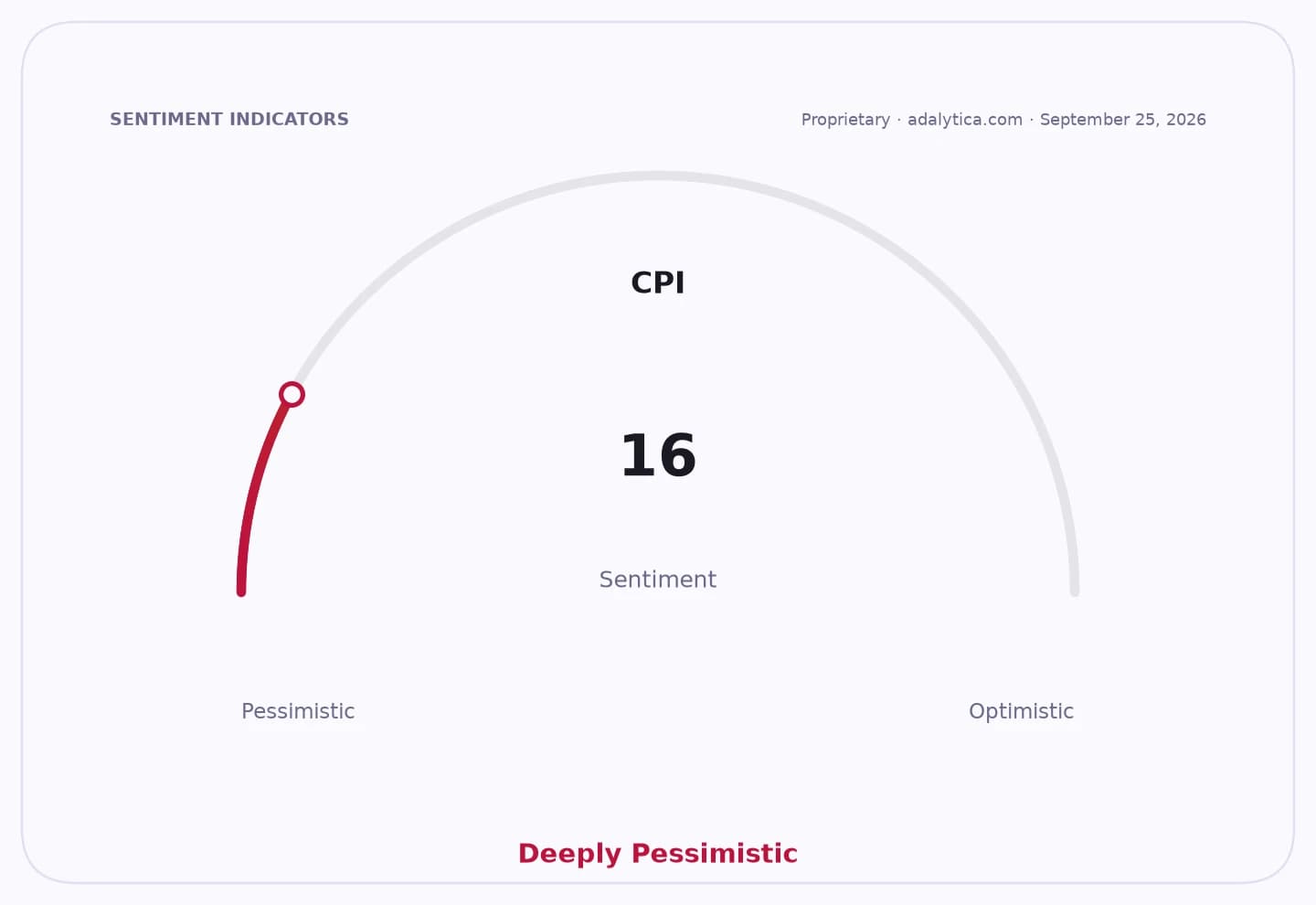
Ukraine’s inflation quickened to 8.1% in August, with fuel and utility tariffs doing the damage even as vegetables and fruit got markedly cheaper, underscoring how the war economy is still pushing up the costs that matter most for households and businesses.
Ukraine inflation rises to 8.1% in August

That matters because the latest print shows inflation is broadening again after easing earlier in the summer, with annual price growth rising for a second straight month from 7.2% in June and 7.7% in July. Monthly CPI still moved only 0.1% higher in August, but the underlying pressure is sticking: core inflation was 8.1% year on year, matching the headline rate.
Sentiment IndicatorsⓘProprietary · adalytica.com · September 11, 2026
This is a snapshot — live sentiment, awareness and momentum for 130+ markets update continuously in the dashboard.Open AlphaPulse

The biggest monthly price gains came from transportation and housing. Fuel and lubricants rose 8.1% in August, pushing transport costs up 4.4%, while water supply jumped 16.8% and sewerage 16.7% after tariff increases. Those are not isolated consumer items; they flow through freight, logistics, agriculture and industrial input costs, which means the inflation impulse can spread well beyond the checkout counter.
For investors, the key message is that Ukraine’s inflation is being driven less by volatile food prices and more by the kinds of costs that are harder to reverse quickly. Fresh produce helped soften the headline, with vegetables down 18.3% and fruit down 12%, but that relief is unlikely to offset persistent pressure from energy, utilities and transport if Russian attacks keep disrupting supply chains and fuel markets.

The central bank will have little room to relax if the trend persists. Higher inflation means tighter financial conditions for consumers already under stress, and it raises the hurdle for recovery in domestic demand. It also keeps pressure on the hryvnia and on any local assets sensitive to imported inflation, especially if the dollar remains firm globally and energy costs stay elevated.
The market underestimates how much of Ukraine’s inflation story is now a war-risk story. That makes the next few readings crucial: if fuel and utility costs keep climbing, inflation will stop looking like a temporary food-cycle issue and start looking like a durable macro headwind. For investors, the trade is clear — favor companies and sectors with pricing power, hard-currency revenue or exposure to rebuilding and energy infrastructure, while remaining cautious on Ukrainian consumers and rate-sensitive assets.
| Entity | Gains | Losses |
|---|---|---|
| Energy and fuel sellers | ▲Higher pricing power | ▼Demand-sensitive consumers |
| Utilities providers | ▲Tariff-driven revenue lift | ▼Households facing higher bills |
| Ukrainian consumers | ▲Cheaper vegetables and fruit | ▼Fuel, transport and utilities inflation |
| Rebuilding and infrastructure firms | ▲Longer-term demand tailwind | ▼Near-term household purchasing power |