Ukraine’s central bank expects inflation to accelerate to 12.5% in 2026 as war damage, higher fuel costs and rising business expenses keep price pressure elevated, before easing from 2027 as those shocks fade and monetary tightening takes hold.
Ukraine central bank forecasts 12.5% inflation in 2026

The National Bank of Ukraine’s October Inflation Report also forecasts a 0.4% contraction in real GDP next year, underscoring how Russian attacks on production, energy and logistics are still weighing on the economy. The bank said the inflation peak will likely come before prices begin to cool in 2027, with inflation returning to its 5% target only by the end of 2028.
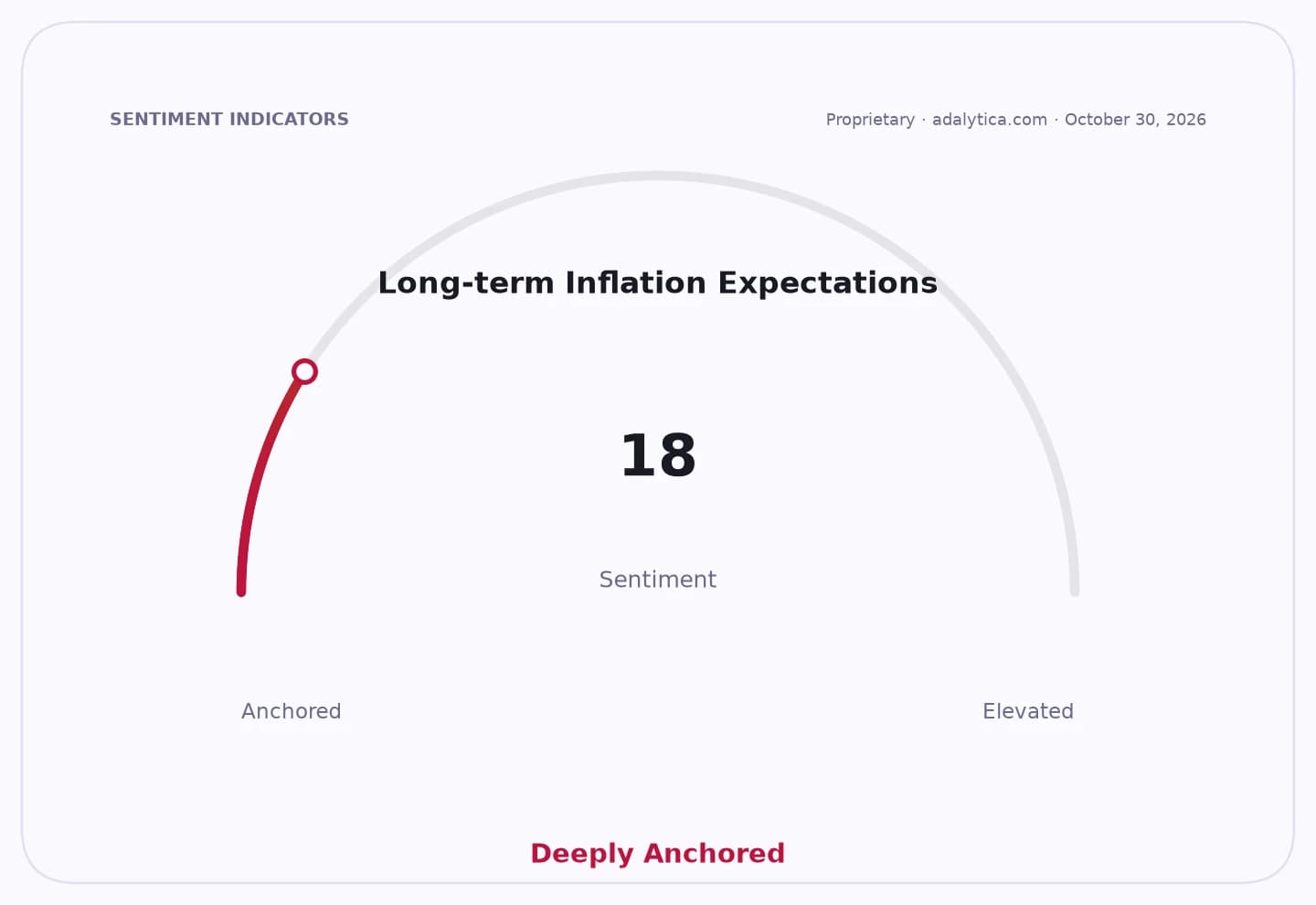
Sentiment Indicators
Long-term Inflation Expectations
For investors, the message is that Ukraine remains in a high-inflation, low-growth environment where policy will stay restrictive. The NBU has already raised its key rate from 15% to 16.5% between July and October to support the hryvnia and anchor inflation expectations, and said it will continue to react flexibly to risks.
The central bank said fuel prices and war-related disruption to infrastructure will remain the main drivers of price growth next year, while additional fiscal stimulus late in the year could add to inflationary pressure. It expects wage growth to stay strong because labor shortages persist, even as economic activity remains subdued.
2% Target Confidence
That labor squeeze matters because it keeps household income growing and adds another layer of cost pressure for businesses, even as demand weakens. The NBU sees real wages rising 11.4% in 2026, with growth slowing to 4%-5% in 2027 and 2028 as the economy gradually stabilizes.
The outlook for growth is only slightly better beyond next year. The bank expects GDP to rise 0.4% in 2027 and 2.2% in 2028, helped by defense spending, infrastructure rebuilding, firmer consumer demand and a potential return of migrants if security conditions improve.
External financing remains the main support for the budget and the currency. The NBU said international aid will cover most of the fiscal gap, with direct budget financing of about $50 billion in 2026, more than $52 billion in 2027 and $44 billion in 2028, while reserves should stay above $62 billion at the end of 2026 and 2027.
The forecast also quantifies the cost of Russia’s attacks: a 1.9 percentage-point hit to GDP in the second half of 2026, inflation 0.7 percentage points higher and a $6.6 billion blow to the external trade balance, largely from weaker agricultural exports. That leaves the near-term path for prices dependent on security conditions as much as on policy.
| Entity | Gains | Losses |
|---|---|---|
| NBU | ▲More room to keep rates tight | ▼Pressure to defend inflation target |
| Hryvnia savers | ▲Higher rate support | ▼Slower economic activity |
| Ukrainian businesses | ▲Later recovery in 2027-28 | ▼Higher fuel and wage costs |
| Consumers/importers | ▲Eventually lower inflation in 2027 | ▼Higher prices in 2026 |