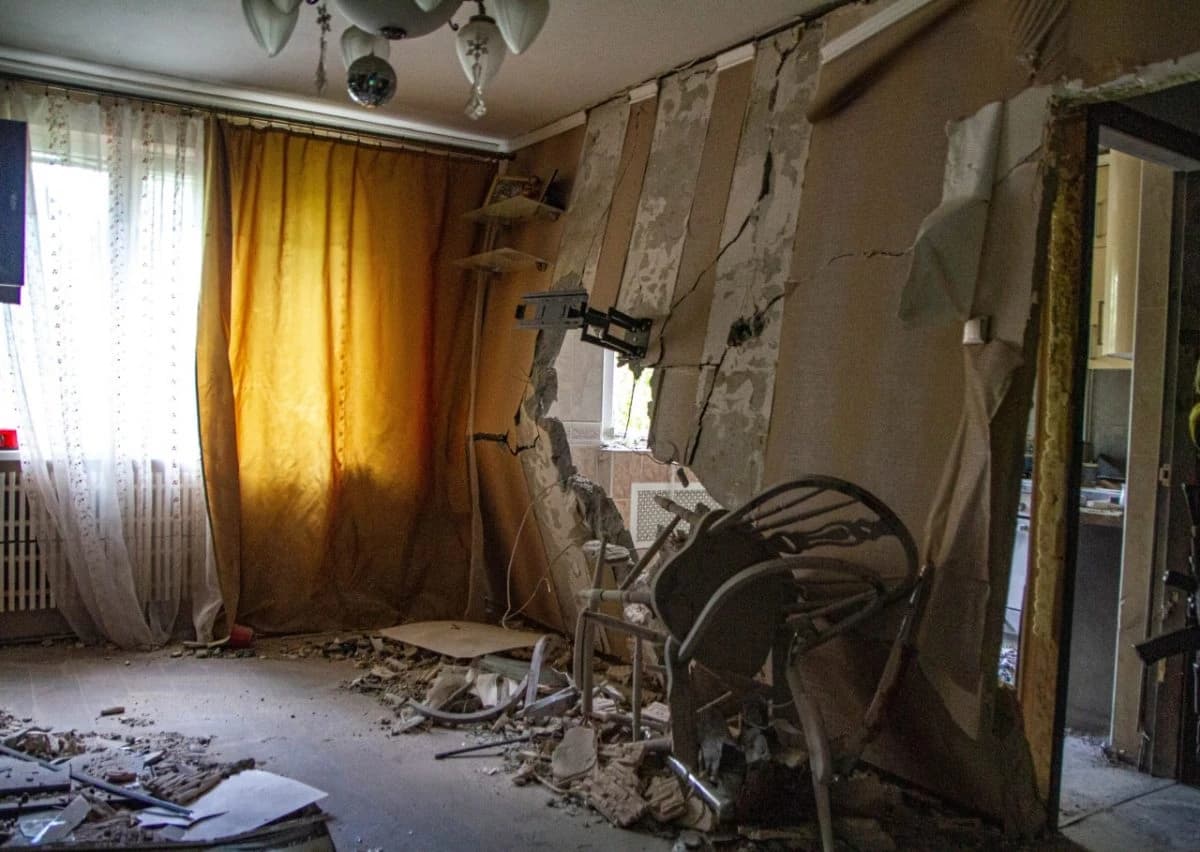
Russia’s capture of Novaya Kazachya on the Kharkiv front matters less as a village and more as a sign that Moscow is widening the war’s economic pressure campaign, moving beyond trenches and power grids to target the digital and logistics infrastructure that keeps Ukraine’s wartime economy running.
Ukraine infrastructure attacks widen war pressure
That shift is the most important development in the latest battlefield update. Ukraine is now being forced to defend not just cities and military positions, but the systems that move goods, carry traffic and keep businesses connected. The reported strikes on railway assets, metal production and data centers suggest a campaign aimed at raising the cost of doing business, degrading communications and tightening the squeeze on a government already wrestling with a large financing gap.
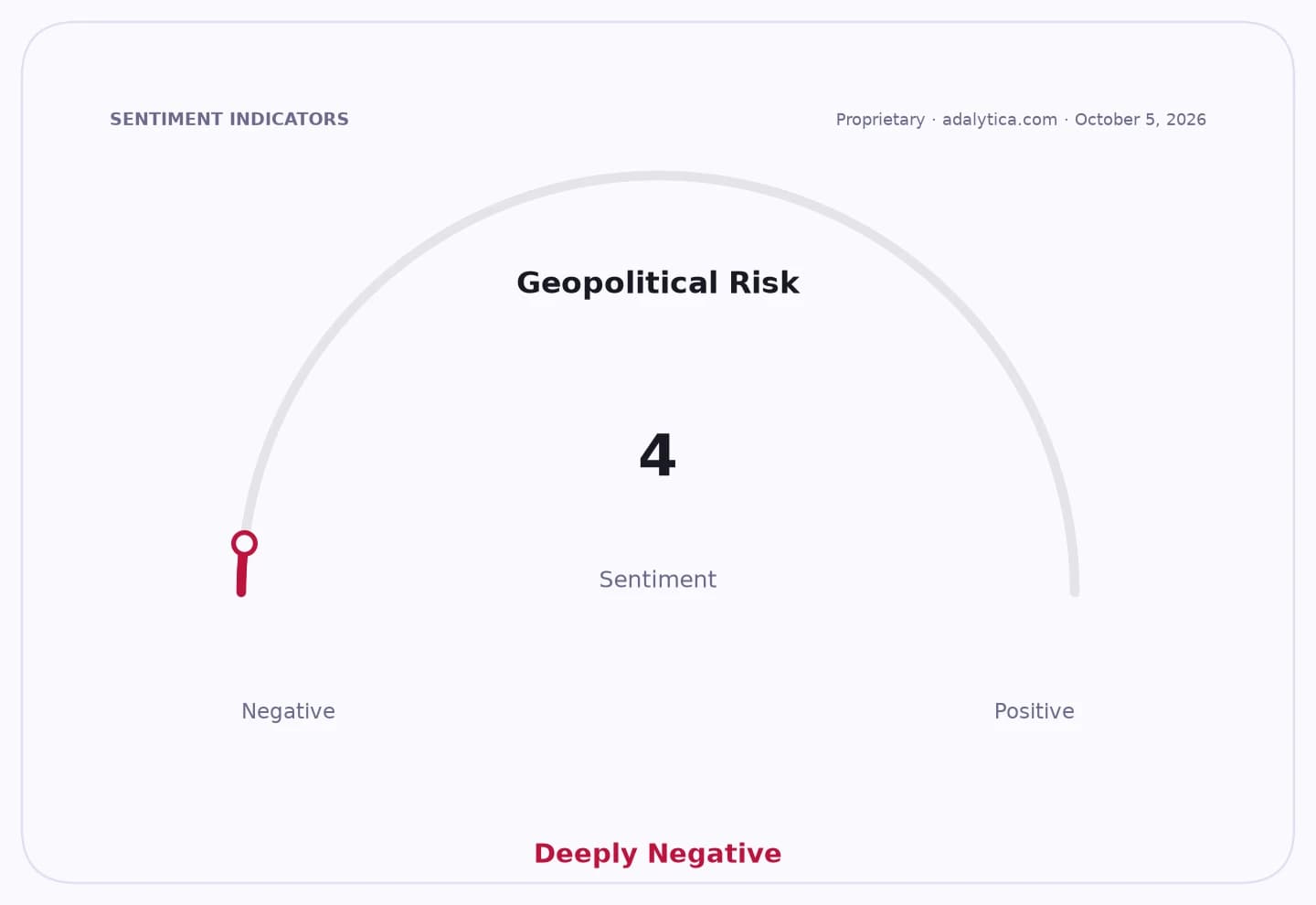
Sentiment IndicatorsⓘProprietary · adalytica.com · October 5, 2026
This is a snapshot — live sentiment, awareness and momentum for 130+ markets update continuously in the dashboard.Open AlphaPulse
The military value of Novaya Kazachya itself is straightforward: it sits on the right bank of the Lopan River near a rail line linking the border area with Kharkiv, giving Russian forces a stronger foothold to build a buffer zone and pressure Ukrainian supply routes. But the bigger story is the combination of that local advance with a more ambitious air campaign. Russian forces are now deploying jet-powered Geran drones that Ukraine’s own officials say its current interceptors struggle to stop.
That matters economically because infrastructure damage translates quickly into lower output, higher logistics costs and weaker tax receipts. The reported suspension of ArcelorMittal’s operations in Kryvyi Rih, disruptions to rail transport and attacks on at least seven internet and hosting providers point to a widening drag on industrial production and corporate continuity. If data centers and connectivity nodes remain under sustained fire, the damage is not just temporary outages; it becomes a capital expenditure shock for firms forced to rebuild and harden operations while the war is still active.
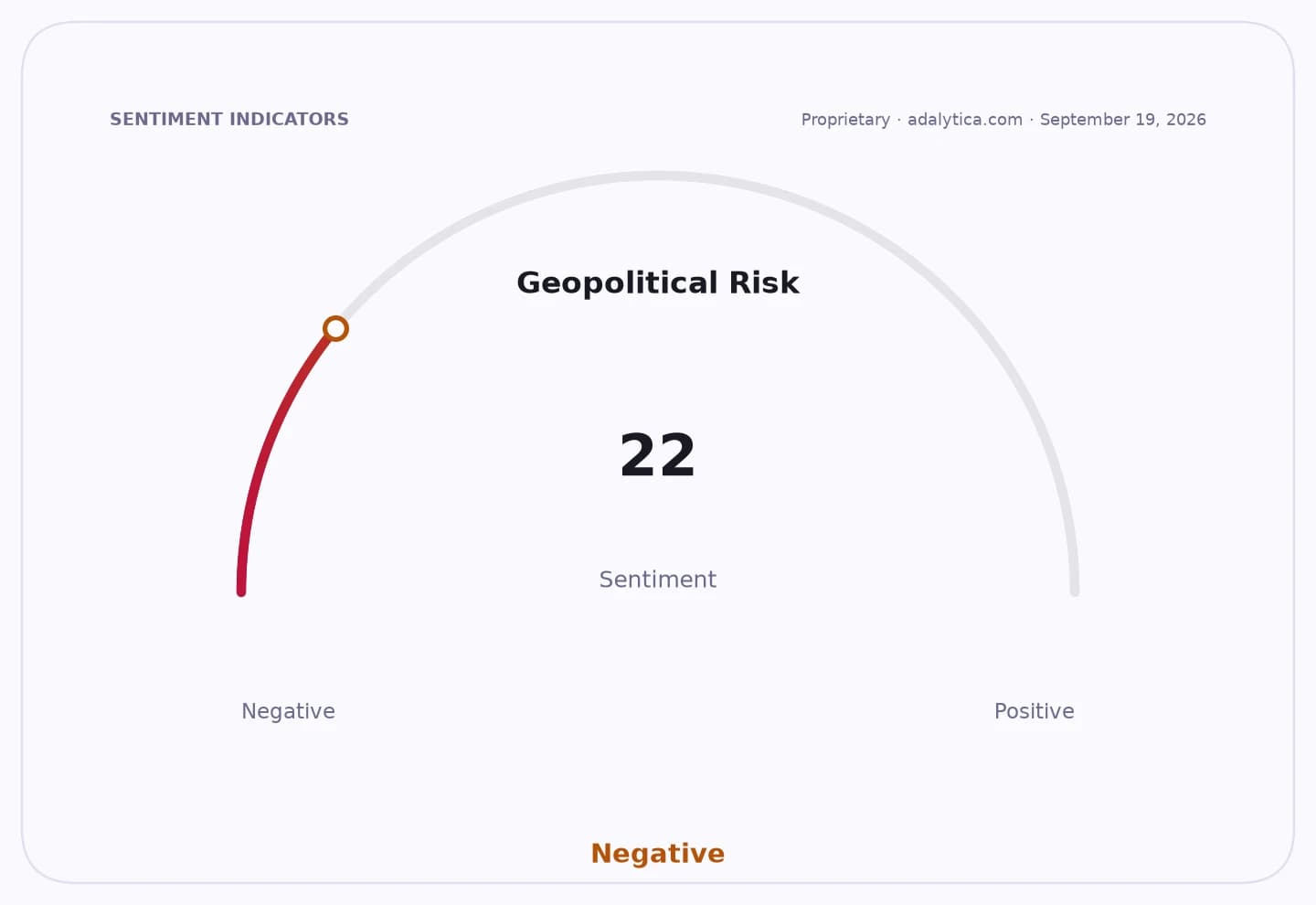
Geopolitical Risk — 30-day sentimentadalytica.com
Explore this data interactively — full history, time series and cross-market comparisons.Open AlphaPulse
For investors, the read-through is clear: Ukraine’s war premium is not fading, it is changing shape. The market often focuses on frontline movements and headline diplomacy, but the more investable implication is the growing importance of air defense, electronic warfare, distributed cloud infrastructure, secure networks and hardened logistics. The companies and countries best positioned are those selling the tools to absorb repeated strikes, not those assuming a quick return to prewar normality.
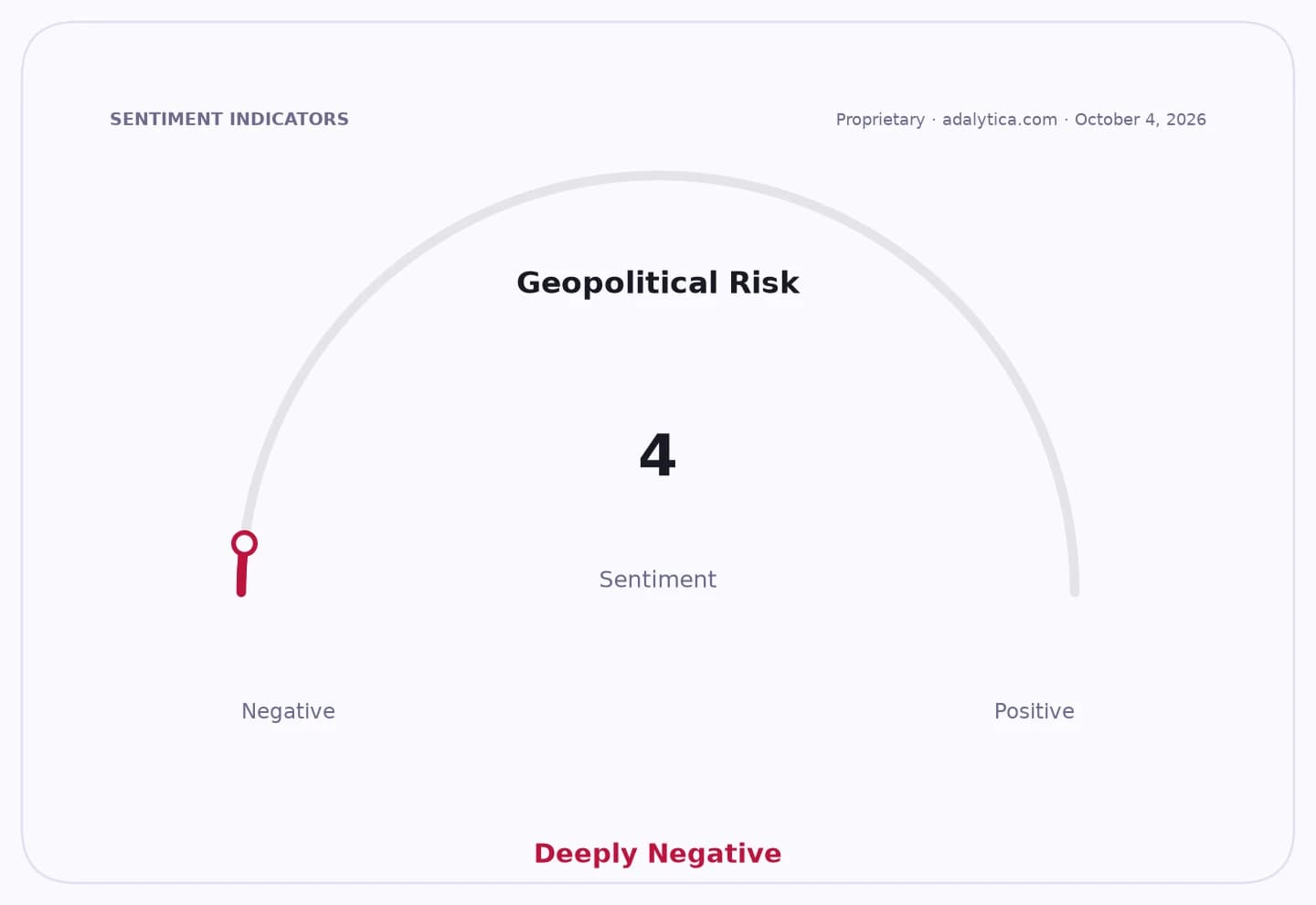
Adalytica’s Global Stability Sentiment has collapsed into “Extreme Fear,” a sign that geopolitical risk is no longer a background issue but a dominant market variable. That is consistent with the widening attack surface in Ukraine and with the strain on funding already visible in the reported suspension of VAT refunds to exporters. When a state is fighting to protect both its territory and its operating system, liquidity pressure and currency weakness become part of the same trade.
The key investment takeaway is that this is no longer just a battlefield story; it is a capital-allocation story. The winners are defense contractors, air-defense suppliers, cyber and network-security names, and logistics-resilience plays. The losers are any assets exposed to Eastern European reconstruction timelines that assume the war remains geographically contained. I believe the market underestimates how quickly infrastructure war becomes an earnings war.
| Entity | Gains | Losses |
|---|---|---|
| Defense contractors | ▲More demand for interceptors and air defense | ▼None |
| Cyber and data infrastructure providers | ▲Resilience spending and rebuild demand | ▼Ukrainian hosting firms under attack |
| Russian military | ▲Buffer-zone gains and strike leverage | ▼Higher escalation risk |
| Ukrainian industry and exporters | ▲None | ▼Output losses, logistics disruption, tighter cash flow |