Farmers in the region are warning that transit of Ukrainian wheat could become blocked, turning a logistics dispute into a fresh test of already fragile grain flows just as global food markets remain elevated and highly sensitive to any disruption.
Ukraine Wheat Transit Worries Lift Grain Prices

The concern matters because wheat has become a strategic commodity in the wake of the war in Ukraine, and even a temporary bottleneck can ripple through importers, millers, food retailers and livestock producers. With government approval already in place for 1 million tonnes of wheat imports, the issue is less about supply on paper than whether grain can actually move through ports, rail links and border corridors without delay.
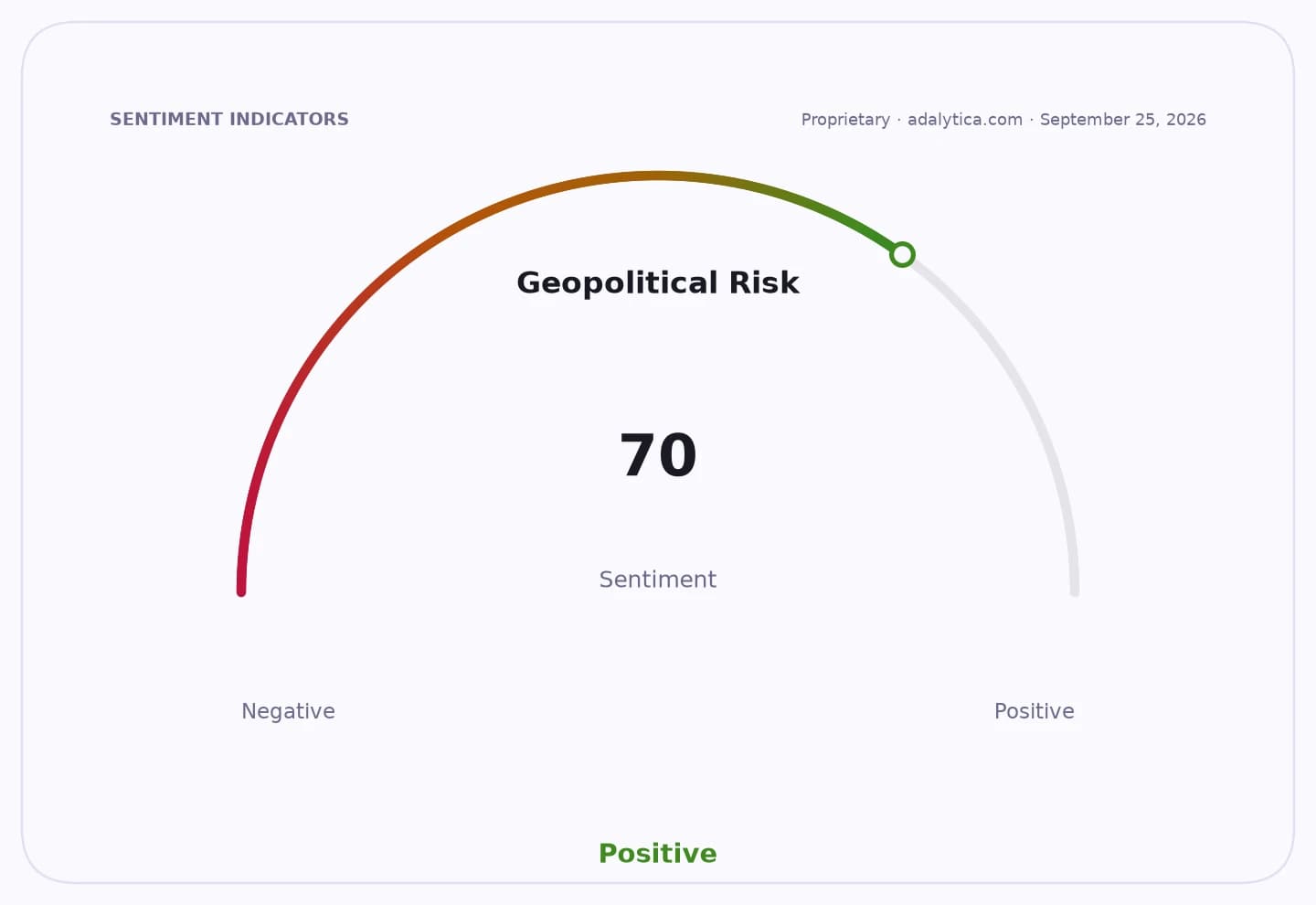
Sentiment IndicatorsⓘProprietary · adalytica.com · August 13, 2026
This is a snapshot — live sentiment, awareness and momentum for 130+ markets update continuously in the dashboard.Open AlphaPulse
That distinction is important for investors because food inflation, freight costs and commodity volatility remain live risks. U.S. consumer prices are still far above pre-pandemic levels, with the CPI index at 332.813 in July after 333.979 in May, while Brent and U.S. crude benchmarks have also been volatile, underscoring how quickly transport and energy shocks can filter into broader inflation expectations. In grain markets, the prospect of blocked wagons tends to support nearby prices and lift trading in agricultural exposures even when harvests are otherwise adequate.
The market response has been mixed but constructive for grain bulls. The Teucrium Wheat ETF, WEAT, closed at 24.32 on Thursday after briefly trading as high as 24.72, well above its 200-day moving average of 22.31. Its relative strength index at 40 suggests the recent pullback has cooled an earlier overbought stretch, while the price remains above the long-term trend line. The broad-based DBA agriculture fund finished at 27.62, also above its 200-day average of 26.56, showing that investors are still willing to pay for exposure to food commodities despite choppy trading.
Food & Groceries vs WEATadalytica.com
Explore this data interactively — full history, time series and cross-market comparisons.Open AlphaPulse
Corn prices have been steadier, with CORN at 17.91 and roughly in line with its 50-day moving average, a sign the market has not yet priced a wider feed-grain panic. That may reflect the fact that the immediate headline risk is wheat logistics rather than a blanket shortage across all grains. Still, farmers’ complaints about transit delays speak to a deeper structural issue: when supply chains are already tight, the physical route matters as much as the crop itself.
The stakes are broader than one shipment corridor. Countries such as Morocco and Jordan have already been adjusting import strategies in response to conflict-driven grain insecurity, and any further friction around Ukrainian wheat could intensify competition for alternative origins. That would favor exporters and traders able to reroute cargoes, while hurting buyers in import-dependent economies and milling companies exposed to higher replacement costs.
For investors, the next catalyst is whether officials can keep grain moving smoothly enough to prevent the issue from becoming a pricing event. If transit holds, wheat could stabilize and nearby rallies may fade. If wagons are blocked, the market is likely to reprice quickly, with the biggest gains flowing to grain holders, logistics providers and agriculture funds, and the biggest losses landing on food manufacturers, importers and consumers already facing stubborn grocery inflation.
| Entity | Gains | Losses |
|---|---|---|
| Wheat bulls / WEAT holders | ▲Higher nearby prices | ▼Near-term correction risk |
| Grain exporters / traders | ▲Rerouting upside | ▼Transit bottlenecks |
| Importers / millers | ▲Stable logistics | ▼Higher replacement costs |
| Consumers / food buyers | ▲None | ▼Higher food inflation |