Ukraine is preparing to roll out a European-style “Youth Guarantee” that could become one of the country’s most important labour-market reforms as war, migration and weak access to experience push young people and veterans toward the margins of the economy.
Ukraine Youth Guarantee rollout set for 2026 pilots

The policy, slated for pilots in 2026 in Lviv and Volyn and a wider launch in 2027, would require authorities to offer people under 30 who are not working or studying a job, apprenticeship, training or further education within four months of entering the system. For investors and employers, the significance is less about the slogan than the economics: Ukraine is trying to prevent a long-term scarring effect on its workforce at a moment when the country needs every available worker, every retrained veteran and every retained young graduate.
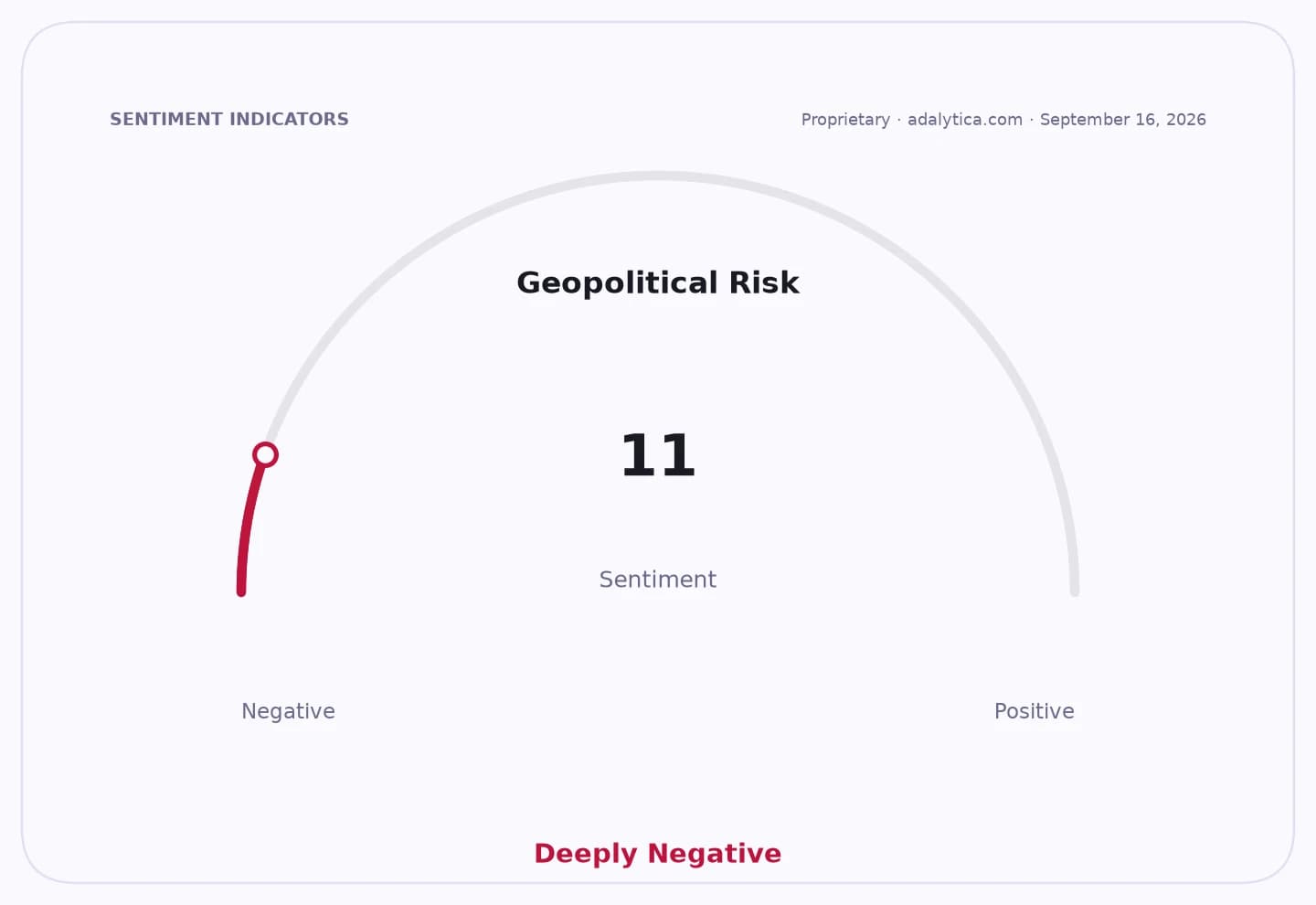
Sentiment IndicatorsⓘProprietary · adalytica.com · September 11, 2026
This is a snapshot — live sentiment, awareness and momentum for 130+ markets update continuously in the dashboard.Open AlphaPulse
That matters because the country’s labour market is under unusual strain. Officials say the scheme will focus on NEET youth — those not in education, employment or training — a group that is especially vulnerable in a war economy shaped by regional inequality, informal work and continued migration abroad. The initiative also gives young veterans extra attention, reflecting the reality that demobilisation and reintegration will be as important to postwar reconstruction as bricks-and-mortar rebuilding.
The model borrows from the European Union, where the Youth Guarantee has become a tool for lowering the risk that a short spell of inactivity turns into prolonged unemployment. The four-month window is designed to intervene before motivation and skills erode, while the Ukrainian version is expected to lean on “one-stop” access points, mobile teams, schools, social services, youth centres and digital profiling to identify young people who are outside the system. Support can include second-chance education, short vocational courses, internships, volunteer placements and help starting a business.
That entrepreneurial element is particularly relevant for Ukraine, where the government and EU-backed programmes are already building youth entrepreneurship centres in eight cities. If executed well, the scheme could channel a portion of young Ukrainians into self-employment and small business creation at a time when private-sector job creation remains uneven and the state wants to keep talent at home. For employers, the upside is a larger pipeline of trained workers; for the state, it is lower social costs and a better chance of limiting future emigration.
The timing is also notable. The broader labour market remains fragile, but the need for active measures is rising as reconstruction demand collides with labour shortages in some sectors and underemployment in others. ManpowerGroup’s latest filing pointed to measured but improving demand for workforce solutions in parts of Europe, including Poland, a reminder that regional labour-market policy is increasingly tied to cross-border competition for talent. Ukraine’s challenge is more acute: it must not only create jobs, but make young people employable enough to fill them.
For investors, the reform is not an immediate market mover, but it is relevant to the medium-term investment case for Ukraine. A more structured transition from school or military service into work would support domestic consumption, improve productivity and reduce the risk that rebuilding is held back by a thin labour supply. The main bear case is execution: if the programme remains a pilot, lacks funding or fails to reach informal and displaced young people, it could become another policy promise that misses the hardest-to-serve cohort.
What happens next will depend on whether the state can coordinate ministries, local governments, employers and civil society quickly enough to make the four-month promise credible. If it can, the Youth Guarantee would do more than help young Ukrainians and veterans find work — it would become part of the infrastructure for keeping the country’s human capital in place during and after the war.
| Entity | Gains | Losses |
|---|---|---|
| Young Ukrainians | ▲Faster job or training access | ▼Prolonged inactivity |
| Young veterans | ▲Reintegration and retraining | ▼Labour-market exclusion |
| Employers | ▲Broader talent pool | ▼Skills shortages |
| State budget | ▲Lower long-term support costs | ▼Higher near-term rollout costs |