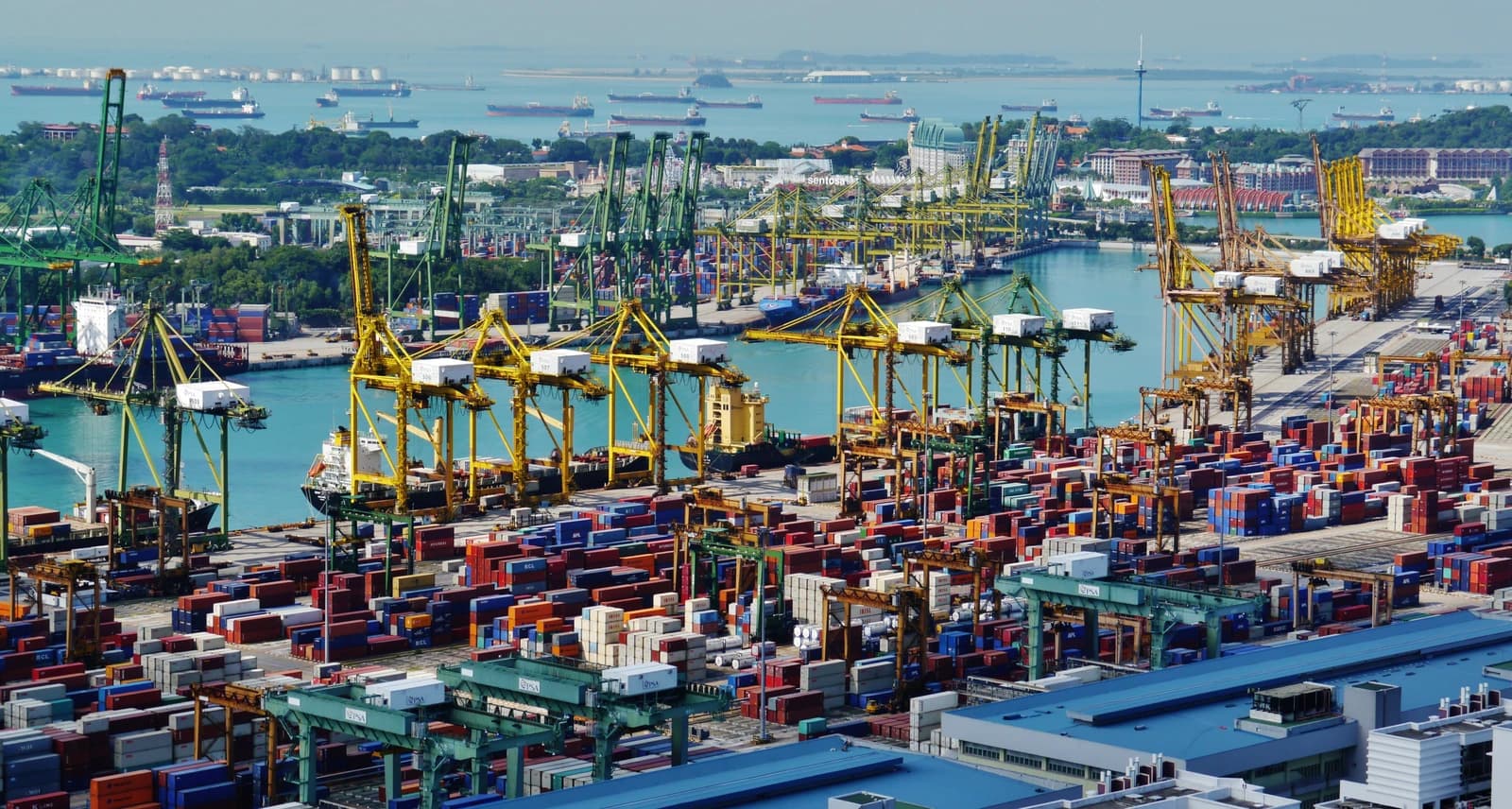
Global trade is still set to expand in 2026, but the bigger investment story is that protectionism and geopolitics are forcing supply chains to become more expensive, less efficient and far more selective about where capital goes.
UNCTAD Trade Update Flags 2026 Supply Chain Shift

That is the message from UNCTAD’s first World Trade Update, which says trade followed a record 2025 rise of 7% to above $35 trillion, yet will slow next year as world growth cools to 2.6% and developing economies outside China lose momentum. The agency’s warning matters because the next phase of globalization is no longer about maximizing efficiency. It is about managing risk, and that shift changes the winners across shipping, logistics, industrials, ports, energy and defense.
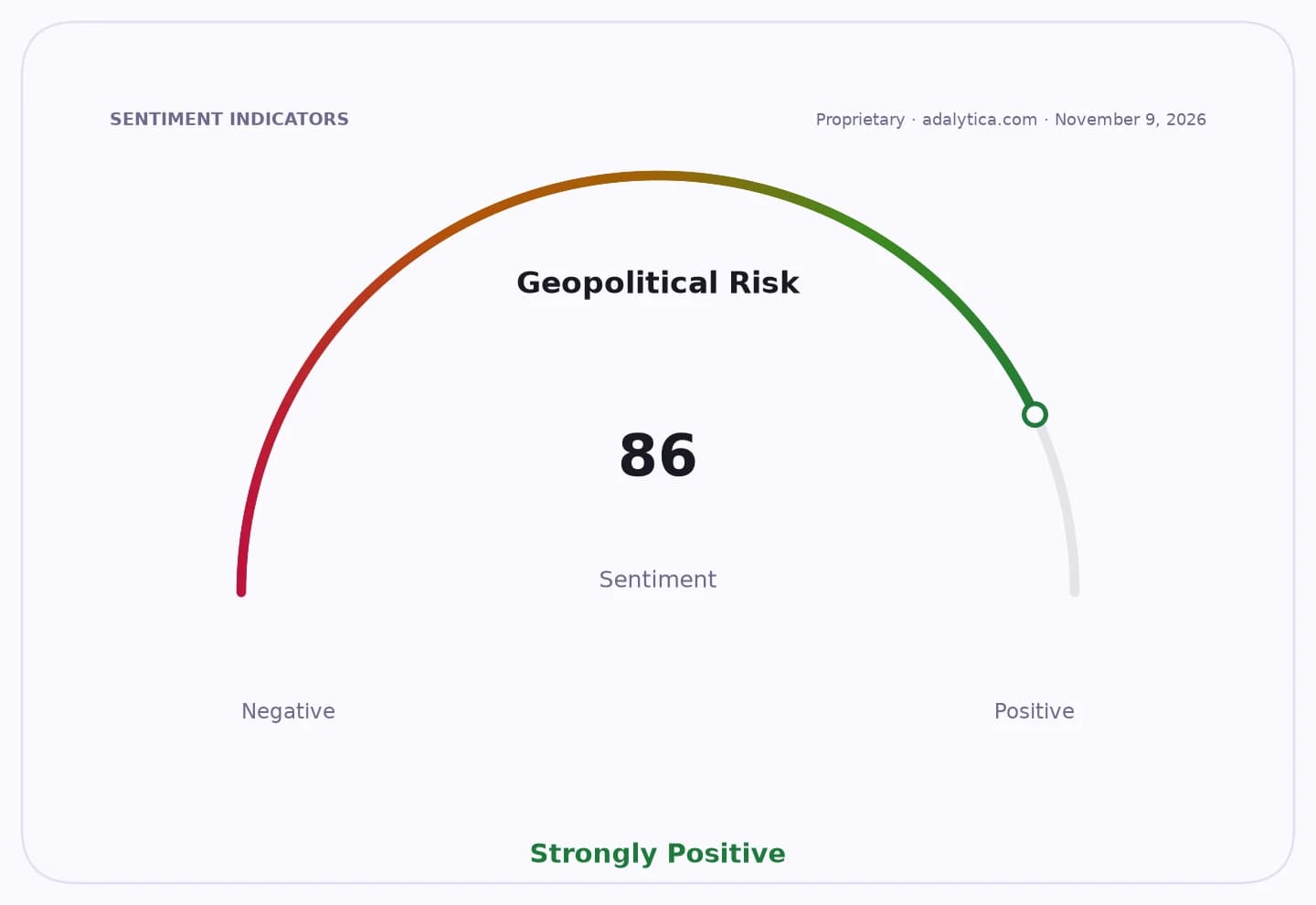
Sentiment Indicators
Geopolitical Risk
Tariffs are increasingly being used not just as trade tools but as industrial and geopolitical weapons, a development that raises costs, distorts demand and hits smaller economies hardest. For investors, that is the key shift: trade may keep growing, but the mix is changing in ways that reward scale, pricing power and domestic capacity while punishing the most exposed cross-border operators.
The data points in that direction. UNCTAD said South-South trade now makes up more than half of exports from developing countries, a sign that emerging markets are trading more with one another as traditional routes get more complicated. Services trade is also growing on digitalization, which benefits cloud infrastructure, payments and software platforms more than old-school goods shippers. At the same time, global value chains are being reworked to favor resilience over low-cost sourcing, creating opportunities for countries and companies that can offer redundancy, security and speed.
That is why the market should care about transport names such as FedEx, UPS and C.H. Robinson Worldwide. These are not just cyclical logistics stocks; they are leveraged to how trade patterns reprice when policy gets unstable. FedEx and UPS have both flagged the impact of changing trade rules, including tariffs and de minimis restrictions, in recent filings, while C.H. Robinson has pointed to tighter routing conditions and higher ocean freight rates. Their shares have held up better than the broader warning would suggest, but the underlying message is that trade friction can support pricing in the short run even as it weighs on volumes over time.
The broader macro backdrop reinforces the point. An Adalytica Global Stability sentiment gauge is flashing Extreme Fear, underscoring how sharply geopolitical stress can move positioning even when trade volumes remain resilient. Meanwhile, the U.S. dollar’s trade signal sits in neutral territory, suggesting markets are not yet pricing a full flight to safety. That leaves room for further volatility if tariff threats escalate or if the U.S., Europe and China move toward more restrictive trade policy.
For investors, the implication is straightforward: the best exposure is not blanket global trade, but the picks-and-shovels of a more fragmented world. That means logistics platforms with pricing power, infrastructure tied to rerouted commerce, automation and digitization plays that reduce supply-chain dependence, and companies serving defense, energy security and industrial reshoring. The market underestimates how durable this capex cycle can become if governments keep prioritizing strategic autonomy over free-flowing trade.
The next catalyst will be whether 2026 trade holds up only in aggregate, or whether the gains concentrate in a narrower set of corridors, sectors and countries. If that happens, capital will continue to rotate toward the companies that benefit from complexity, not simplicity. Investors should be positioning early for that regime, because the new trade order is not a temporary shock — it is the operating system.
| Entity | Gains | Losses |
|---|---|---|
| Logistics firms | ▲Higher pricing power | ▼Lower volume growth |
| Exporters with diversified supply chains | ▲More rerouted demand | ▼Margin pressure from tariffs |
| Small developing economies | ▲South-South trade access | ▼Exclusion from reshoring networks |
| Multinationals reliant on old trade lanes | ▲Resilience investments | ▼Higher costs and delays |