A long-abandoned landmark in central Bucharest may finally be getting a second life, and that matters because it would turn a derelict communist-era shell into income-producing real estate in one of Romania’s tightest urban markets.
Unirea Business Center redevelopment planned in Bucharest
Sibiu-based businessman Aurel Eugen Muntean, 71, who owns the Împăratul Romanilor hotel chain and Bucharest’s Victoria store, is preparing to redevelop the former “Circus of Hunger” site behind Unirea Shopping Center into Unirea Business Center, a mixed-use complex of offices and ground-floor retail.
Sentiment Indicators
For investors, the key question is not nostalgia but utilization. A 27,000-square-meter project in the heart of Bucharest can generate recurring lease income in a location that already has foot traffic, transport links and visible scarcity of modern space. In a market where central development is constrained by land availability and permitting, converting an abandoned structure into a functioning office-and-retail asset is exactly the kind of move that can preserve capital and create long-term cash flow.
The plan calls for four above-ground levels of roughly 6,500 square meters each, plus a basement garage with 307 spaces and another 45 outside. Construction is now slated to begin in the first quarter of 2027, with completion targeted for the second quarter of 2028. Project director Alecsandra Atanasiu said building systems design is nearing completion and that talks with prospective tenants are already underway for both office and commercial units.
That leasing strategy matters. The project is being positioned not as a traditional mall, but as a mixed-use center with a grocery operator large enough to act as an anchor tenant. That kind of tenant mix can stabilize cash flow, pull in daily traffic and support smaller occupiers above, which is often what makes an urban redevelopment financeable in the first place.
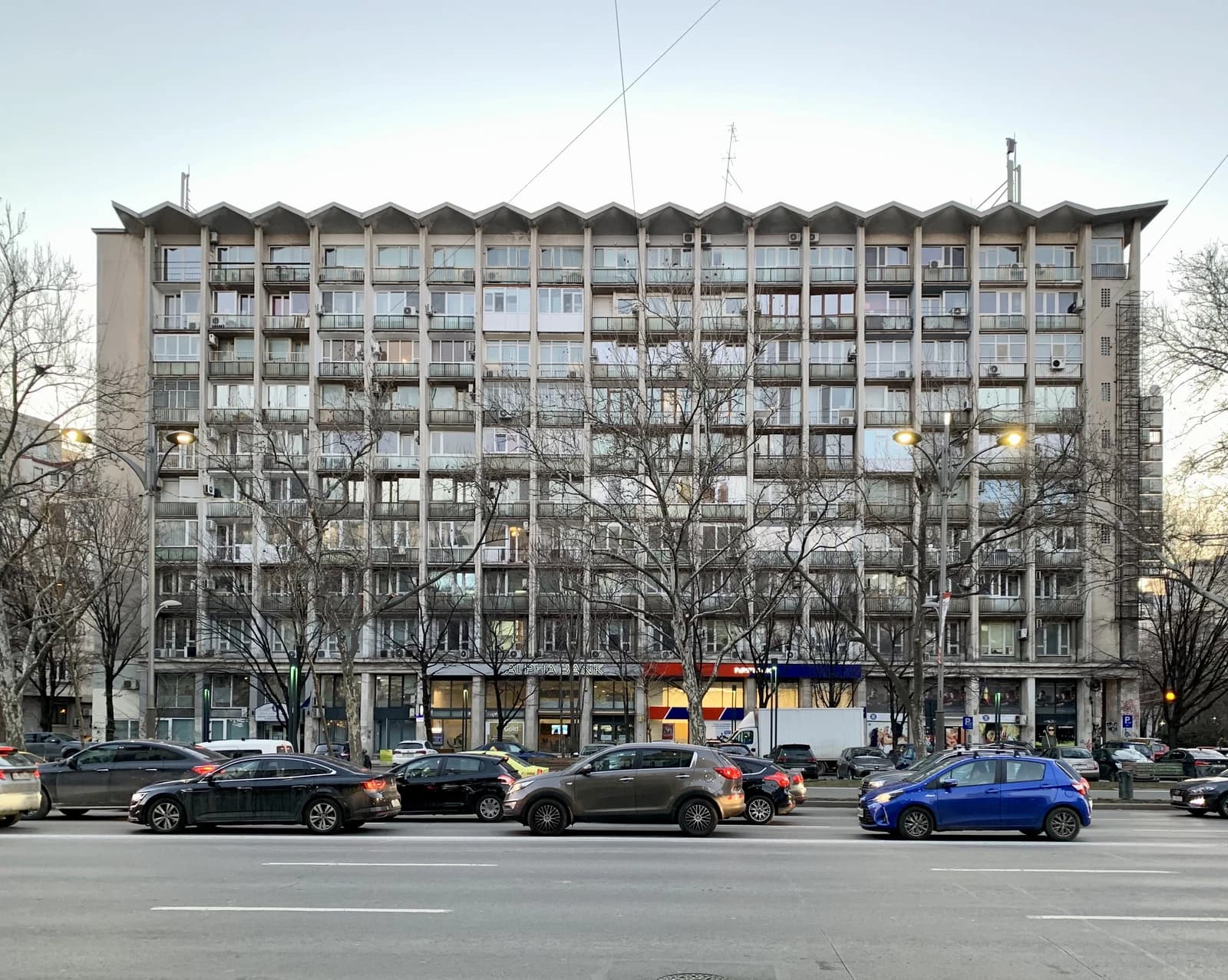
The site is part of the class of large agro-industrial commercial complexes designed under communism to combine food supply and public catering, buildings that became known in Bucharest as the “Circus of Hunger” because of the gulf between the regime’s ambitions and the reality of shortages. Several have already been successfully repurposed into modern property assets, including Plaza România, București Mall, City Offices, the former City Mall and Jumbo Center, formerly Liberty Center.
That track record is the bigger story here. Bucharest has shown that these oversized, centrally located relics can be turned into productive real estate rather than left to decay. For the city, that means renewed economic activity, jobs and tax revenue. For owners, it means unlocking value from stranded assets. For tenants, it means access to a central address in a market where quality space still carries pricing power.
The delay until 2027 also underlines the main risk: redevelopment of legacy sites is slow, capital-intensive and sensitive to leasing demand. But if the plan proceeds as described, Unirea Business Center could become another example of a patient, long-term property play paying off in the Romanian capital.
| Entity | Gains | Losses |
|---|---|---|
| Aurel Eugen Muntean / Unirea Business Center | ▲Future rental income | ▼Development risk |
| Bucharest city center | ▲Reused urban asset | ▼An empty landmark |
| Office and retail tenants | ▲Central new space | ▼Scarcity premium |
| Competing malls / older offices | ▲Less advantage from location | ▼Potential tenant competition |