UnitedHealth Group is consolidating just above its 20-day exponential moving average after a powerful recovery from its spring selloff, a technical pattern that suggests the market is deciding whether the stock’s reset in expectations has gone far enough.
UnitedHealth Bulls Defend Key Support
That matters because UnitedHealth is not just another Dow component: it is one of the largest weightings in managed care and a bellwether for how investors are pricing medical cost trends, reimbursement pressure and the durability of earnings power across the sector. After plunging to 278.93 in late January on heavy volume, the shares have rebuilt to 420.74, leaving the stock well above its 50-day and 200-day moving averages and indicating that the long-term trend remains intact despite the recent pause.
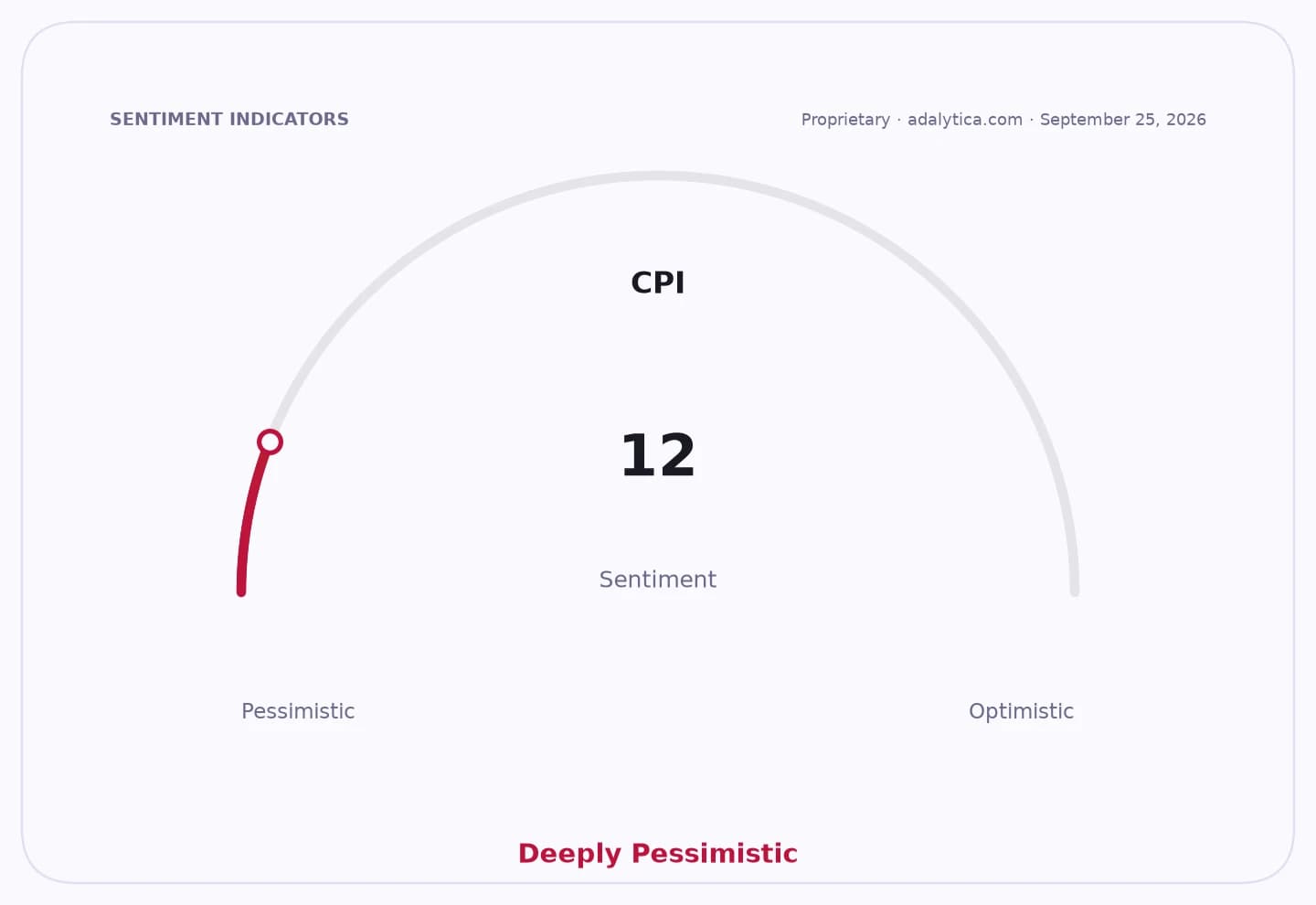
Sentiment IndicatorsⓘProprietary · adalytica.com · July 26, 2026
This is a snapshot — live sentiment, awareness and momentum for 130+ markets update continuously in the dashboard.Open AlphaPulse
The immediate question is whether this is a constructive pause or the start of a deeper retracement. The latest sessions show a tightening range near 420-431, with volume easing from the prior advance, while the 50-day average has climbed to 406.62 and the 200-day to 339.86. Momentum has cooled from overheated levels, with RSI at 51.6, but not enough to suggest a full trend break. For technicians, that combination fits a bull flag: a brief consolidation after a sharp run, often viewed as a continuation pattern if buyers defend support.
Fundamentally, the stock’s rally reflects renewed confidence that UnitedHealth can absorb higher medical costs and still deliver earnings resilience. That is especially important in managed care, where investors have been focused on medical-loss trends, Medicare Advantage margins and the broader sustainability of premium growth. A stock that can hold above both key moving averages while the sector faces a skeptical macro backdrop is telling investors that the market is still willing to pay for scale, diversification and pricing power.
The broader backdrop remains cautious. Adalytica’s healthcare spending sentiment gauge shows extreme fear at 4, while the S&P 500 trade-signal snapshot also sits in extreme fear territory. That combination suggests the market is not broadly rewarding defensives, which makes UnitedHealth’s relative strength more notable. In other words, if UNH continues to hold the 20-day area while sentiment across healthcare and the wider market remains fragile, it would strengthen the case that investors are rotating selectively into quality earnings rather than embracing the sector wholesale.
The bull case is straightforward: the stock has repaired its chart, reclaimed long-term trend support and is pausing rather than reversing after a steep advance. The bear case is that the move from the January lows may have run ahead of near-term fundamentals, and a failure to hold the 20-day EMA could invite profit-taking back toward the 50-day moving average. What happens next will likely depend on whether investors view the latest consolidation as confirmation that the rebound has staying power or as an opportunity to fade a crowded recovery.
| Entity | Gains | Losses |
|---|---|---|
| UnitedHealth longs | ▲Trend continuation | ▼Break below 20-day EMA |
| UnitedHealth shorts | ▲Pullback on failure | ▼Short squeeze risk |
| Managed-care peers | ▲Sector sympathy | ▼Relative underperformance |
| Defensive investors | ▲Quality rotation | ▼Missing upside if rally resumes |