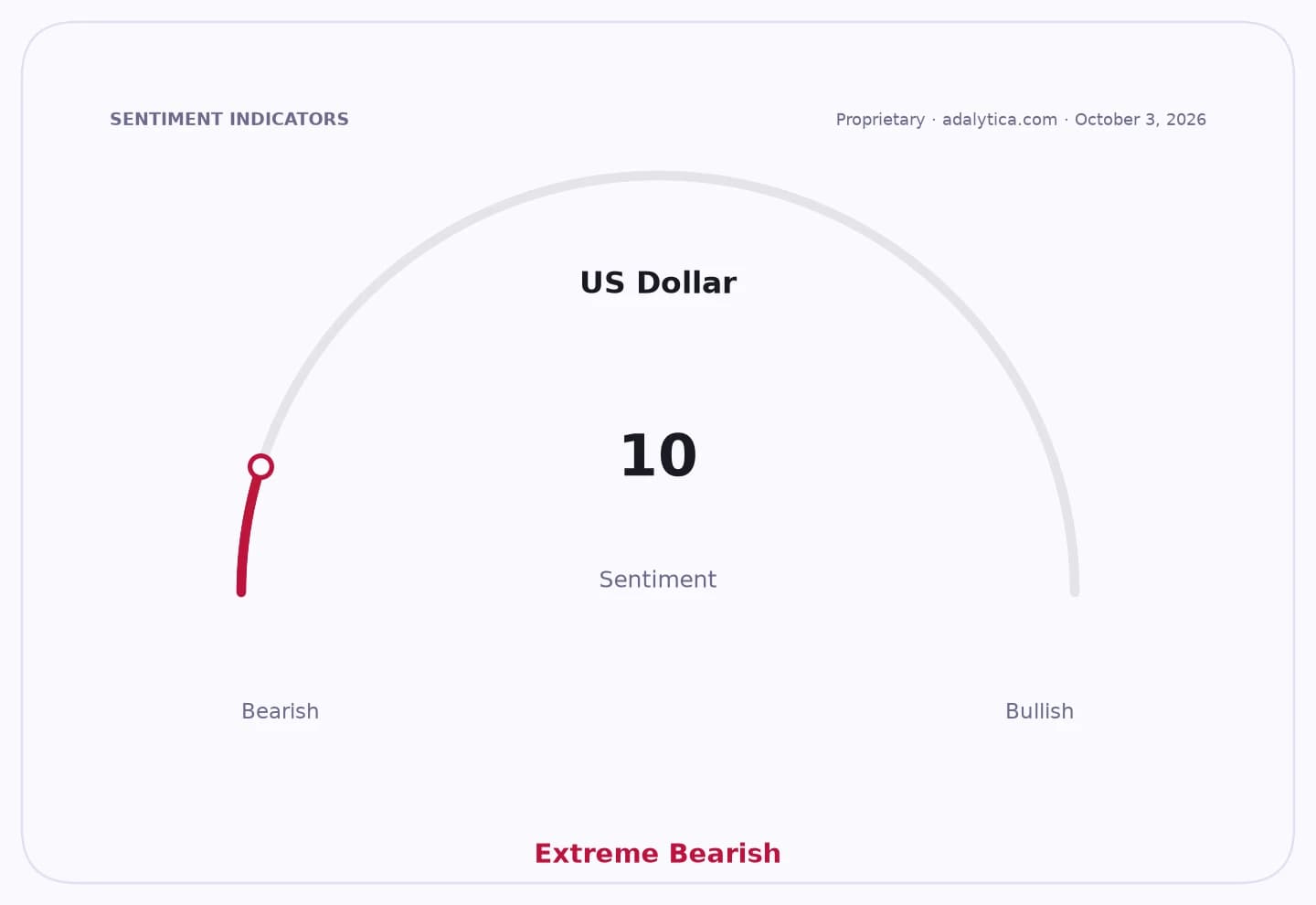
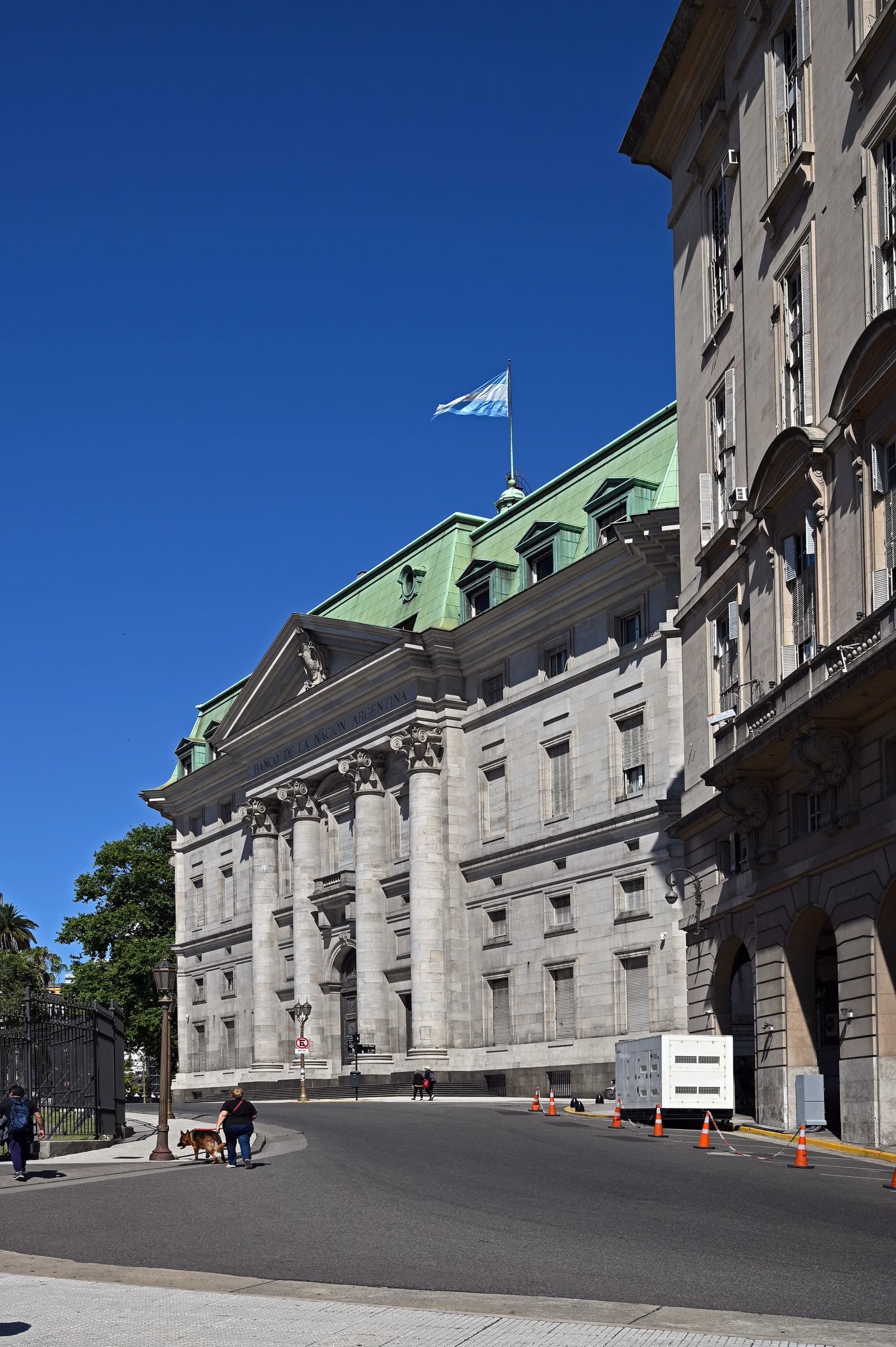
Uruguay’s central bank is moving to make it more expensive for banks to operate in dollars and more costly for savers to stay in foreign currency, in a regulatory shift that underscores a broader push to deepen the use of the peso and lift domestic credit.
Uruguay central bank raises costs of dollar banking
The Bank of Uruguay’s new roadmap matters because it targets one of the country’s most persistent financial distortions: a banking system that remains heavily dollarised even after two decades of gradual de-risking. Officials say the stability threat from dollarisation has been “substantially mitigated,” but the economic drag has not. The central bank now wants to reduce that drag through pricing, disclosure and product development rather than coercion.
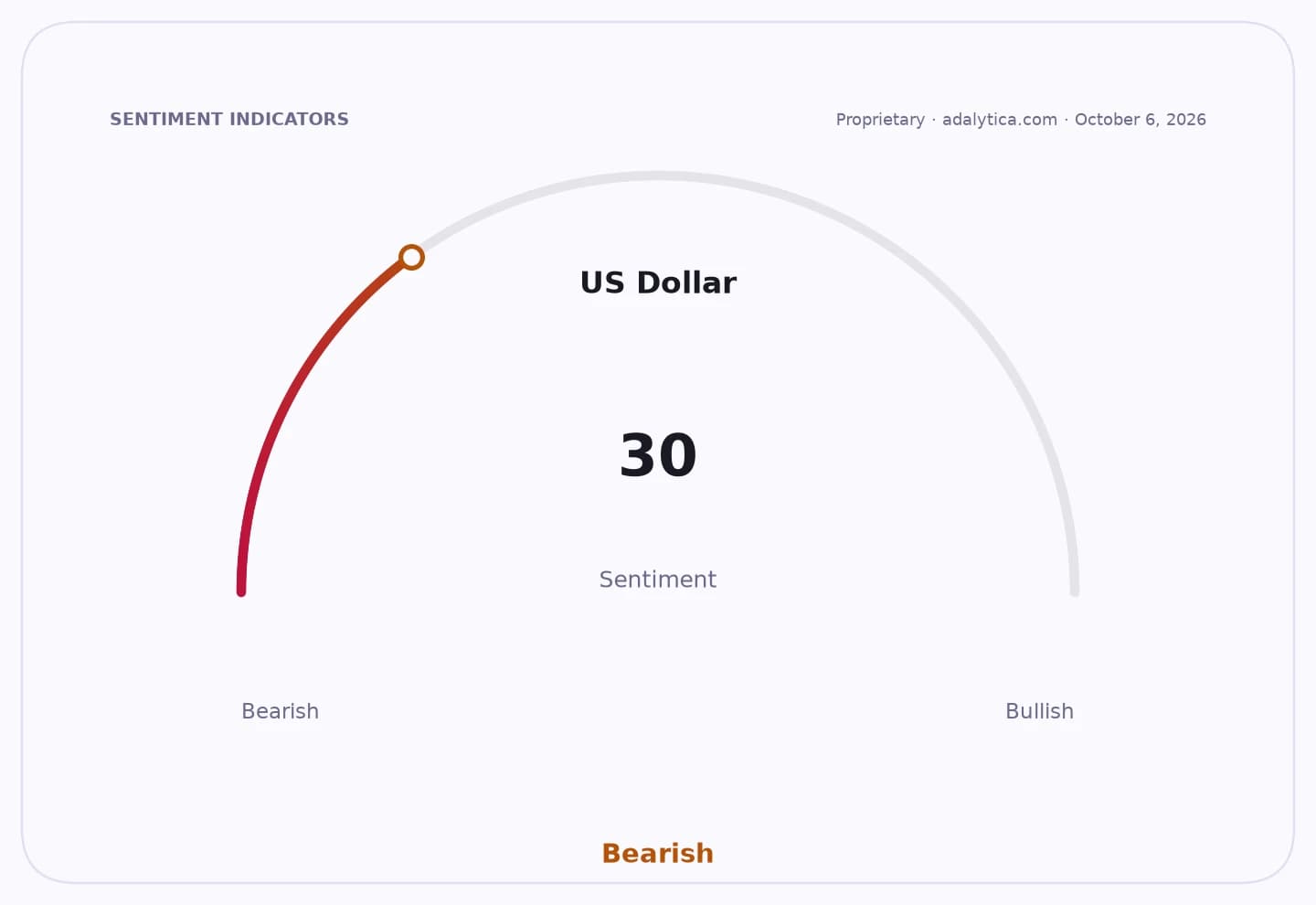
Sentiment IndicatorsⓘProprietary · adalytica.com · October 6, 2026
This is a snapshot — live sentiment, awareness and momentum for 130+ markets update continuously in the dashboard.Open AlphaPulse
The clearest signal is the new mandatory warning, in force since Oct. 1, requiring banks to spell out for depositors that the peso value of dollar savings can swing with the exchange rate even if the dollar balance does not change. The regulator has also launched a simulator showing historical purchasing-power outcomes across currencies, a direct attempt to confront a long-standing household preference for dollar deposits.
That preference has real costs. The central bank said savers who held demand dollar deposits between 1972 and 2026 lost about 6% a year of local purchasing power on average, with volatility of 9.8% versus 1.5% for peso deposits. The probability of losing purchasing power in dollars exceeded 60% across all investment horizons studied and reached 93% over 12 years. For a country where household savings behaviour still anchors bank balance sheets, the message is that dollars are not just a refuge — they are often an inferior store of value in local terms.
The policy shift also reflects a macroeconomic problem that goes beyond depositor behaviour. Uruguay’s private-sector credit amounts to only 31% of GDP, far below the global average of 53%, according to the central bank. Officials argue the constraint is not lack of deposits but the currency mix of those deposits: 94% of peso deposits are recycled into lending, but only 37% of dollar deposits are, because banks prefer to place much of the foreign-currency liquidity in low-yield external assets rather than create currency mismatches for borrowers.
That makes dollarisation an issue for growth, not just balance-sheet management. The central bank says it encourages companies to borrow less, keep excess cash and inventories, invoice in dollars even at home and generally operate defensively. In other words, the cost is not only financial intermediation inefficiency but lower investment and weaker productivity over time.
Uruguay’s authorities are trying to address the problem through a four-part plan. The first leg changes the economics for banks: from March through September, reserve requirements were recalibrated, peso reserves were paid more, and dollar reserves were paid less, cutting the implicit cost of intermediation in dollars to 0.42% from 0.14%, according to the central bank’s comparison. That still leaves Uruguay between Chile and Peru, but no longer at the very low end of the cost spectrum for dollar banking.
A second leg aims to build out peso-denominated markets, including foreign-exchange derivatives, corporate hedging tools and money-market funds in pesos that can be distributed through e-wallets and redeemed within 48 hours. That matters for investors because the success or failure of desdollarisation will depend not only on penalties for dollar use but on whether the peso ecosystem becomes liquid, investable and convenient enough to compete.
A third leg attacks retail behaviour directly through the disclosure rule. A fourth creates coordination channels between the central bank, finance ministry and industry to remove operational barriers. The central bank has been explicit that it is not pursuing forced conversion or coercive measures, framing the strategy as preserving freedom of choice while shifting incentives.
For investors, the policy is most relevant to the banking sector and to sovereign and corporate funding patterns. Over time, a lower-dollar economy should support deeper local debt markets, reduce balance-sheet currency risk and improve credit transmission. But the transition is likely to be slow. The central bank itself says comparable cases — including Peru, Bolivia, Paraguay, Lithuania and Armenia — took nine to 16 years, with annual reductions of only 1 to 4 percentage points.
| Entity | Gains | Losses |
|---|---|---|
| Peso savers | ▲Better local purchasing power protection | ▼Less dollar optionality |
| Banks | ▲Deeper peso lending franchise | ▼Higher compliance and funding costs |
| Businesses with peso revenues | ▲More local-currency financing | ▼Less cheap dollar liquidity |
| Dollar deposit holders | ▲Currency choice preserved | ▼FX-loss warnings and weaker returns |