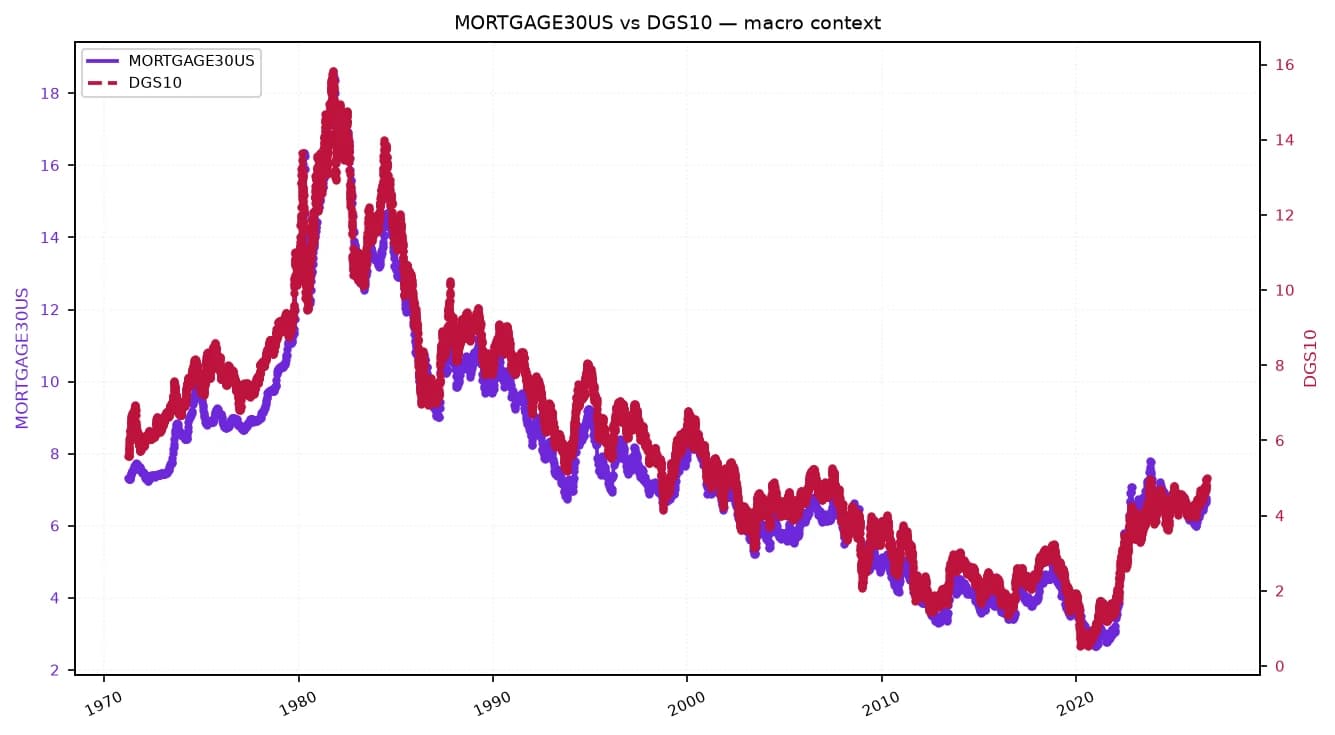
The average rate on a 30-year U.S. mortgage climbed to 6.71%, its highest level in more than a year, underscoring why the housing market is still stuck in a low-turnover rut and why affordability remains the biggest obstacle for buyers.
U.S. 30-Year Mortgage Rate Rises to 6.71%

That matters because mortgage rates are the price of entry for most homebuyers. When borrowing costs move higher, monthly payments rise quickly, shrinking purchasing power and forcing many would-be buyers to wait. Freddie Mac said Thursday the benchmark rate rose from 6.66% last week and stood above 6.50% a year ago, while the 15-year mortgage rate also edged up to 6.04% from 5.98%.
Sentiment IndicatorsⓘProprietary · adalytica.com · September 4, 2026
This is a snapshot — live sentiment, awareness and momentum for 130+ markets update continuously in the dashboard.Open AlphaPulse
For the economy, the message is straightforward: housing activity is still being restrained by financing costs, not by a lack of demand. The average rate is the highest since July 31, 2025, and that keeps pressure on sales, refinancing and the broader chain of industries tied to housing, from builders and lenders to furniture retailers and home-improvement stores. Higher rates can add hundreds of dollars a month to a borrower’s bill, which is often enough to push a family out of the market or into a cheaper home.
Investors should care because housing is one of the clearest transmission channels from the bond market to Main Street. Mortgage rates generally track the 10-year Treasury yield, and they move with expectations for inflation, Federal Reserve policy and growth. When Treasury yields stay elevated, mortgage demand usually weakens, and that can weigh on homebuilder traffic, loan origination volumes and refinancing activity. The recent weakness in housing-sensitive ETFs such as XHB and ITB reflects that reality, with both still under pressure as buyers balk at affordability and lenders face thinner deal flow.
The longer-term story is not just about one weekly rate print. It is about a housing market that still needs either lower rates or stronger income growth to regain momentum. Until that happens, price pressure may ease only gradually, and resale turnover is likely to remain subdued even as some regional markets hold up better than others. For long-term investors, the right response is not to chase headlines, but to watch for the durable beneficiaries of a persistent housing shortage and to stay diversified across companies that can keep compounding through a slower market.
| Entity | Gains | Losses |
|---|---|---|
| Homebuyers | ▲Lower prices if demand cools | ▼Higher monthly payments |
| Mortgage lenders | ▲Refi and purchase volume if rates fall | ▼Origination demand at current rates |
| Homebuilders | ▲Better affordability if yields ease | ▼Slower sales in a high-rate market |
| Treasury bond buyers | ▲Price support if growth weakens | ▼Losses if yields keep rising |