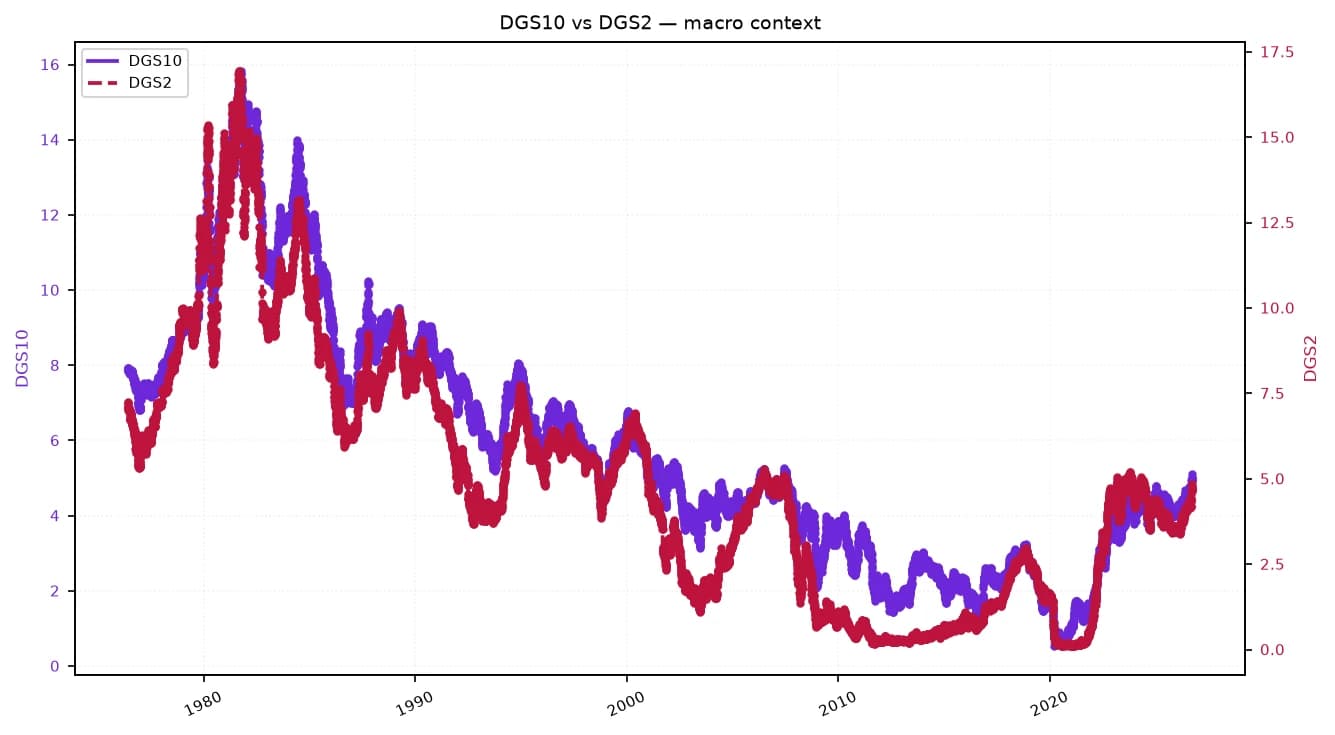
U.S. bond prices are falling as investors increasingly bet that the economy’s “neutral” interest rate has moved higher, a shift that could keep borrowing costs elevated and make the Federal Reserve’s path to rate cuts more difficult.
U.S. bond prices fall as R-star climbs

The move centers on the elusive R-star, a theoretical rate that neither stimulates nor restrains growth. Traders and analysts say the surge in artificial intelligence-related capital spending, along with heavy U.S. government borrowing, is pushing that rate higher and helping drive up Treasury yields across the curve.
Sentiment IndicatorsⓘProprietary · adalytica.com · September 3, 2026
This is a snapshot — live sentiment, awareness and momentum for 130+ markets update continuously in the dashboard.Open AlphaPulse
That matters because a higher neutral rate implies the Fed may eventually have to settle at a higher policy rate than markets previously assumed. It also feeds directly into mortgage costs, corporate financing, and the government’s own debt service burden at a time when the national debt has reached $40 trillion.
The New York Fed’s updated Laubach-Williams model put R-star at 1.65% in the second quarter of 2026, down from 1.73% in the first quarter but still above 1.36% in early 2025. Market participants say the current reading likely understates the true level because it does not fully capture the capital demand generated by hyperscaler AI buildouts from firms such as Amazon.com, Microsoft and Alphabet’s Google.

“Higher R-star is pushing rates across the curve higher,” said Zachary Griffiths, head of investment grade and macro strategy at CreditSights. Chip Hughey, managing director of fixed income at Truist Wealth, said the likely culprits include AI investment and higher government debt, both of which lift demand for capital and real yields.
The pressure is most visible in the front and long ends of the curve. Higher R-star tends to lift two- and five-year yields by implying a higher eventual policy rate, while the 10-year yield also faces a larger term premium as investors demand more compensation to own long-dated debt. Griffiths said the effect can be especially asymmetric on the 30-year sector because of large deficits and persistent Treasury supply.
Bond ETFs showed the strain. The iShares 20+ Year Treasury Bond ETF, TLT, fell to 82.29 on Sept. 3 from 85.08 in early October, while the iShares 7-10 Year Treasury Bond ETF, IEF, traded at 92.39, both still below their 50-day moving averages. Adalytica’s trade signal for TLT showed “Extreme Fear,” with sentiment at 7, while awareness remained elevated at 71.
The broader market backdrop suggests the selloff is not just about growth optimism or inflation fears, but about a structural fight for capital between the public and private sectors. If AI spending stays intense and Treasury issuance remains heavy, investors may have to adjust to a world of higher-for-longer yields, smaller bond rallies and less room for the Fed to ease.
For investors, the key risk is that what looks like a cyclical bond decline could turn into a more durable repricing of the entire rates complex. The next catalyst is the Fed’s response to incoming data and any fresh evidence that AI investment and fiscal borrowing are keeping neutral rates elevated.
| Entity | Gains | Losses |
|---|---|---|
| Lenders/holders of cash | ▲Higher yields | ▼Lower bond prices |
| Borrowers: households, companies, U.S. government | ▲Access to capital demand | ▼Higher financing costs |
| AI hyperscalers and bond buyers | ▲Funding for buildouts | ▼More competition for capital |
| Treasury bulls | ▲None in the near term | ▼Duration losses and weaker price momentum |