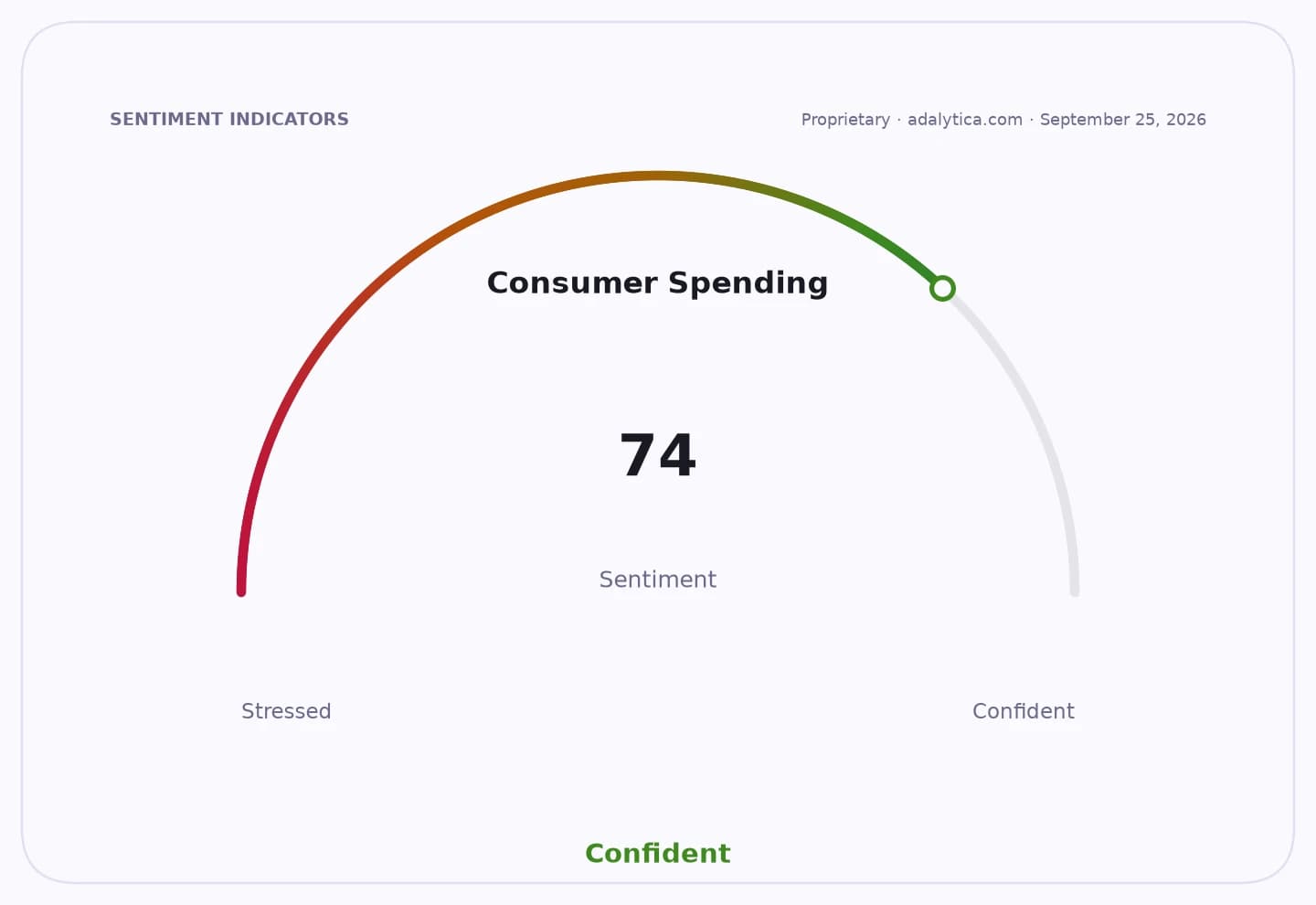
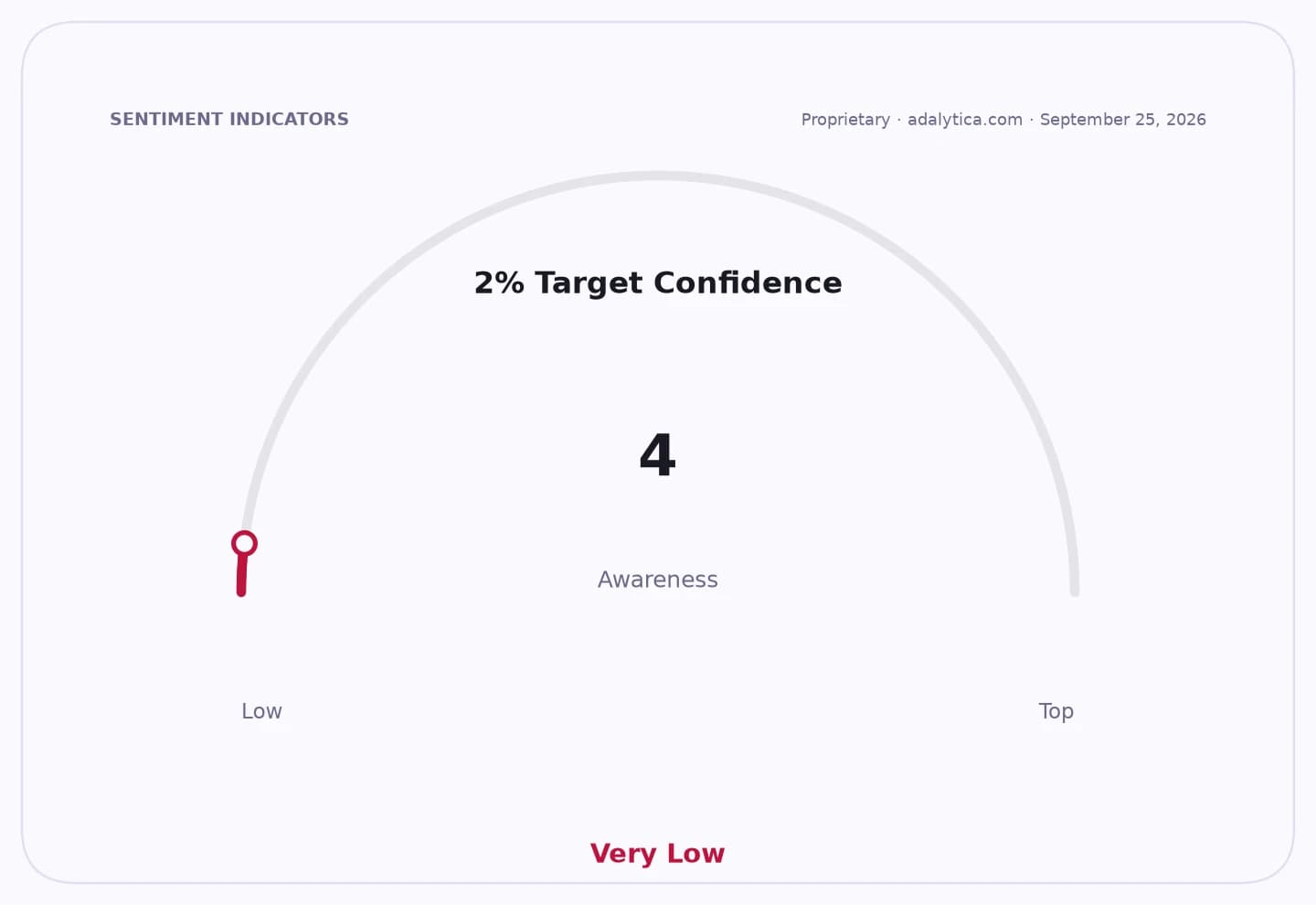
US consumer confidence has slipped for the first time in three months, and that matters because households are the backbone of the American economy. When sentiment weakens, people tend to delay big-ticket purchases, trade down to cheaper goods and get more cautious about discretionary spending — exactly the kind of shift that can slow growth and squeeze retailers.
US Consumer Confidence Falls in August

The University of Michigan’s consumer sentiment index dropped to 51.0 in August, down from 51.5 previously and below forecasts. More importantly for investors, the survey’s history shows how fragile confidence can be once inflation expectations reheat. The context supplied here points to a sharp deterioration in the broader outlook, with consumer confidence having already fallen to 49.8 in April and 44.8 in May before a brief June rebound. The latest dip suggests that rebound may have been short-lived.
Sentiment IndicatorsⓘProprietary · adalytica.com · August 15, 2026
This is a snapshot — live sentiment, awareness and momentum for 130+ markets update continuously in the dashboard.Open AlphaPulse
That is a warning sign for the consumer sector, especially discretionary names. The Consumer Discretionary Select Sector SPDR Fund, which tracks companies most exposed to household spending, has recovered to around 118.20 after a rough stretch earlier this year, but the technical picture is still mixed. The fund sits only slightly above its 50-day and 200-day moving averages, while the recent surge in its relative strength index shows the rebound may be stretched rather than sustainable. If consumer mood keeps eroding, companies tied to travel, apparel, home goods and other nonessential purchases could face slower revenue growth just as valuations need earnings support.
By contrast, defensive spending still looks better positioned. The Consumer Staples Select Sector SPDR Fund has climbed to about 86.09 and remains above both its 50-day and 200-day moving averages, reflecting the market’s preference for groceries, household necessities and other everyday purchases when confidence weakens. That makes sense: in uncertain times, investors usually rotate toward businesses with steadier cash flow and less dependence on consumer optimism.
There is also a broader macro angle here. The unemployment rate remains relatively low at 4.1%, so this is not a classic recession signal on its own. But confidence often turns before the labor market does, and that is why investors watch it closely. If households become more worried about jobs, inflation or future income, spending can cool quickly even before layoffs rise.
For long-term investors, the takeaway is not to panic on one reading. But it is a reminder that consumer stocks live and die by confidence, and confidence is never static. If this deterioration persists into the next few months, expect retailers, travel companies and other discretionary names to face a tougher setup, while staples and diversified index funds may offer a calmer path. Worth watching closely — especially if you own consumer-facing stocks and think in years, not weeks.
| Entity | Gains | Losses |
|---|---|---|
| Consumer staples | ▲Defensive demand | ▼Less upside in bull markets |
| Consumer discretionary | ▲Short-term rebound traders | ▼Slower spending growth |
| Retailers | ▲Bargain hunters | ▼Big-ticket purchases |
| Broad index investors | ▲Diversification cushion | ▼Consumer-led earnings pressure |