U.S. consumer confidence improved modestly in November, with the University of Michigan’s final sentiment index revised higher from the preliminary reading and above October’s 48.0, a small but important sign that households were less gloomy about the economy heading into the holiday shopping season.
U.S. Consumer Confidence Revises Higher in November
The revision matters because consumer sentiment helps shape spending decisions for an economy still relying on households to keep growth afloat. Even after the upgrade, the reading remains historically weak by non-recession standards, underscoring that Americans remain uneasy about prices, wages and the broader outlook. But the fact that the final figure moved up from the initial print suggests the sharp deterioration seen in recent months may be stabilizing, at least at the margin.
Sentiment Indicators
That nuance is important for markets because softer confidence usually feeds through to slower discretionary spending, weaker earnings expectations and a more cautious tone around inflation-sensitive consumer names. For retailers, travel companies and consumer discretionary stocks, the question is less whether shoppers are still spending and more whether they will keep doing so once holiday promotions and post-Thanksgiving purchases fade.
The macro backdrop remains mixed. Unemployment is still low at 4.1%, which should support income and spending, but inflation is not gone: the consumer price index is still advancing, with the latest reading at 337.476 and another monthly increase expected. That combination of steady jobs and stubborn prices can keep sentiment suppressed even if households continue to spend selectively.
UMCSENT vs UNRATE — macro contextadalytica.com
Explore this data interactively — full history, time series and cross-market comparisons.
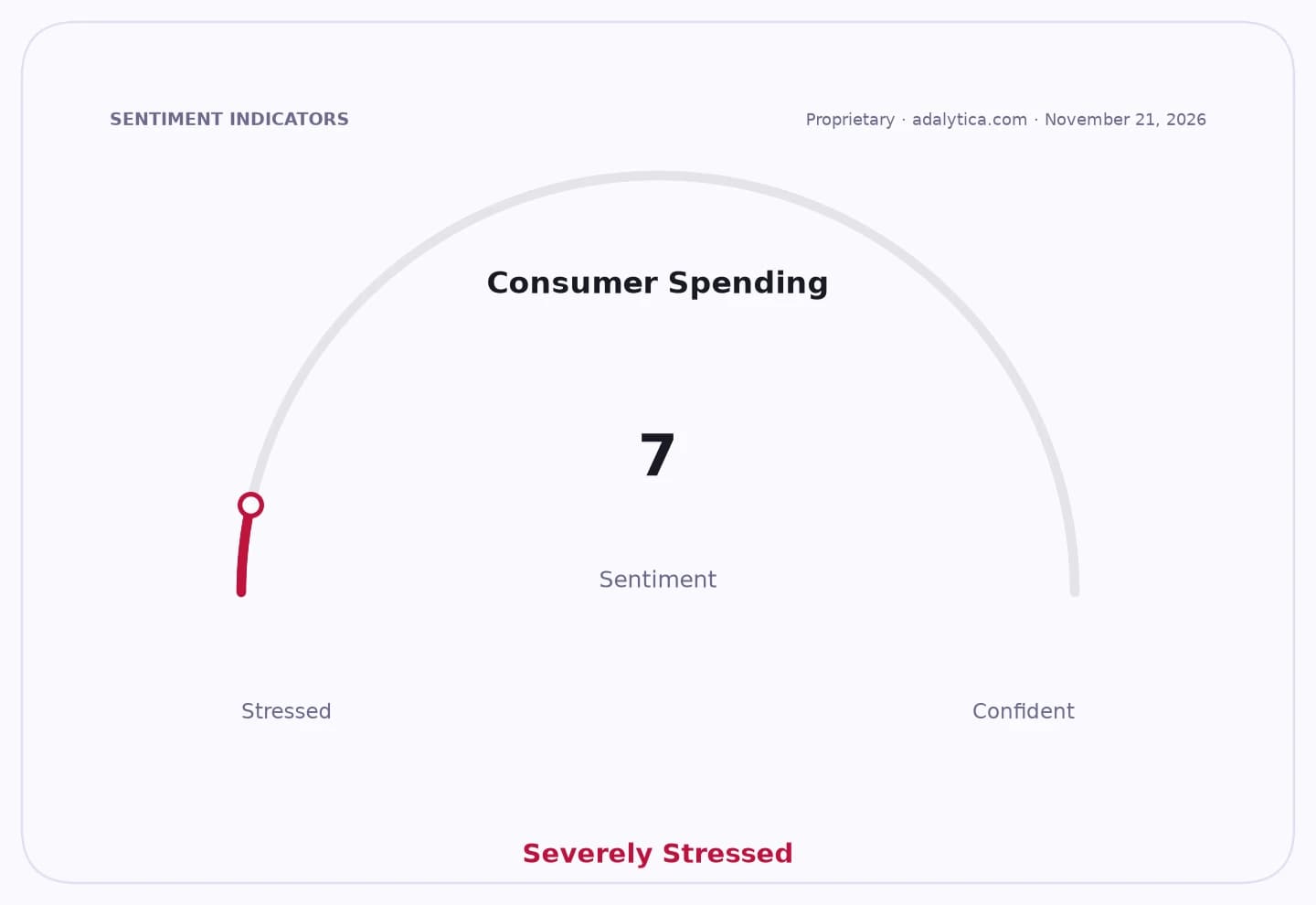
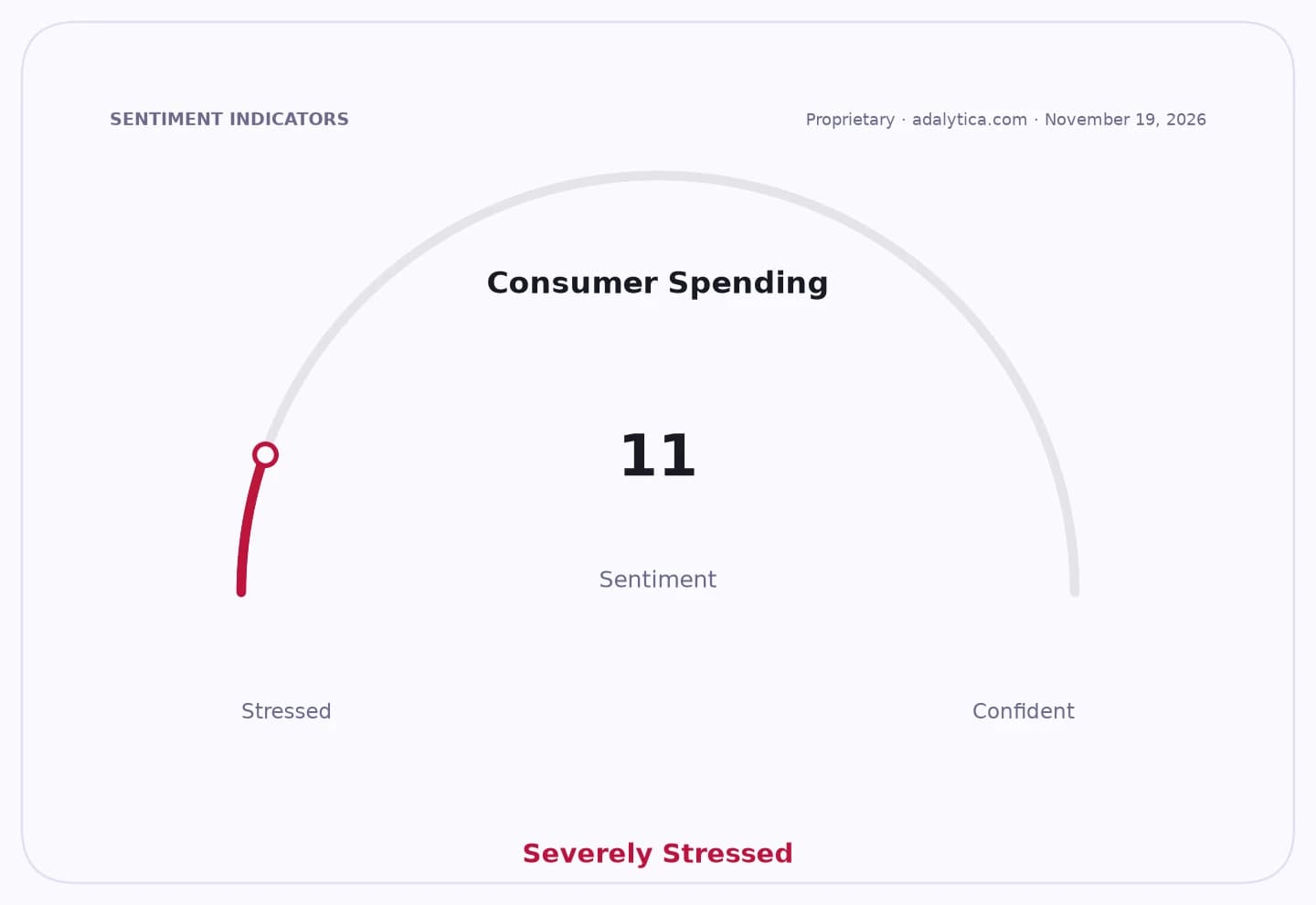
Investor positioning reflects that strain. Adalytica’s S&P 500 trade signals show extreme fear, while its consumer spending sentiment gauge is also in extreme fear territory, indicating a market that is still braced for weaker demand despite the slight improvement in Michigan’s survey. The gap between sentiment and hard economic data remains the key tension: consumers say they feel worse, but the labor market has so far kept the economy from slipping into a sharper slowdown.
For investors, the revision is not a bullish inflection on its own. But it does reduce the risk that November’s initial reading overstated the drop in confidence and suggests the consumer may be entering year-end with less stress than feared. The next catalyst will be whether incoming spending and retail data confirm that households are merely cautious — or starting to pull back.
| Entity | Gains | Losses |
|---|---|---|
| U.S. consumers | ▲Slightly less pessimism | ▼Still-high price pressure |
| Retailers/discretionary stocks | ▲Holiday spending support | ▼Demand slowdown risk |
| S&P 500 bulls | ▲Less recession fear | ▼Continued valuation pressure |
| S&P 500 bears | ▲Weak sentiment backdrop | ▼No sharp collapse in spending |