U.S. consumer sentiment fell in August for the first time in three months, underscoring a weakening household outlook even as Americans became a little less worried about inflation over the next year.
U.S. Consumer Sentiment Falls to Four-Month Low
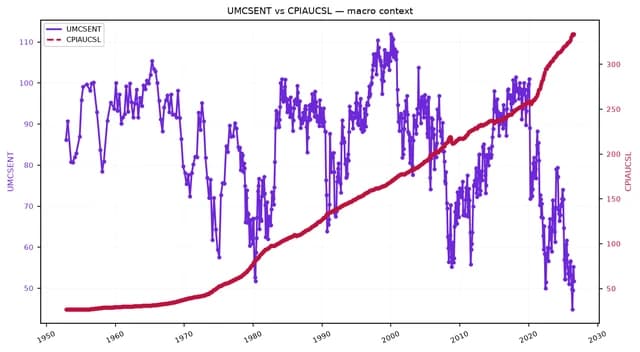
The University of Michigan’s final sentiment index slipped to 51.7 from July’s 55.2, marking a four-month low and landing just above economists’ median estimate. Year-ahead inflation expectations eased to 4%, the lowest since March, but still point to price pressure well above the Federal Reserve’s target.
Sentiment IndicatorsⓘProprietary · adalytica.com · September 30, 2026
This is a snapshot — live sentiment, awareness and momentum for 130+ markets update continuously in the dashboard.Open AlphaPulse
The split matters for markets because it suggests consumers are becoming less convinced the economy will hold up, even as they expect slightly slower price growth. That combination can restrain spending, especially on discretionary items, while keeping policymakers focused on whether inflation is truly moving back toward 2%.
Joanne Hsu, director of the survey, said households remain worried inflation will “remain elevated for the foreseeable future,” and are increasingly concerned that other parts of the economy are weakening. The survey’s measures of current conditions and future expectations both fell, while views on the economy one year and five years ahead deteriorated.
The report also showed sentiment among Republicans fell to the lowest since November 2024. The survey period ran from July 28 through Aug. 24, capturing a stretch when national average gasoline prices stayed above $4 a gallon and broader inflation continued to erode incomes.
Longer-term inflation expectations held at 3.3% for the next five to 10 years, a level that remains sticky enough to matter for Fed officials watching whether price expectations are becoming entrenched. That makes the latest reading important for bond yields, rate-cut bets and consumer-facing stocks, especially retailers and travel names that depend on confidence holding up into year-end.
For investors, the message is mixed: weaker sentiment raises downside risk to consumer spending, but softer one-year inflation views may support assets that benefit from a slower inflation path if the trend continues in coming months.
| Entity | Gains | Losses |
|---|---|---|
| Consumers | ▲Slightly lower inflation fears | ▼Confidence in economy |
| Fed doves | ▲Easing year-ahead inflation views | ▼Little evidence of 2% progress |
| Treasury bulls | ▲Softer inflation expectations | ▼Growth-sensitive risk assets |
| Retailers/discretionary stocks | ▲Potentially lower fuel pressure | ▼Weaker spending outlook |