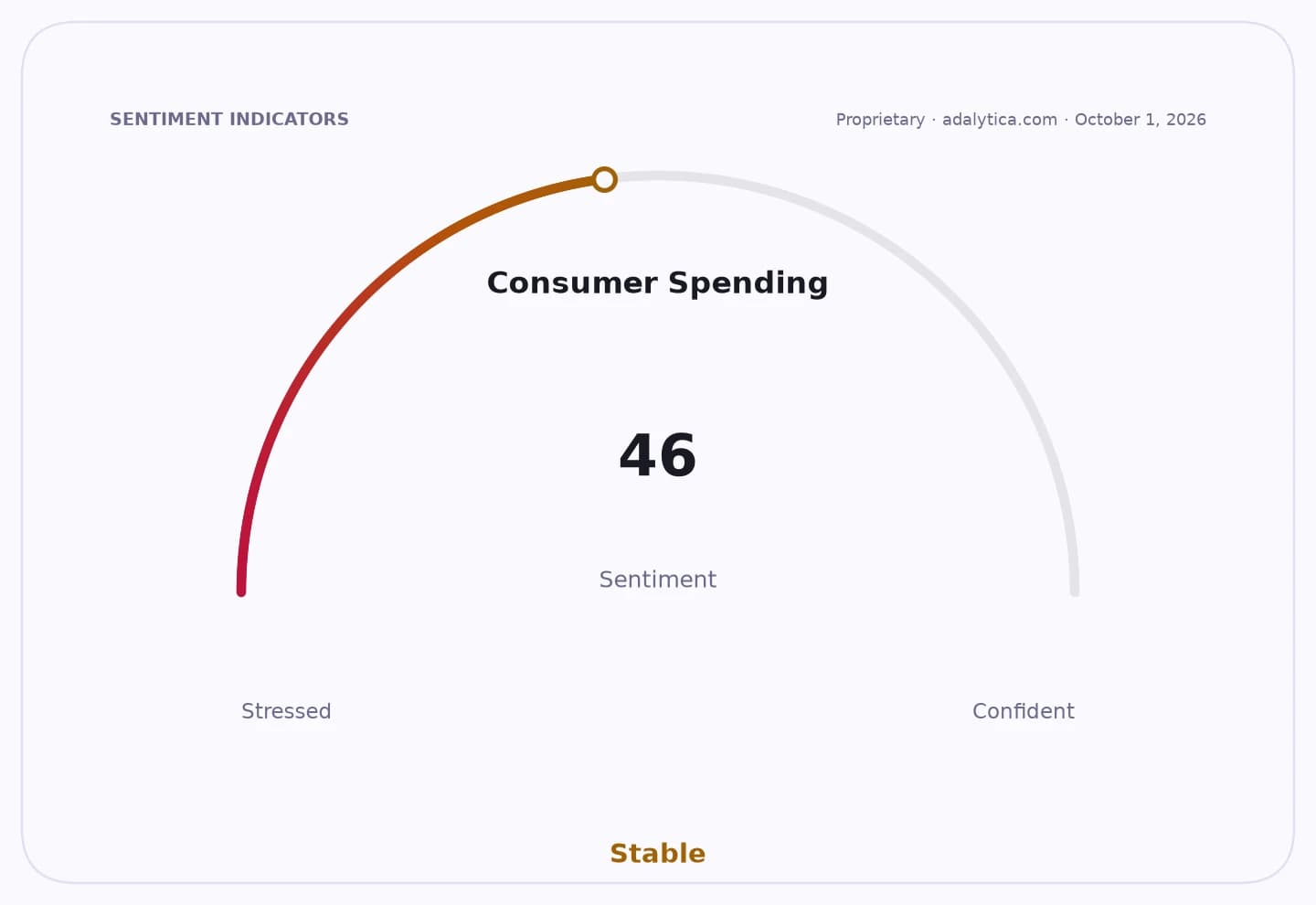
US consumers are heading into the holidays feeling more cautious, even as retailers still expect spending to hold up — a combination that could keep sales resilient in the short term while pushing more households toward credit, buy now, pay later products and other forms of borrowing.
US consumers stay cautious ahead of holiday spending
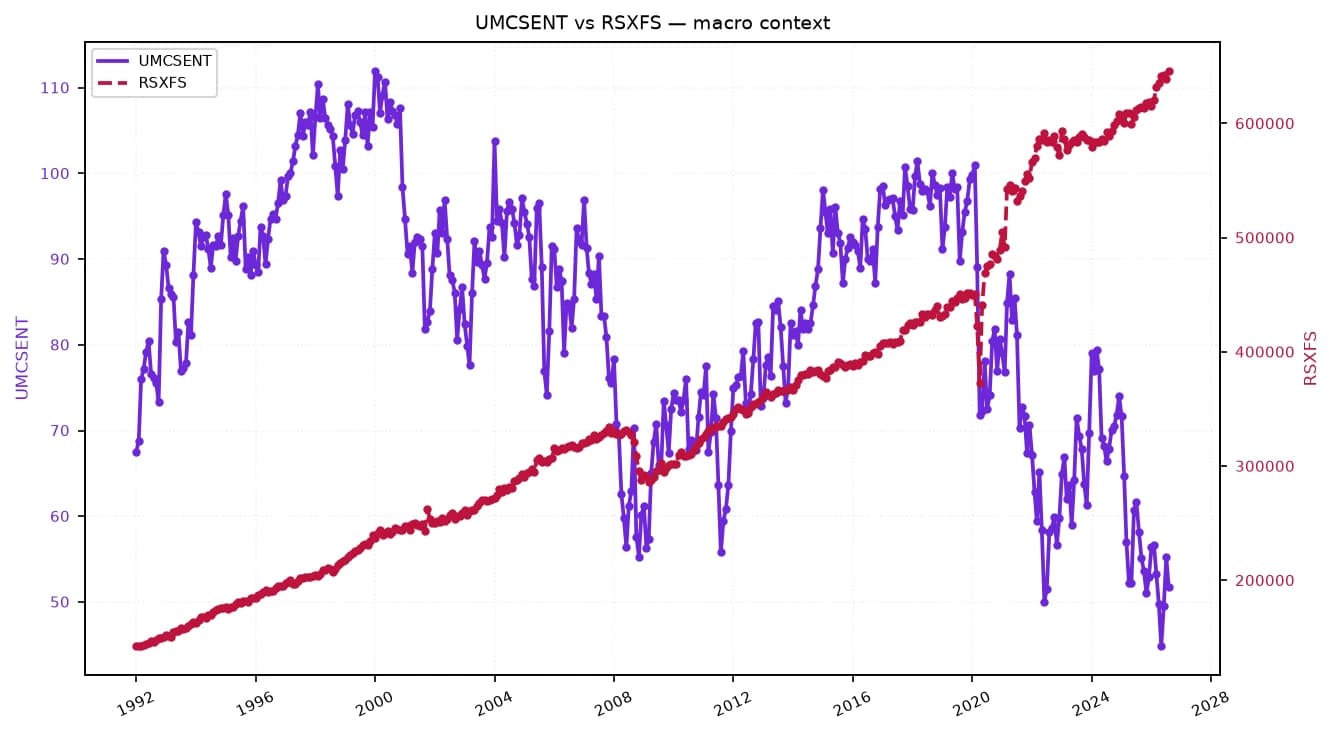
The University of Michigan’s consumer sentiment index slipped to 51.7 in August from 55.2 in July, its weakest reading in four months and a reminder that households remain uneasy about prices, borrowing costs and the economy’s direction. The survey’s expected September reading of 54.46 would mark only a modest rebound, not a clean recovery in confidence.
Sentiment IndicatorsⓘProprietary · adalytica.com · October 1, 2026
This is a snapshot — live sentiment, awareness and momentum for 130+ markets update continuously in the dashboard.Open AlphaPulse
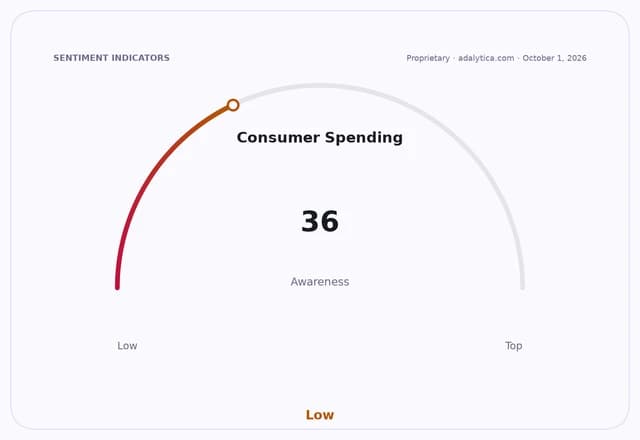
That matters because consumer spending still drives the US economy. When shoppers turn defensive, they usually trim discretionary purchases first, which hits retailers, travel, leisure and consumer brands before the weakness shows up more broadly in growth data. But this cycle has an important twist: analysts say holiday buying is still expected to rise, even if more of it is financed rather than funded out of current income.
That is why the story is not just about weak sentiment — it is about the quality of spending. If consumers are leaning more heavily on credit cards and buy now, pay later services to maintain purchases, sales volumes may stay firmer than sentiment alone suggests. For investors, that creates a split-screen market. Retailers and payment networks can still benefit from holiday traffic, but lenders, BNPL providers and anyone exposed to consumer stress may face rising risk if households start carrying more debt into 2027.
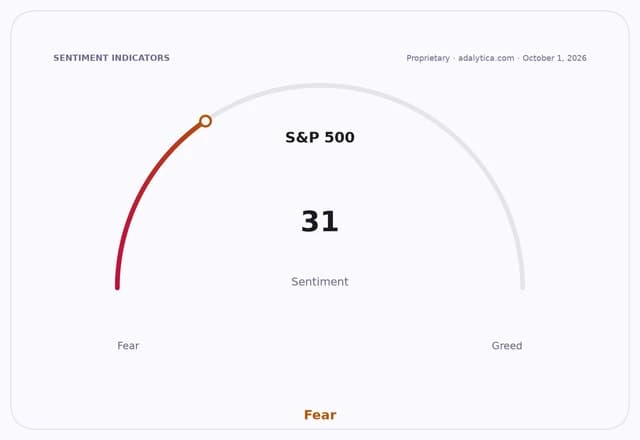
The labor market is still doing important work in cushioning the blow. The unemployment rate held at 4.1% in August and is forecast to ease to 4.02% in September, which helps explain why spending has not cracked even as confidence has weakened. In other words, consumers are worried, but they are not yet breaking.
Investors should watch whether that balance holds. A stable job market with softer sentiment is usually manageable. A weaker job market plus rising reliance on credit is where the risk moves from temporary caution to a deeper consumer slowdown. For long-term investors, this is a reminder that consumer stocks are not all the same: strong balance sheets, pricing power and loyal customers matter far more when confidence is shaky. It’s worth watching, but not a reason to abandon the consumer altogether.
| Entity | Gains | Losses |
|---|---|---|
| Retailers | ▲Holiday sales support | ▼Margin pressure if demand weakens |
| BNPL and card lenders | ▲More borrowing volume | ▼Higher credit risk |
| Consumers | ▲Short-term spending flexibility | ▼Rising debt burden |
| Consumer staples and value names | ▲Defensive demand appeal | ▼Less upside in a spending rebound |