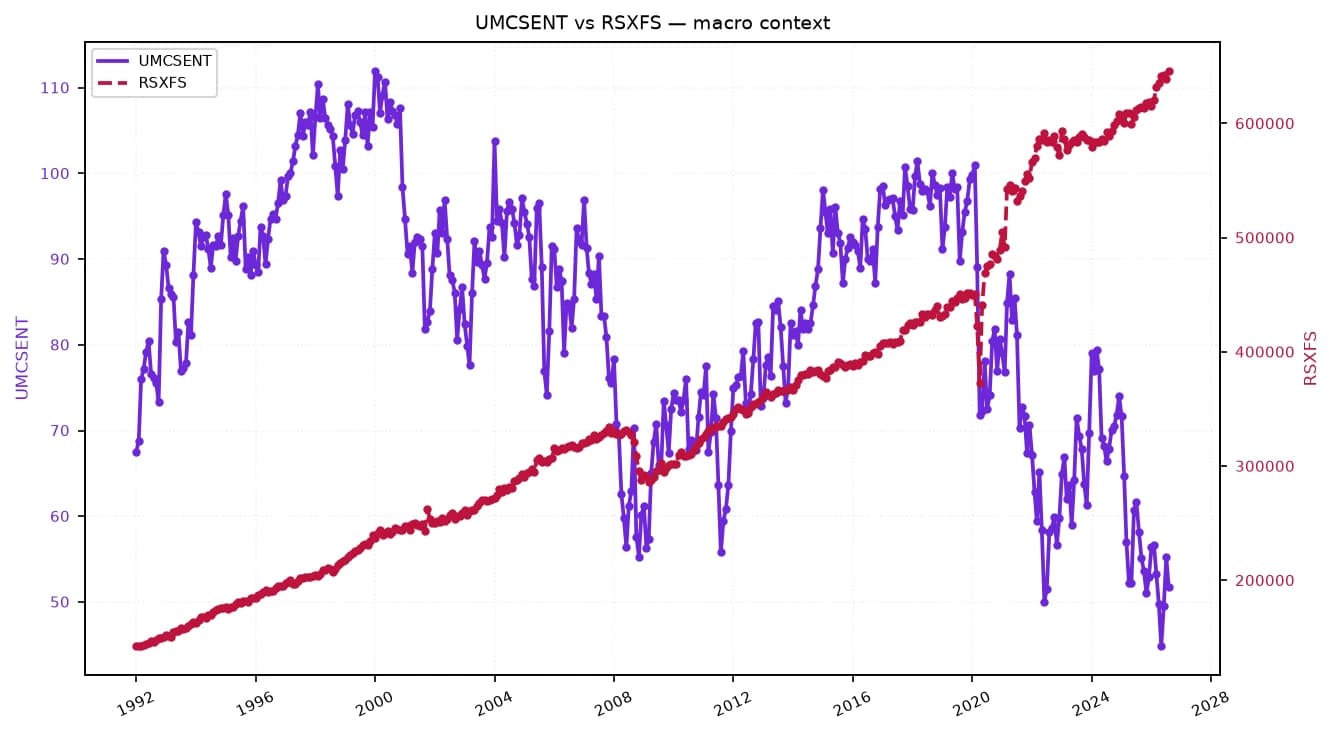
Americans are growing more pessimistic about the economy for a second straight month, with the University of Michigan’s consumer sentiment index sliding to 48.1 in September even as layoffs remain scarce and the labor market holds up.
US consumer sentiment falls as fuel costs rise
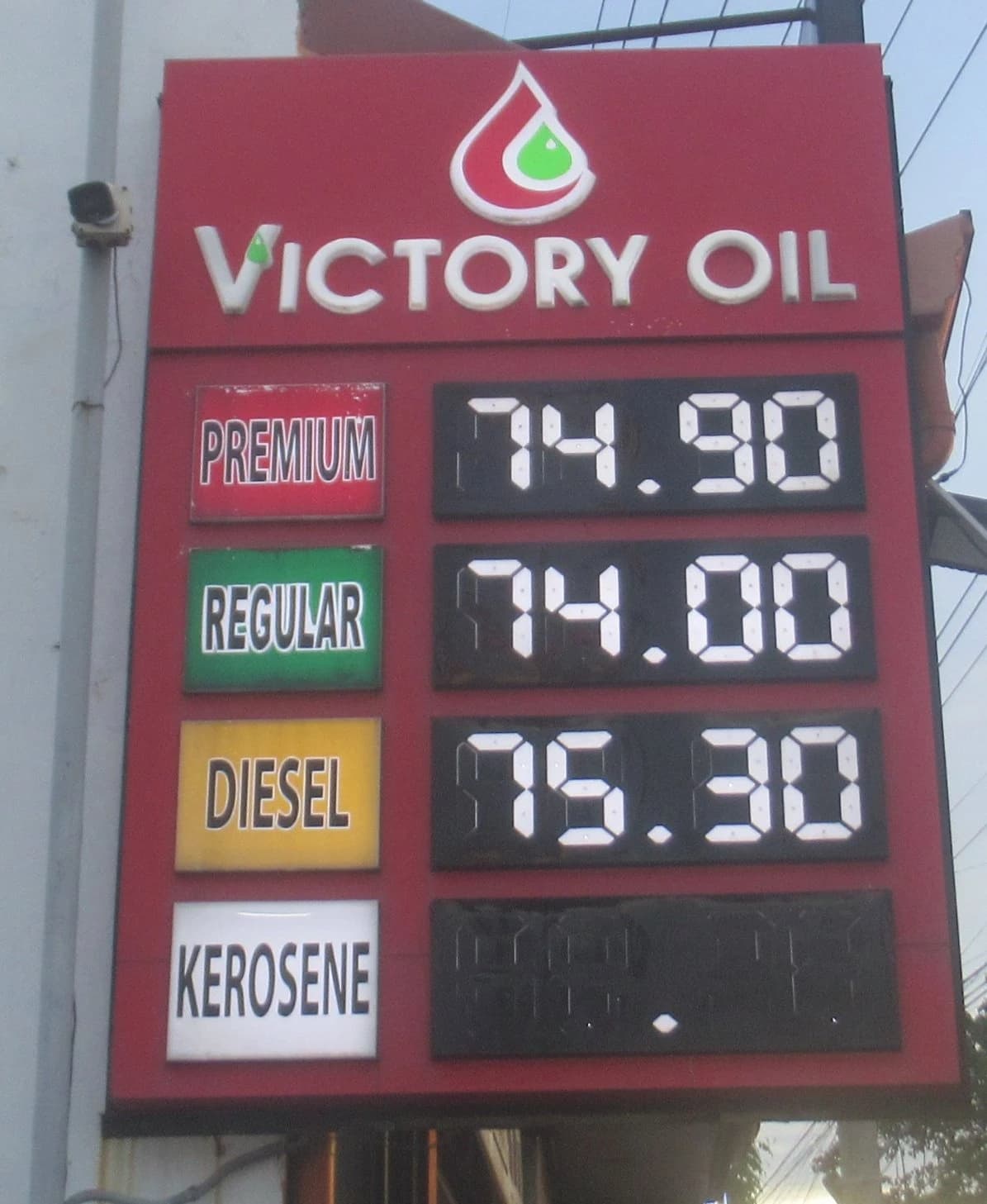
That mismatch matters because it shows the US economy is being squeezed less by job losses than by the cost of living. Gasoline at a national average of $4.48 a gallon and diesel near a record $6.51 are rippling through household budgets and supply chains, while a Georgetown University index found 70% of Americans struggle to afford at least one basic need such as housing, food, health care or child care.
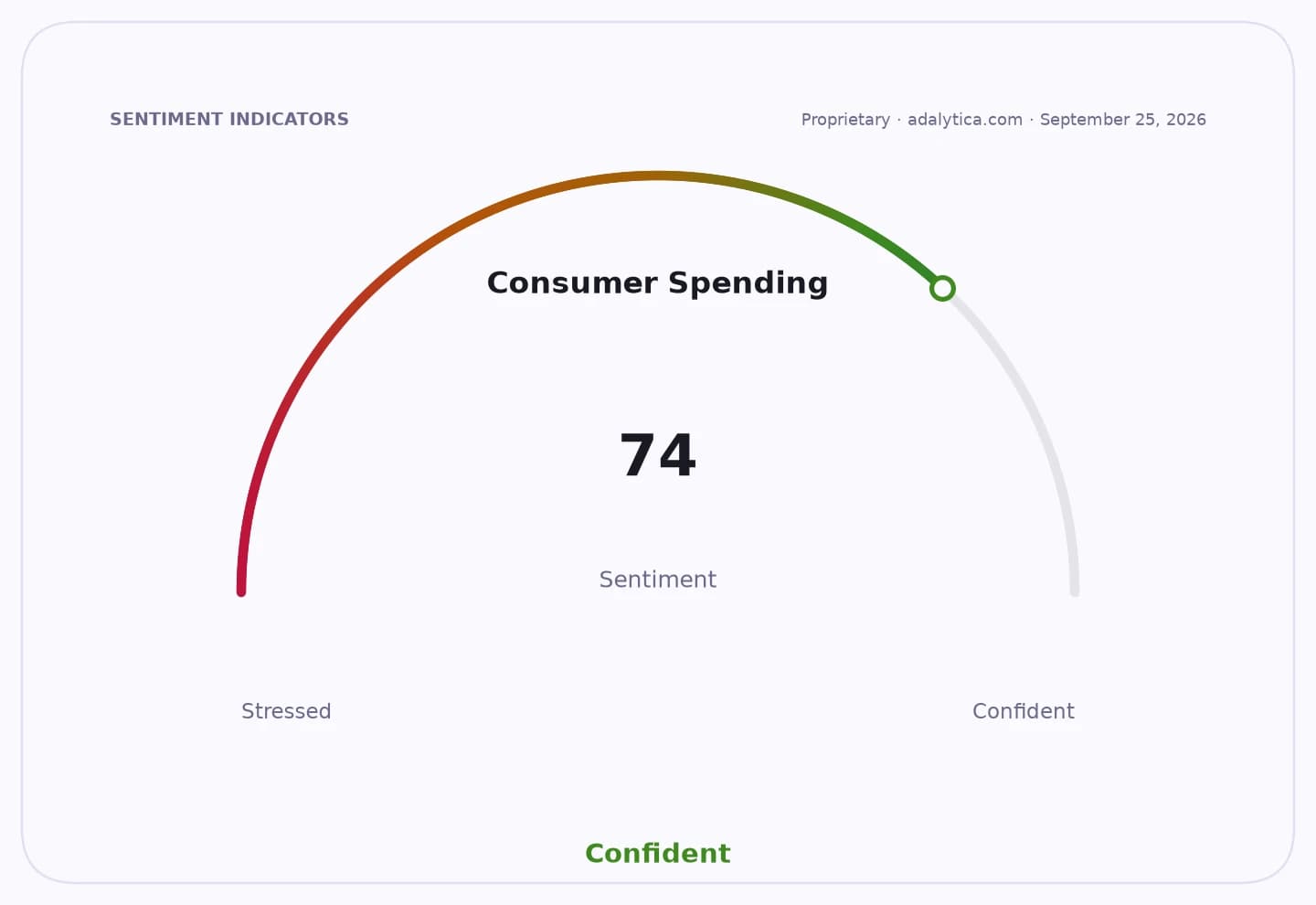
Sentiment IndicatorsⓘProprietary · adalytica.com · October 1, 2026
This is a snapshot — live sentiment, awareness and momentum for 130+ markets update continuously in the dashboard.Open AlphaPulse
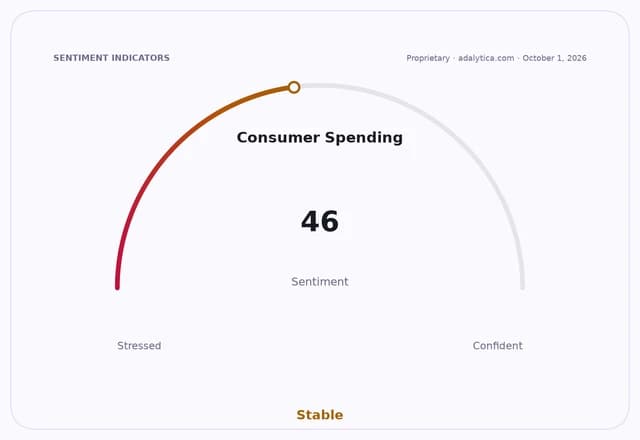
The deterioration in sentiment to the lowest level in four months, and down 15% from January, comes despite weekly jobless claims falling to 197,000, near the lowest since 1969. In other words, employment is not the main source of anxiety. The problem is that paychecks are not keeping pace with the combined burden of fuel, rent, groceries and child care.
That economic pressure has direct market implications. Higher diesel costs do not stay at the pump; they feed into freight, agriculture and industrial logistics, raising input costs for businesses and preserving inflationary pressure just as growth-sensitive consumers are pulling back. Farmers and other fuel-intensive businesses face a margin squeeze that can force price increases or cutbacks, reinforcing the drag on real household income.
The Georgetown data helps explain why sentiment is slipping even without a broad labor-market crack. The index, based on 2023 Census data plus additional cost estimates, found 41% of Americans face a health-care burden, 33% a housing burden and nearly one-third a food burden. One in six faces three or more burdens at once. The pressure is heaviest on renters, children and Black and Latino households, while nearly seven in 10 middle-class families with children under 6 face a child-care burden.
For investors, the story is less about one weak survey reading than about the durability of consumer demand under persistent cost stress. If households keep relying on credit to bridge the gap, spending may hold up for longer than sentiment alone suggests, but at the cost of weaker balance sheets and higher default risk later. That would matter for retailers, lenders and any company exposed to discretionary demand.
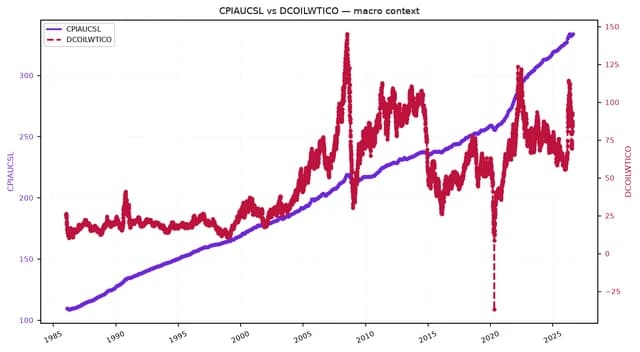
The backdrop also keeps pressure on energy stocks. The XLE energy ETF has held up, while Exxon Mobil and exploration and production names such as XOP have benefited from the surge in crude prices. But the same fuel spike that supports producers also acts as a tax on consumers and a headwind for the broader economy. Adalytica’s consumer spending and S&P 500 trade signals both point to a more cautious market tone, even as inflation-related awareness remains elevated.
Mortgage costs are adding another layer of strain. The average 30-year fixed rate has climbed back above 7%, the highest since January 2025, even as the median new-home price eased 5.8% from a year earlier to $393,700. That suggests affordability is being constrained more by financing costs than by sticker prices, limiting any near-term relief for households trying to buy.
The likely near-term narrative is one of a consumer that is still spending, but only by stretching harder. That supports the case for resilient headline retail sales in the near term, but it also raises the risk that the underlying demand engine weakens if fuel prices stay elevated, credit costs rise and wage gains fail to keep up with basic living expenses.
| Entity | Gains | Losses |
|---|---|---|
| Energy producers | ▲Higher cash flow | ▼Consumer demand backlash |
| Consumers with stable jobs | ▲Continued spending capacity | ▼Real-income squeeze |
| Retailers and lenders | ▲Near-term sales and credit use | ▼Later credit stress |
| Freight and food users | ▲None | ▼Higher input costs |