Americans are carrying $1.26 trillion in credit card debt and falling further behind, which is making collection offers more common — but the first settlement proposal is not always the best one to take.
U.S. credit card debt rises as collections grow
That matters because elevated consumer debt stress is feeding a larger wave of collection activity just as household budgets remain stretched. The lesson for borrowers is straightforward: a collector’s opening bid can be a starting point, not a final price.
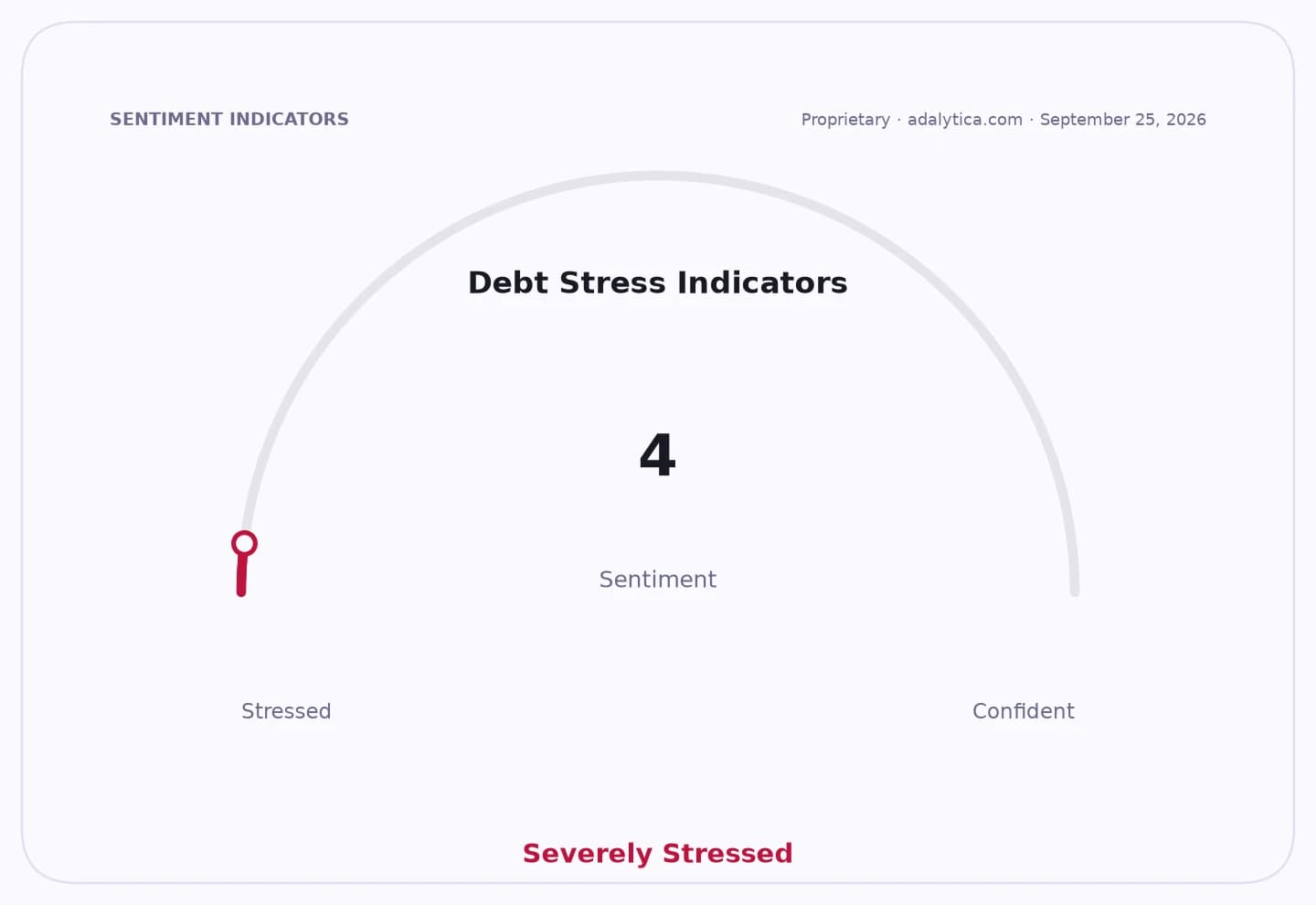
Sentiment IndicatorsⓘProprietary · adalytica.com · September 9, 2026
This is a snapshot — live sentiment, awareness and momentum for 130+ markets update continuously in the dashboard.Open AlphaPulse
The cost of credit card borrowing remains a pressure point. U.S. credit card balances hit $1.26 trillion in the second quarter of 2026, while the unemployment rate is projected at 4.02% for September, a level that still suggests a relatively tight labor market but not enough relief for households already behind on payments.
For investors, that combination points to persistent credit risk across the consumer finance chain. Banks, specialty lenders and debt buyers all face more accounts moving into collections, even as high-yield credit stress eases modestly — the Bank of America high-yield spread measure has slipped to 2.68 percentage points, down from 3.13 in early August — suggesting investors are still pricing in strain without assuming a full-blown credit event.
Public lenders tied to consumer credit are already showing the sensitivity. CarMax-backed lender Credit Acceptance Corp. has seen shares run from $429.76 in November to $593.78 this week, while its 50-day moving average sits near $600.88 and the stock trades close to that level, showing how quickly sentiment can swing around credit performance. Ally Financial and Synchrony Financial have also been moving with the broader consumer-credit backdrop, with Ally at $42.28 and Synchrony at $78.62 on the latest close.
The practical point for borrowers is that a first offer is often just that — an opening offer. Collectors may start high, especially on accounts they believe are still collectible, and a borrower who can pay a lump sum or structured plan may be able to push for a lower total, different timing or a cleaner release of the remaining balance.
That is why the details matter more than the headline number. Borrowers need the agreement in writing, including the amount, deadline and confirmation that the settled payment extinguishes the rest of the debt. Without that, a “settlement” can turn into a dispute later.
Professional debt relief firms can make sense when a borrower is juggling multiple unsecured debts, but they add fees and do not guarantee creditors will agree. In a market where delinquency pressure is still building, patience can be more valuable than speed — especially if the first offer leaves room to negotiate.
| Entity | Gains | Losses |
|---|---|---|
| Borrowers with cash | ▲Room to negotiate lower payoff | ▼Risk of overpaying first offer |
| Debt collectors | ▲Fast recovery on aged balances | ▼May leave money on table |
| Consumer lenders | ▲Higher collections activity | ▼Rising delinquency and charge-offs |
| Debt relief firms | ▲More demand for negotiation help | ▼Fee scrutiny and execution risk |