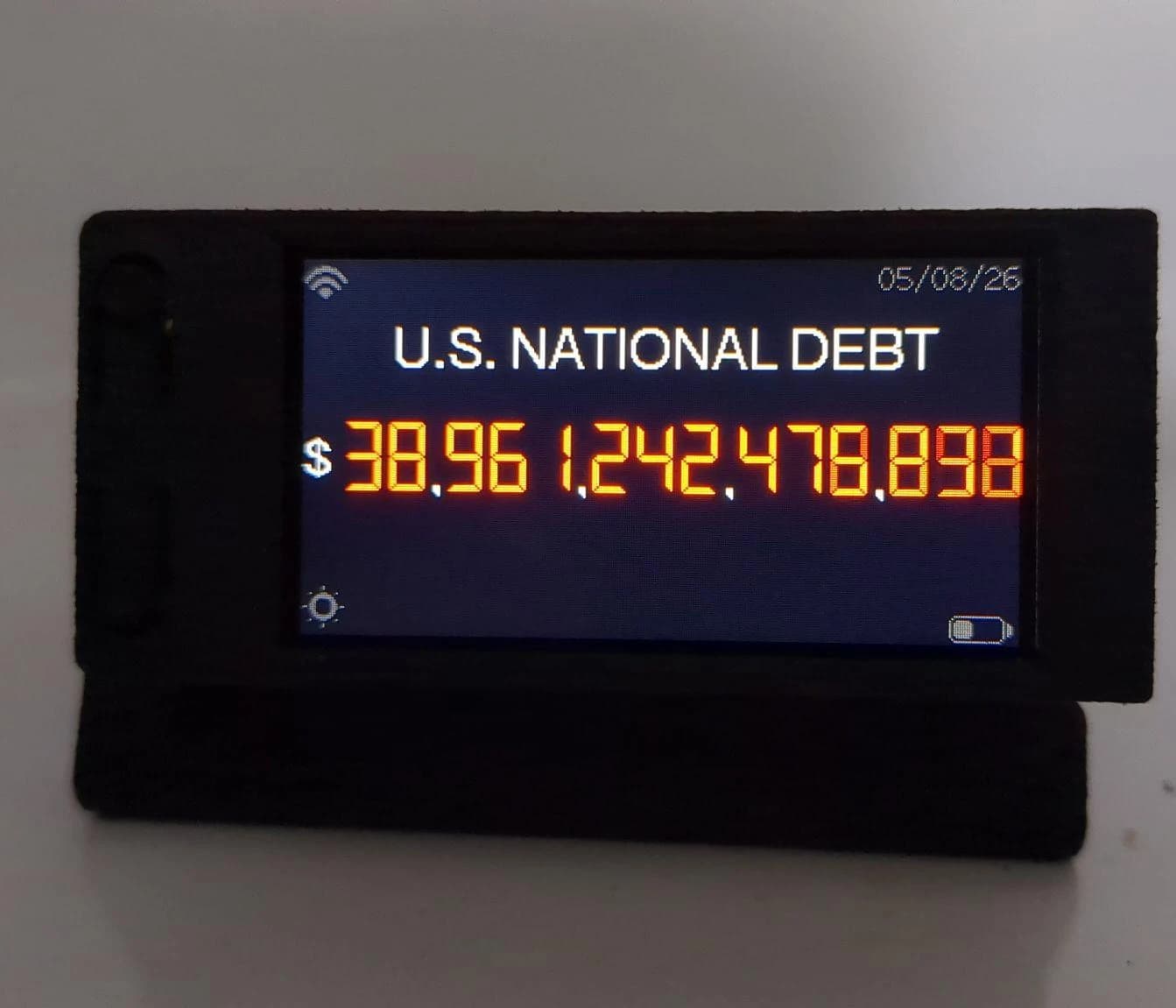
Washington’s $40 trillion debt burden matters less as a headline number than as a market problem: higher borrowing costs are making the federal balance sheet harder to finance just as Congress shows little appetite to reverse course.
U.S. debt, yields, and market risk

That is the economic shift behind former White House adviser Jared Bernstein’s warning that the issue is no longer the size of the debt alone, but the combination of persistent deficits, rising interest rates and political paralysis. The U.S. 10-year Treasury yield was around 4.8% in recent trading, close to levels that materially raise the government’s debt-service bill and keep pressure on long-duration assets across markets.
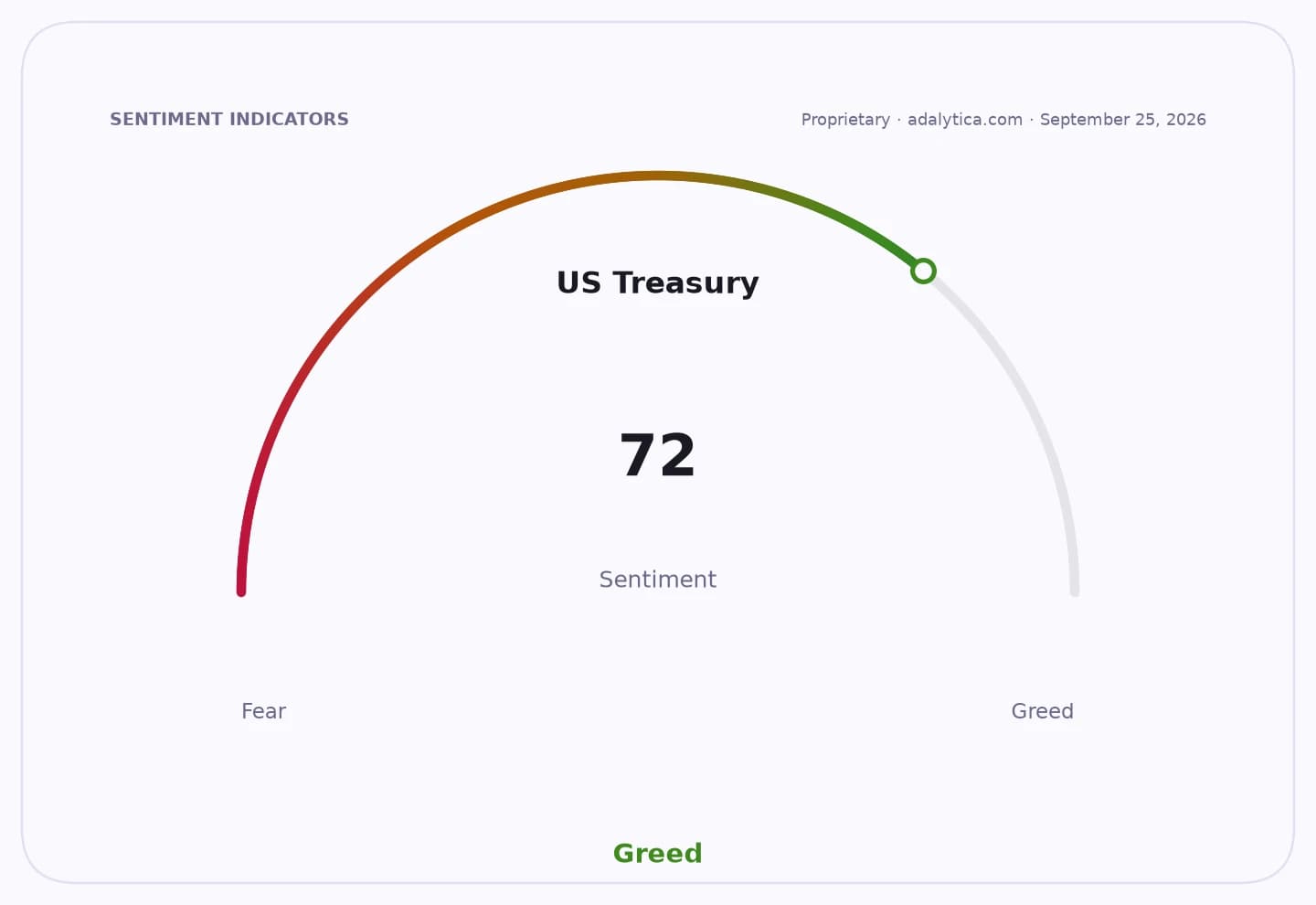
Sentiment IndicatorsⓘProprietary · adalytica.com · September 6, 2026
This is a snapshot — live sentiment, awareness and momentum for 130+ markets update continuously in the dashboard.Open AlphaPulse

The risk is not an imminent funding crisis. It is a slow-moving deterioration in fiscal flexibility. Bernstein’s point that debt becomes dangerous when it grows faster than the economy reflects the standard debt-to-GDP framework investors watch. With deficits running in the 4% to 6% range in what would normally be expansionary conditions, the trajectory is moving in the wrong direction even without a recession. That leaves less room for stimulus in a downturn and increases the chance that future governments are forced into sharper tax increases, spending cuts or both.
For investors, the implications stretch beyond Washington. Higher Treasury yields can crowd out risk assets by lifting the discount rate used to value equities, while also making government paper more competitive versus corporate credit and dividend stocks. The latest market data show the S&P 500 still trading near record territory, but Adalytica’s S&P 500 trade signals have flipped to extreme fear, underscoring how quickly sentiment can deteriorate when rate and fiscal concerns converge. Treasury bonds, meanwhile, remain in a more neutral posture, suggesting investors are not yet in full panic mode even as the fiscal story darkens.
DGS10 vs BAMLH0A0HYM2 — macro contextadalytica.com
Explore this data interactively — full history, time series and cross-market comparisons.Open AlphaPulse

The dollar has also strengthened, with trade signals showing greed rather than fear, a reminder that periods of fiscal strain do not always translate immediately into U.S. currency weakness. In the near term, the dollar can benefit from elevated yields and relative U.S. growth. Over time, though, a sustained loss of fiscal credibility would be harder to reconcile with a persistently strong currency and rising real rates.
There is a bull case for complacency. The U.S. still has the world’s deepest bond market, the dollar remains the reserve currency, and recession risk is not the base case. The National Bureau of Economic Research’s recession gauge is still at zero, implying no official downturn signal in the data context. But the bear case is more relevant for markets: if Congress keeps avoiding hard choices, interest costs keep rising and the economy slows, then debt dynamics can worsen fast without a single crisis moment.
That is why Bernstein’s preferred fix — scaling back tax cuts at the upper end of the income and wealth scale — matters less as a partisan argument than as a signal that the policy menu is narrowing. The market is not pricing a default. It is pricing a future in which the government pays more to borrow, equities face a higher rate backdrop and fiscal policy becomes a larger source of volatility.
| Entity | Gains | Losses |
|---|---|---|
| Treasury bondholders | ▲Higher yields | ▼Price risk from fiscal stress |
| Equity investors | ▲Near-term growth support | ▼Higher discount rates |
| U.S. government | ▲Short-term financing access | ▼Fiscal flexibility |
| Taxpayers | ▲Potential long-term reform | ▼Higher debt-service costs |