The U.S. dollar is pressing back toward its late-July high near 100.35, and the move matters because it reflects a market that still believes the Federal Reserve can stay tighter for longer even as global risk remains elevated.
U.S. Dollar Nears Late-July High on Fed Outlook
That combination is powerful. A firmer dollar tightens financial conditions across markets, pressures commodities and emerging-market assets, and reinforces the relative appeal of U.S. yields versus the rest of the developed world. In plain terms, when traders price in more Fed hikes, they are also pricing in a stronger dollar and less room for rate-sensitive assets to breathe.
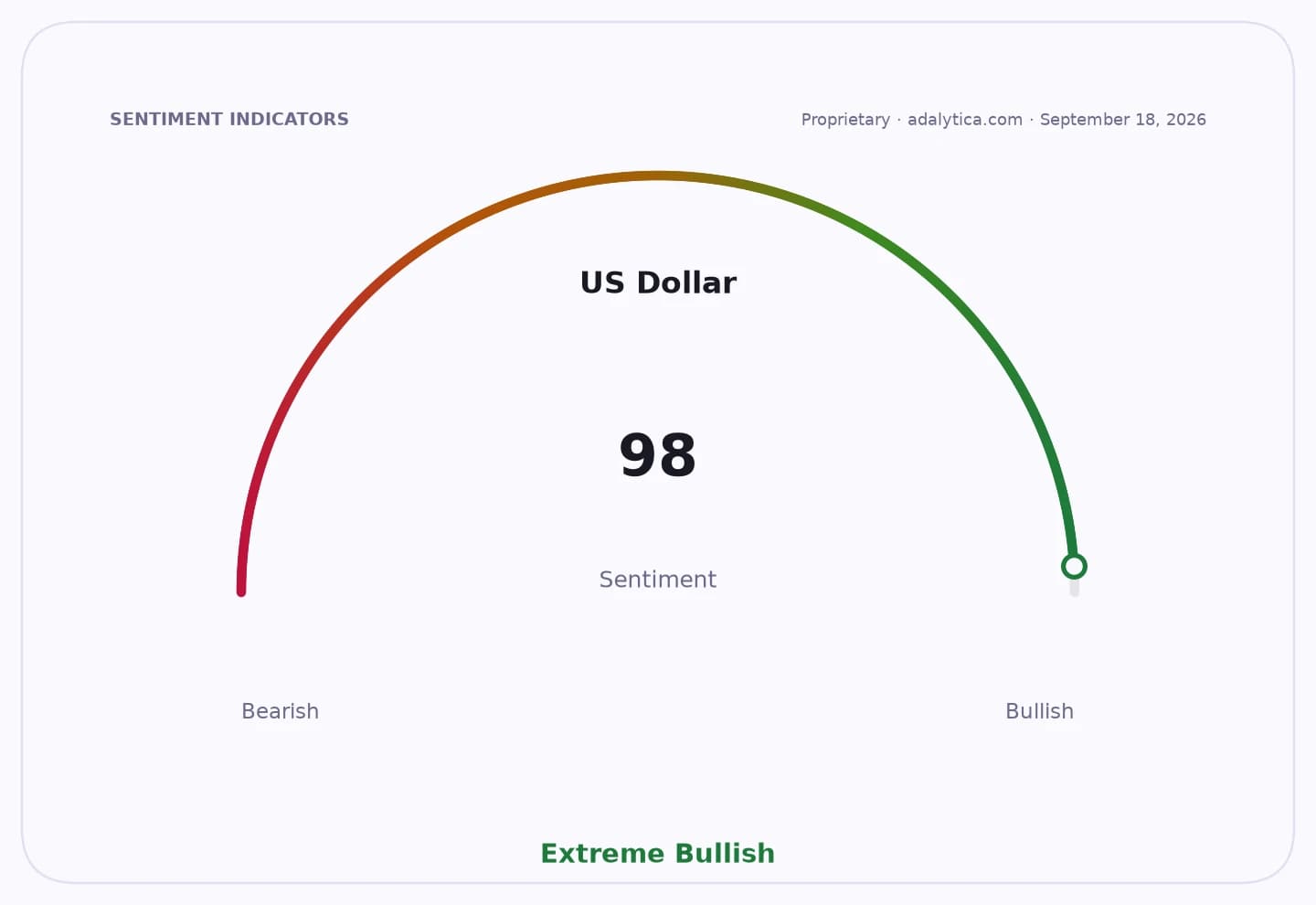
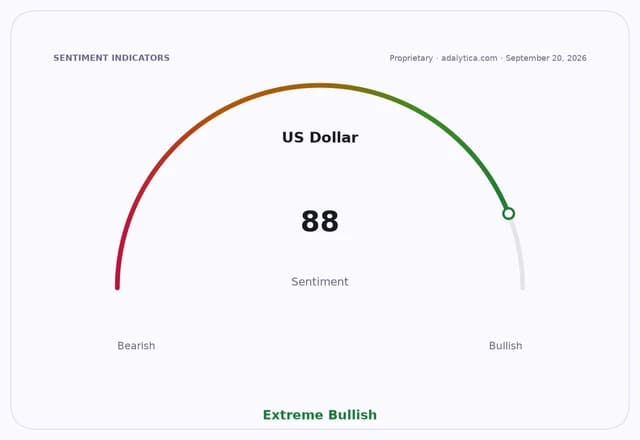
Sentiment IndicatorsⓘProprietary · adalytica.com · September 20, 2026
This is a snapshot — live sentiment, awareness and momentum for 130+ markets update continuously in the dashboard.Open AlphaPulse
The latest backdrop points in that direction. FXStreet’s coverage said the greenback continues to attract dip buyers as the Fed’s outlook remains hawkish, with markets assigning a 54% probability of an October rate increase and 88% odds for December. That is enough to keep the dollar supported even without fresh upside surprise data, especially when geopolitical risk is also bid. Escalating tensions in the Middle East are adding a safe-haven premium to the currency, helping the dollar keep its footing against peers.
Technically, the trade still has room to run. UUP, the dollar-tracking ETF, closed at 28.39 on Sept. 18, holding above its 50-day moving average of 28.21 and 200-day average of 27.66. Its RSI reading of 60.8 suggests momentum remains constructive without yet showing the kind of extreme overbought condition that typically exhausts a rally. That matters because sustained price action above those averages often brings systematic buyers back into the trade.
US Dollar vs UUPadalytica.com
Explore this data interactively — full history, time series and cross-market comparisons.Open AlphaPulse
The investor implication is straightforward: a stronger dollar is not just a macro headline, it is a capital-allocation signal. It tends to reward U.S. cash flows, defensive balance sheets and companies with domestic revenue or pricing power, while it punishes commodity importers, foreign borrowers and multinationals with heavy overseas earnings translation. The dollar’s rise also complicates the case for rate cuts, because it eases some import-price pressure but can tighten global liquidity enough to keep central banks cautious.
Adalytica’s US Dollar Trade Signals snapshot shows sentiment at 88, labeled “Extreme Greed,” even as awareness remains “Extreme Fear” at 11. That split is telling: positioning and attention are not fully aligned, which often leaves room for the trend to persist longer than skeptics expect. In other words, the market may be underestimating how much policy divergence and geopolitical stress can keep the dollar elevated.
For investors, the setup argues for staying long the dollar on pullbacks and leaning into the second-order winners: U.S. large caps with pricing power, short-duration assets, and hedges against global risk. If the Fed keeps the market guessing on another hike, the dollar’s late-July high near 100.35 may not be resistance for long.
| Entity | Gains | Losses |
|---|---|---|
| U.S. dollar | ▲Safe-haven demand | ▼— |
| U.S. Treasury yields | ▲Hawkish repricing | ▼Rate-cut bets |
| U.S. domestic large caps | ▲Stronger relative pricing power | ▼Multinationals with foreign revenue |
| Emerging markets | ▲— | ▼Dollar funding costs |