The U.S. dollar is back in control, and that matters because a stronger greenback, a weaker yen and a jump in crude oil are tightening financial conditions just as global growth is already fragile.
U.S. Dollar, Yen, Oil Pressure Global Markets

For investors, this is not just a currency story. It is a cross-asset warning that money is moving toward the United States, away from Japan, and into commodities — a combination that usually pressures import-dependent economies, lifts inflation risks and complicates central bank policy.
Sentiment IndicatorsⓘProprietary · adalytica.com · August 31, 2026
This is a snapshot — live sentiment, awareness and momentum for 130+ markets update continuously in the dashboard.Open AlphaPulse

The dollar’s strength is showing up in UUP, the Invesco U.S. Dollar Index ETF, which rose to 28.18 on Aug. 28, holding above both its 50-day and 200-day moving averages. That is the kind of technical confirmation traders watch when they want to know whether a move has real staying power. The yen, tracked by FXY, remains under strain at 57.25 after a volatile stretch, while the broader story in the market is the same: the greenback is firming as yields stay elevated and investors continue to favor U.S. assets.
That backdrop matters because Japan is unusually exposed to every inch of yen weakness. A weaker currency raises the cost of imported energy, and that comes at the worst possible time for an economy still wrestling with sluggish domestic demand and inflation that is not strong enough to feel healthy, but high enough to squeeze households. The latest news on Japan’s trade balance points in the same direction, with the deficit widening sharply as crude import costs surged.
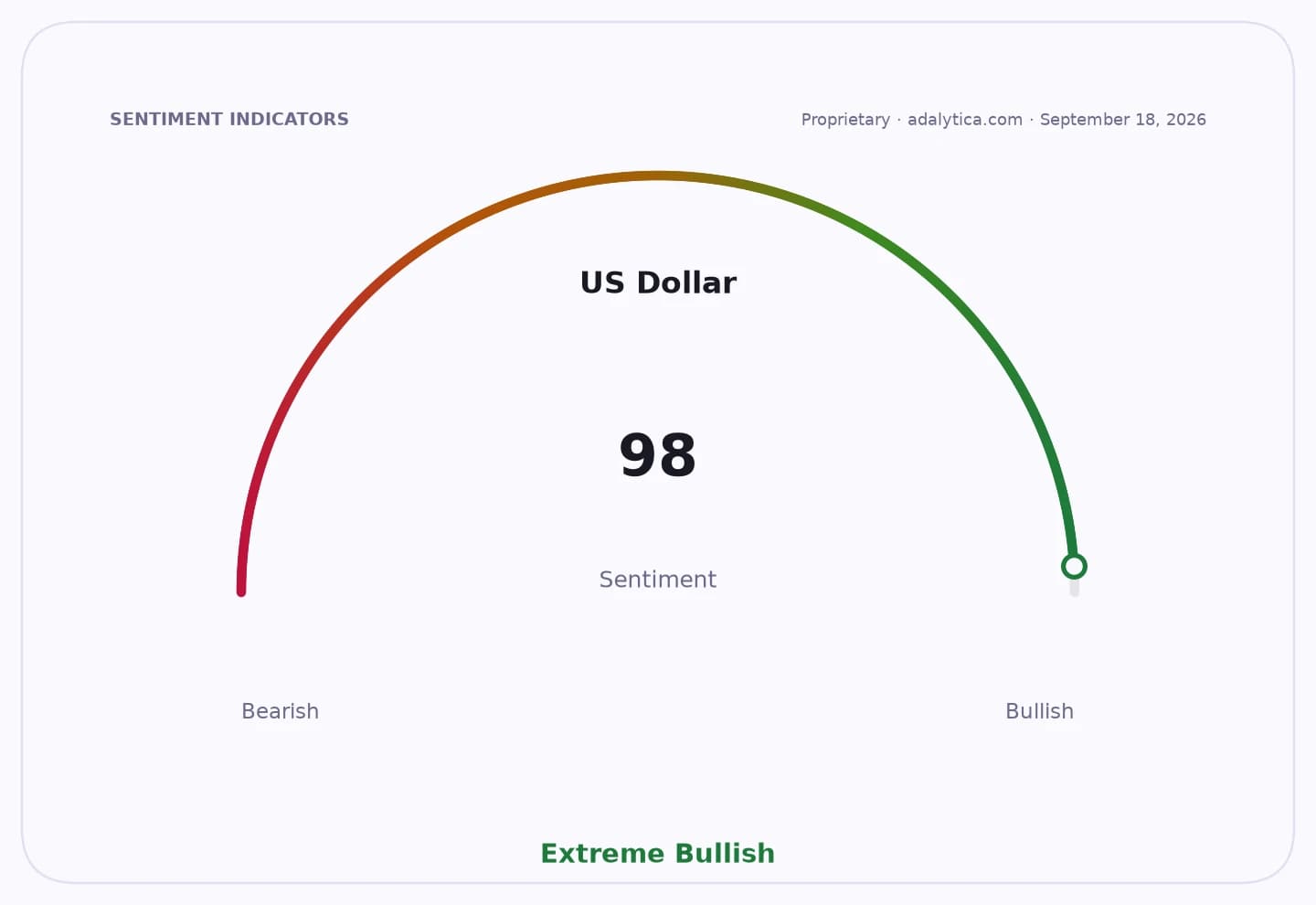
US Dollar — 30-day sentimentadalytica.com
Explore this data interactively — full history, time series and cross-market comparisons.Open AlphaPulse
Oil is adding another layer of pressure. USO, the U.S. Oil Fund, has climbed to 129.70, after a powerful summer run that pushed it far above its 200-day moving average. Even after some giveback from earlier peaks, the move is still large enough to matter for airlines, transport, manufacturers and consumers. Rising oil tends to reinforce dollar strength too, because it can stoke inflation expectations and keep U.S. rates higher for longer.
That is why Treasury yields are part of the same story. The 10-year Treasury yield has been near 4.67%, with the 2-year at 4.20%, leaving policy still restrictive and the yield curve only modestly inverted. Those levels help explain why the dollar is attracting capital: investors are being paid to hold U.S. assets, while Japan’s yield environment remains too low to support the yen in a durable way.
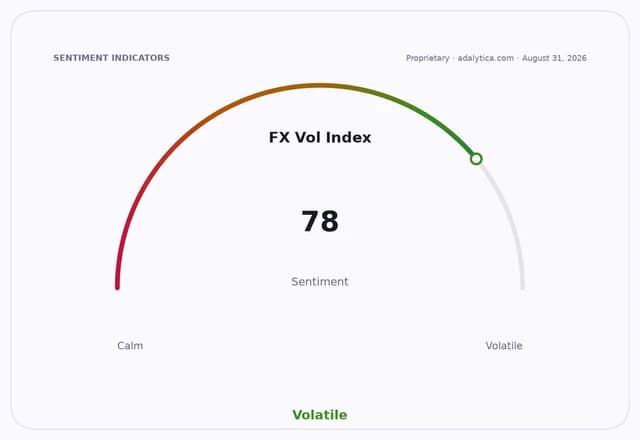
Adalytica’s U.S. Dollar Trade Signals snapshot shows sentiment on the dollar at neutral, but awareness at a greedy 73, suggesting the market is paying close attention even if positioning is not yet euphoric. By contrast, FX volatility signals have jumped sharply, with Greed at 78 and Extreme Fear still visible in the awareness reading. In plain English, traders expect bigger swings ahead.
For long-term investors, the bigger takeaway is that this is what macro regime shifts look like before they settle down. A strong dollar can be a headwind for U.S. multinationals, but it can also keep imported inflation in check at home. A weak yen can boost Japanese exporters over time, but it punishes consumers and importers in the near term. Higher oil prices help energy producers and hurt almost everyone else.
If this persists, expect the winners and losers to become clearer: energy stocks, U.S. dollar beneficiaries and exporters with pricing power may hold up better, while airlines, import-heavy businesses and currency-sensitive Japanese assets could stay under pressure. For patient investors, the right move is not to chase every swing, but to watch whether this becomes a lasting dollar-and-oil cycle — because if it does, it will shape earnings, inflation and valuations well beyond this week.
| Entity | Gains | Losses |
|---|---|---|
| U.S. dollar | ▲Higher relative demand | ▼Export-heavy multinationals |
| Japanese exporters | ▲Better overseas competitiveness | ▼Japanese consumers and importers |
| Energy producers | ▲Stronger crude pricing | ▼Fuel-intensive industries |
| U.S. Treasury bulls | ▲Yield support for dollar | ▼Yen bulls and carry traders |