President Donald Trump’s move to impose tariffs of up to 100% on imported drones is adding a fresh cost shock to the aerospace and defense supply chain, lifting trade uncertainty even as investors bid up U.S. military contractors and defense ETFs.
U.S. Drone Tariffs Lift Aerospace Defense ETFs

The policy matters because drones sit at the intersection of commercial aviation, battlefield procurement and critical components that often cross borders before reaching U.S. buyers. A tariff this steep can quickly alter sourcing decisions, raise input costs for manufacturers and distributors, and push more orders toward domestic suppliers if they can scale fast enough.
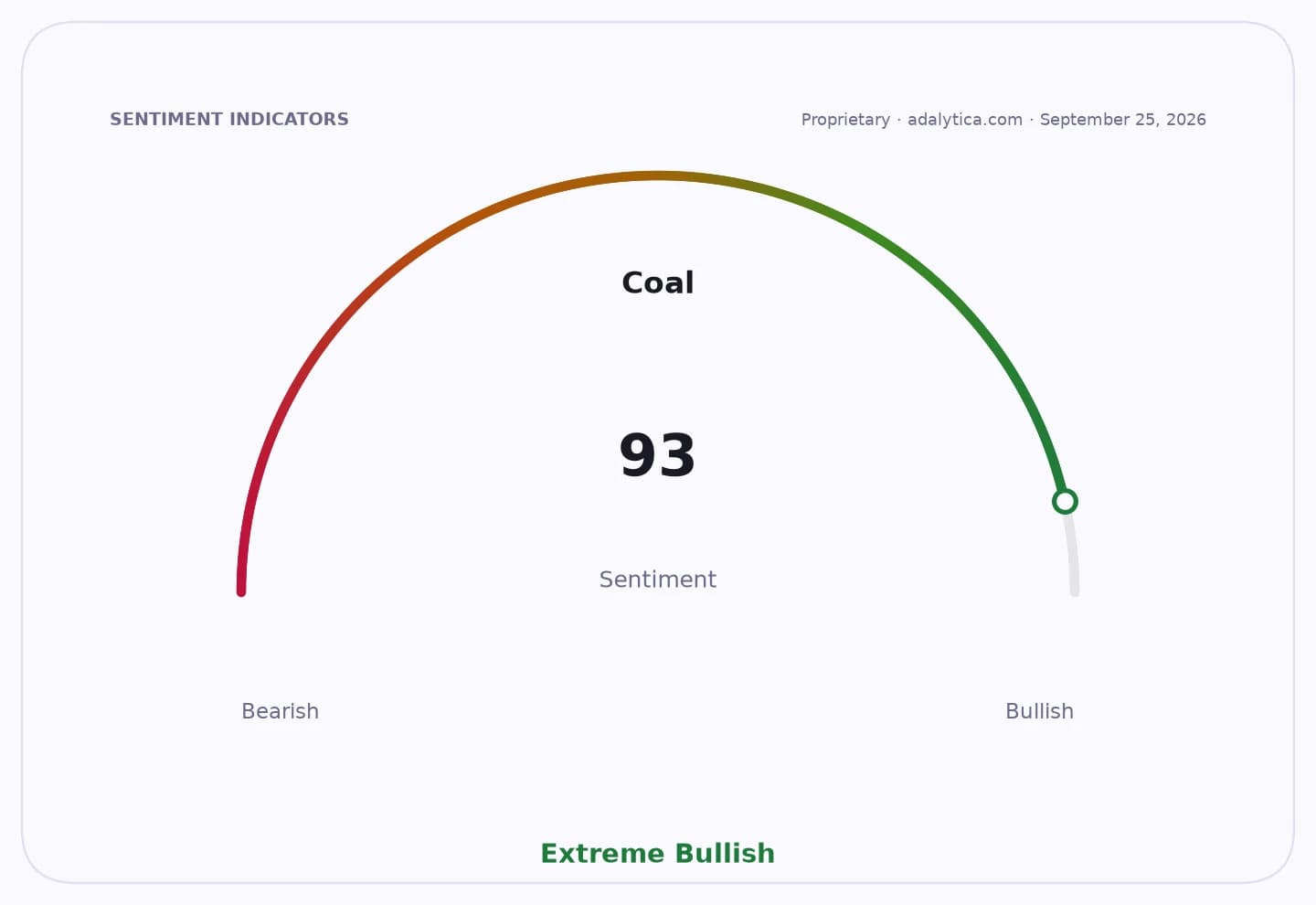
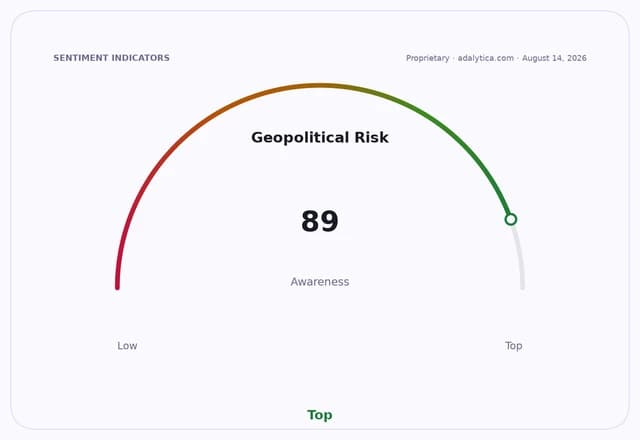
Sentiment IndicatorsⓘProprietary · adalytica.com · August 14, 2026
This is a snapshot — live sentiment, awareness and momentum for 130+ markets update continuously in the dashboard.Open AlphaPulse
That is the immediate investor question for defense names tied to unmanned systems and broader military hardware. The iShares U.S. Aerospace & Defense ETF, ITA, is up to $249.69 from $204.52 in mid-December, a gain of about 22%, while the SPDR S&P Aerospace & Defense ETF, XAR, has climbed to $292.10 from $273.40 in early June and the Direxion Daily Aerospace & Defense Bull 3X Shares, DFEN, has surged to $84.77 from $65.21 over the same span.
The technical backdrop suggests the group remains well supported despite the latest pullback from recent highs. ITA’s 50-day moving average stands at $239.18 versus a close of $249.69, XAR’s 50-day moving average is $276.60 versus $292.10, and DFEN’s 50-day moving average is $76.41 versus $84.77, showing all three funds still trade above their intermediate trend.
But momentum has cooled at the margin. ITA’s RSI reading has slipped to 63.3 from overbought territory near 75 earlier this month, while XAR’s RSI is 68.9 and DFEN’s is 63.8, leaving the sector firm but no longer in the most stretched part of the rally. Analysts and investors will be watching whether tariff-driven reshoring offsets margin pressure or simply raises costs across the supply chain.
The broader market backdrop is also turning more sensitive to geopolitical shocks. Adalytica’s Global Stability Sentiment gauge has dropped to 36 from 89 a day earlier, underscoring how quickly trade and security headlines are resetting risk appetite, even as the S&P 500 trade-signal snapshot remains neutral.
The next catalyst is whether Washington widens the tariff regime, whether allies retaliate and whether defense contractors flag any material procurement changes in coming earnings updates.
| Entity | Gains | Losses |
|---|---|---|
| U.S. drone makers | ▲Less import competition | ▼Higher component costs |
| Domestic defense contractors | ▲Potential order shift | ▼Supply-chain disruption |
| Importers and shippers | ▲Some tariff clarity | ▼Steeper landed costs |
| Foreign drone suppliers | ▲None | ▼Lost U.S. market access |