Agricultural input prices climbed in August, with higher energy and lubricants costs and rising building maintenance expenses underscoring a renewed squeeze on farm margins even as broader price pressures remain far below their 2022 peak.
U.S. Farm Input Costs Rise in August
The increase matters because input inflation tends to feed quickly into farm profitability, planting decisions and, with a lag, food costs. The latest U.S. producer price data show agricultural inputs rising 0.96% in August after a 1.44% decline in June and a 0.29% fall in July, leaving the index at 287.928. A September forecast points to only a 0.03% further increase, suggesting the latest move is not yet a new inflation wave, but it does show costs are no longer easing uniformly.
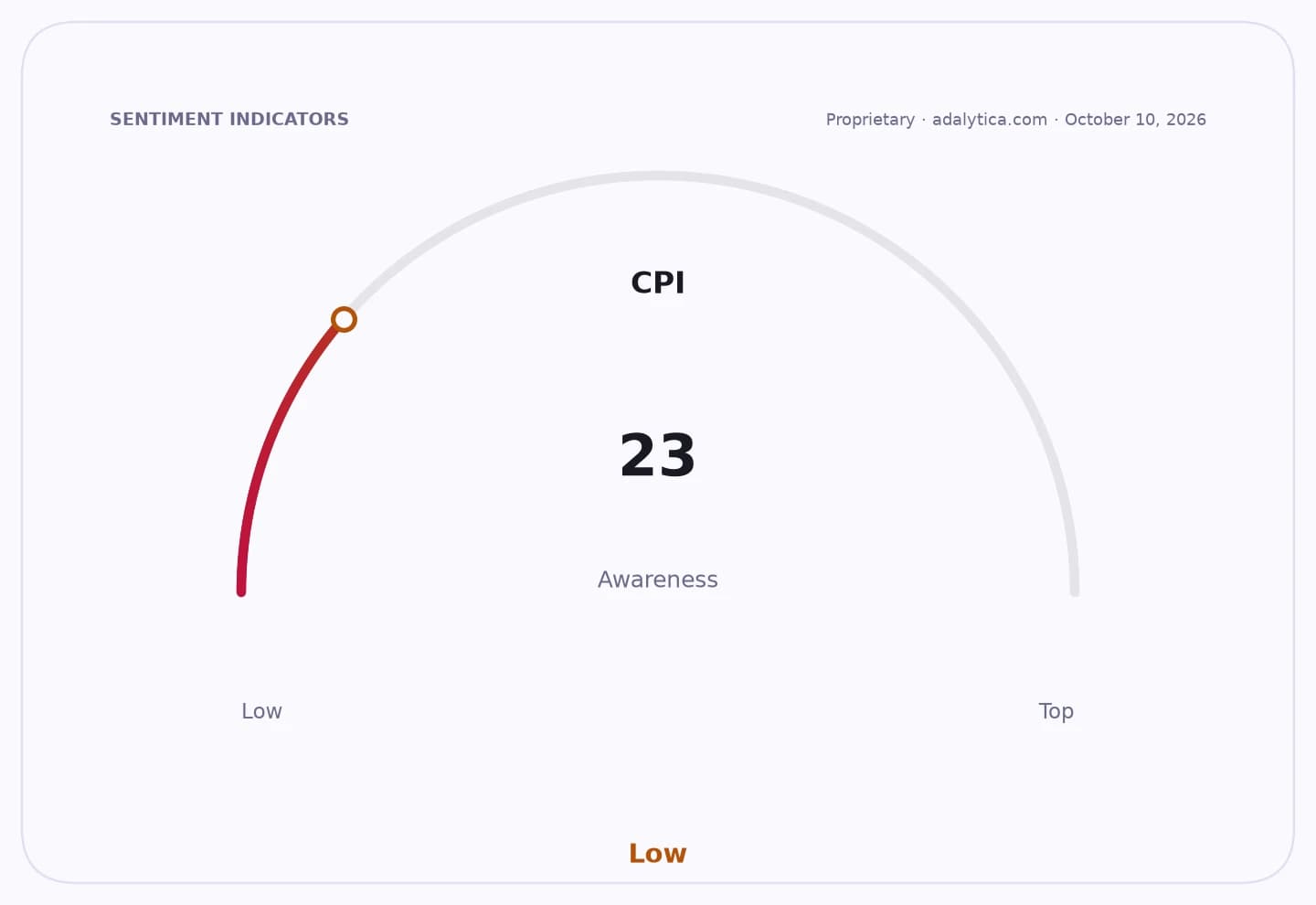
Sentiment IndicatorsⓘProprietary · adalytica.com · October 15, 2026
This is a snapshot — live sentiment, awareness and momentum for 130+ markets update continuously in the dashboard.Open AlphaPulse
Energy is the clearest driver. West Texas Intermediate crude has bounced sharply from $85.23 a barrel on Sept. 25 to $96.24 on Oct. 6, a roughly 13% jump in less than two weeks. That matters for fuel, transport and on-farm power use, all of which hit farmers directly and also raise the cost of moving crops and livestock through the supply chain. Maintenance costs are also rising, adding to the burden at a time when equipment and infrastructure spending has already been elevated across the sector.
For investors, the read-through is mixed. Higher input costs can support pricing power for suppliers such as Deere and AGCO if farmers are forced to spend more to keep operations running, but they also risk delaying discretionary equipment purchases if margins tighten. Deere shares have held well above their 200-day moving average despite a recent pullback, while AGCO has weakened to $106.78, below both its 50-day and 200-day moving averages, reflecting a more cautious view on farm spending. Fertilizer names remain vulnerable to any further deterioration in farm economics: Mosaic has fallen to $19.01, while crop protection and input suppliers could benefit if farmers prioritize yield protection over capital investment.
PPIACO vs DCOILWTICO — macro contextadalytica.com
Explore this data interactively — full history, time series and cross-market comparisons.Open AlphaPulse
The broader narrative is one of a farm sector caught between softer commodity prices, uneven demand and stubborn operating costs. That is why input inflation matters more than the modest monthly headline suggests: when energy and maintenance rise together, they can compress margins even if crop prices stay stable. The next test will be whether crude’s recent rebound persists and whether the September input print confirms August as a one-off or the start of a firmer cost trend.
| Entity | Gains | Losses |
|---|---|---|
| Energy suppliers | ▲Higher fuel revenue | ▼Farm operators |
| Deere and AGCO | ▲Potential service and parts demand | ▼Buyers delaying equipment |
| Mosaic and input peers | ▲Pricing support if costs pass through | ▼Farmers’ profit margins |