The United States is trying to take ownership of a Gulfstream G550 registered in China after the business jet was confiscated following a flight to Iran, turning a single aircraft into a test case for sanctions enforcement and the risks facing cross-border aviation assets.
U.S. Seeks Gulfstream G550 Registered in China
US-China Relations
That matters because Washington is not just impounding metal and engines; it is signaling that aircraft linked to sanctioned destinations can be treated as recoverable strategic assets. In a market where business jets are expensive, mobile and often financed across jurisdictions, aggressive seizure actions raise the legal and political cost of routing aircraft through prohibited airspace or sanctioned counterparties.
Sentiment Indicators
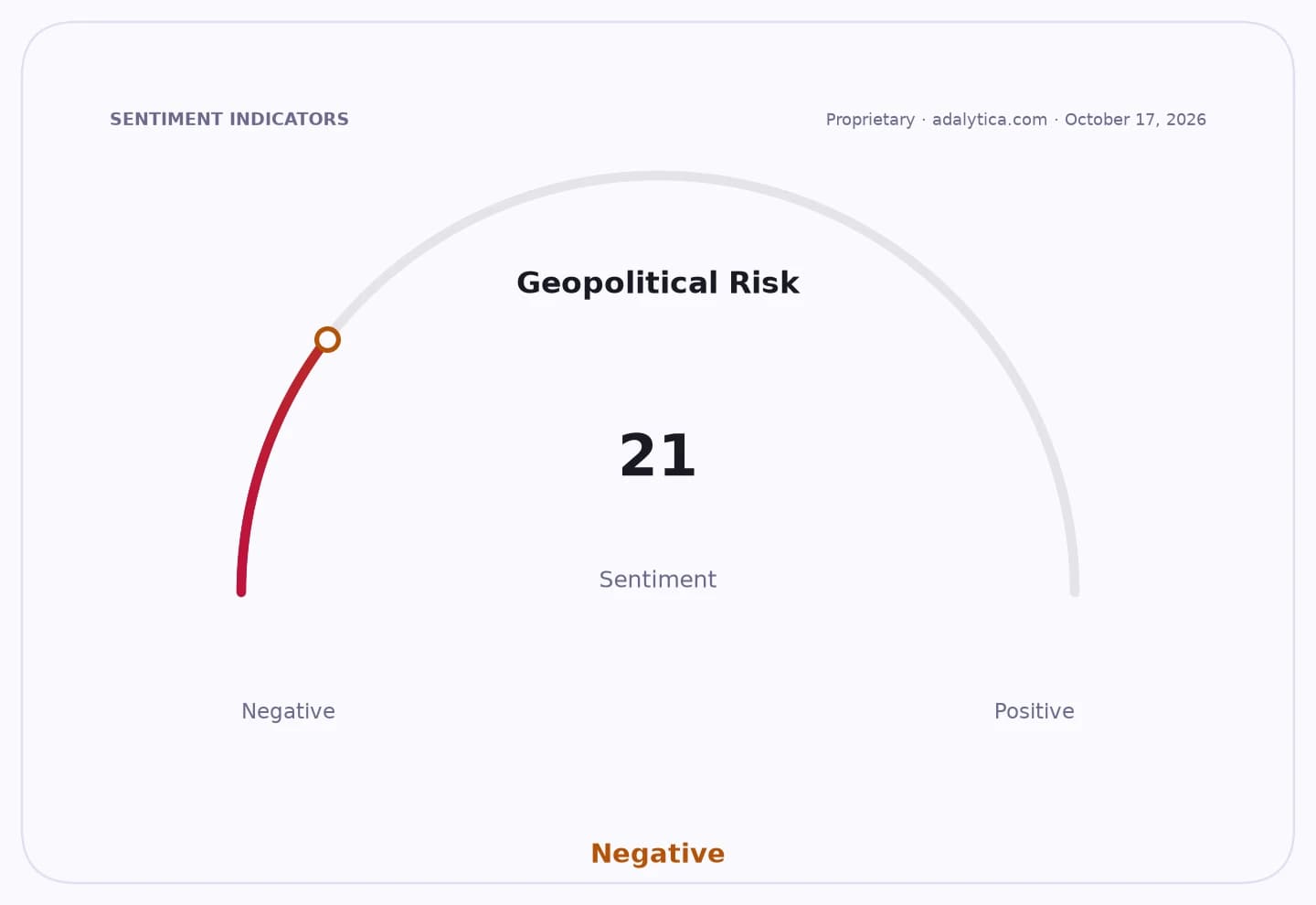
The move comes as tensions between the U.S. and Iran remain elevated and as security concerns ripple through European and Middle Eastern aviation networks. The broader backdrop is one of tighter scrutiny over aircraft that touch restricted destinations, with governments increasingly willing to use customs, sanctions and forfeiture tools to block owners from quietly reclaiming value.
For investors, the story cuts beyond this one Gulfstream. It reinforces a premium for companies that can navigate sanctions compliance, aircraft registration, asset recovery and geopolitical risk. Lessors, financiers and operators with exposure to international business aviation now face a more adversarial enforcement environment, while defense and security contractors benefit from a world where governments are leaning harder on surveillance, interdiction and asset tracking.
The market is already telling part of that story. General Dynamics, Gulfstream’s parent, has held up far better than many aerospace names, with the stock at $362.36 on Nov. 13, above its 50-day and 200-day moving averages, even as technical momentum has cooled from recent highs. Boeing, by contrast, remains under pressure, with shares near $170.96 and still below both its 50-day and 200-day averages, a reminder that aerospace investors are still pricing in execution risk and geopolitical friction rather than smooth global demand.
There is also a wider macro signal here. Oil near $89.62 a barrel and the 10-year Treasury yield around 4.95% suggest the cost of capital and the cost of moving goods and people internationally remain elevated. In that environment, enforcement actions against aircraft assets are not isolated legal disputes; they are part of a broader tightening of the global operating system.
Our thesis is simple: the market underestimates how much geopolitics is becoming a persistent revenue driver for the aerospace-defense complex. The best-positioned names are not just those building aircraft, but those enabling resilience, compliance and state power as global aviation becomes more politically constrained.
Investors should watch for a spillover into maintenance, surveillance, defense electronics and sanctioned-asset recovery services. If Washington follows through on this seizure, it could harden a precedent that makes international aircraft ownership more expensive, more complex and more valuable for the firms that help governments police it.
| Entity | Gains | Losses |
|---|---|---|
| U.S. government | ▲Sanctions leverage | ▼Diplomatic friction |
| Gulfstream / General Dynamics | ▲Compliance demand | ▼Ownership uncertainty |
| Aircraft financiers / lessors | ▲Recovery services demand | ▼Cross-border asset risk |
| Iran-linked operators | ▲None | ▼Asset seizure risk |