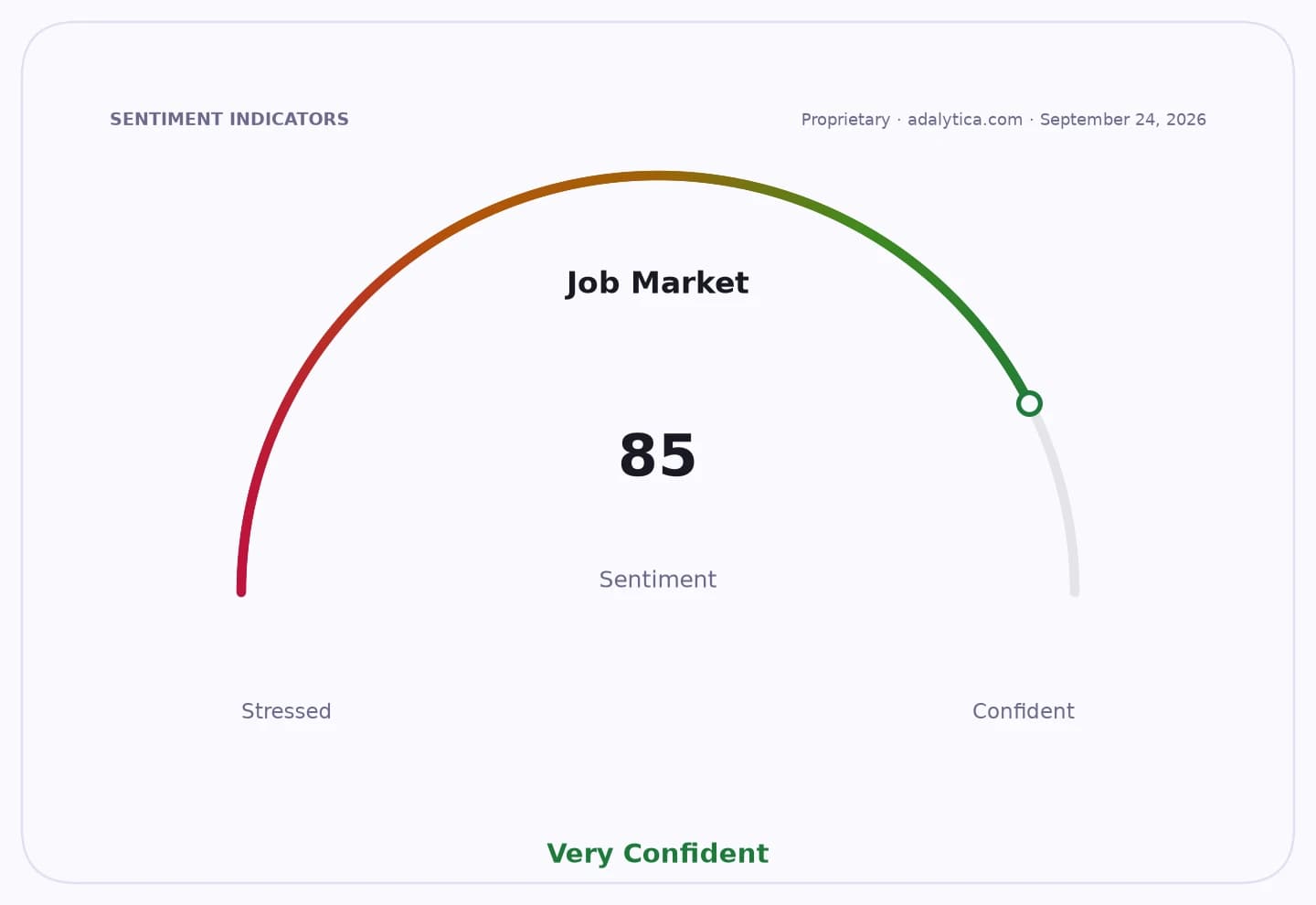
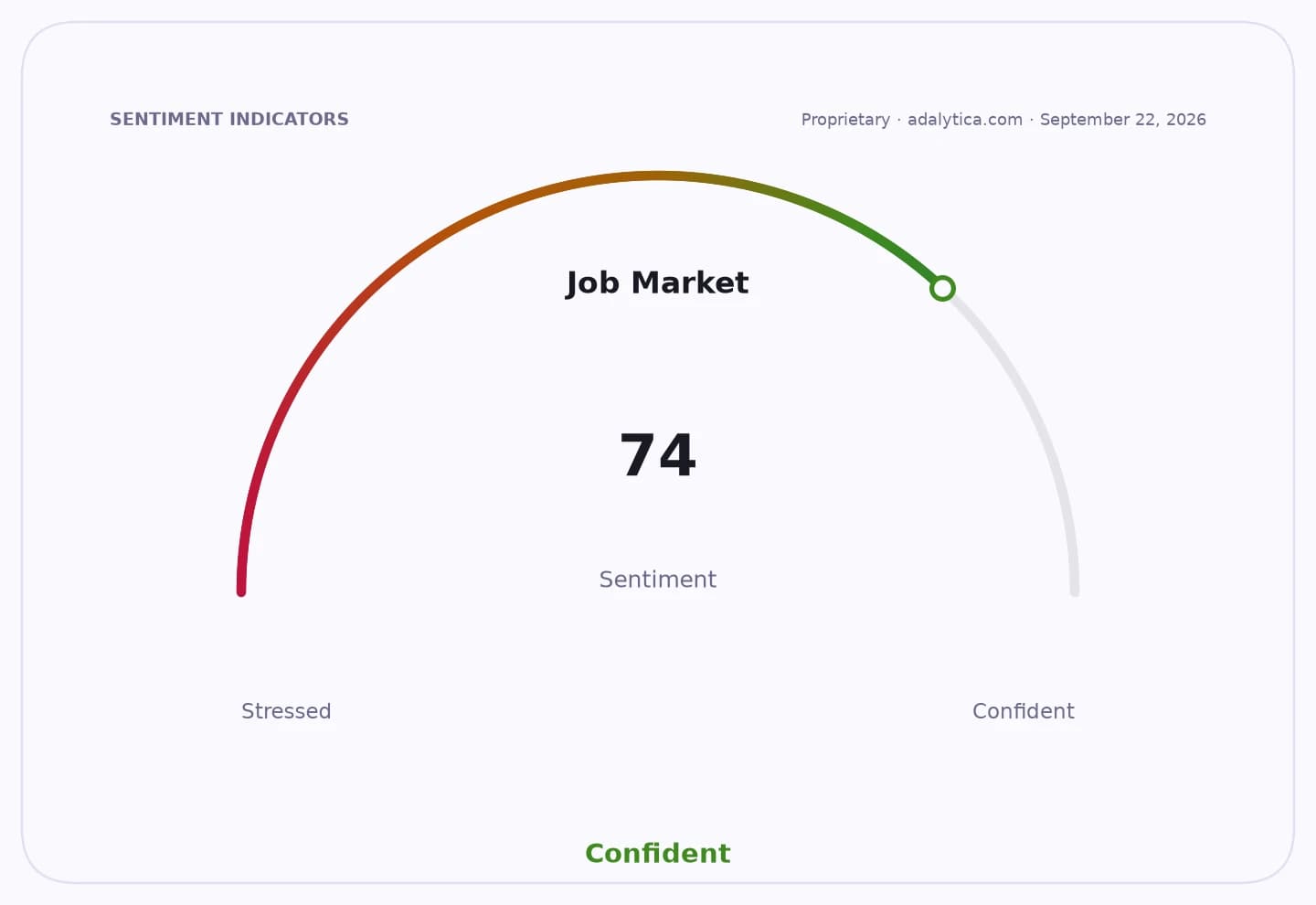
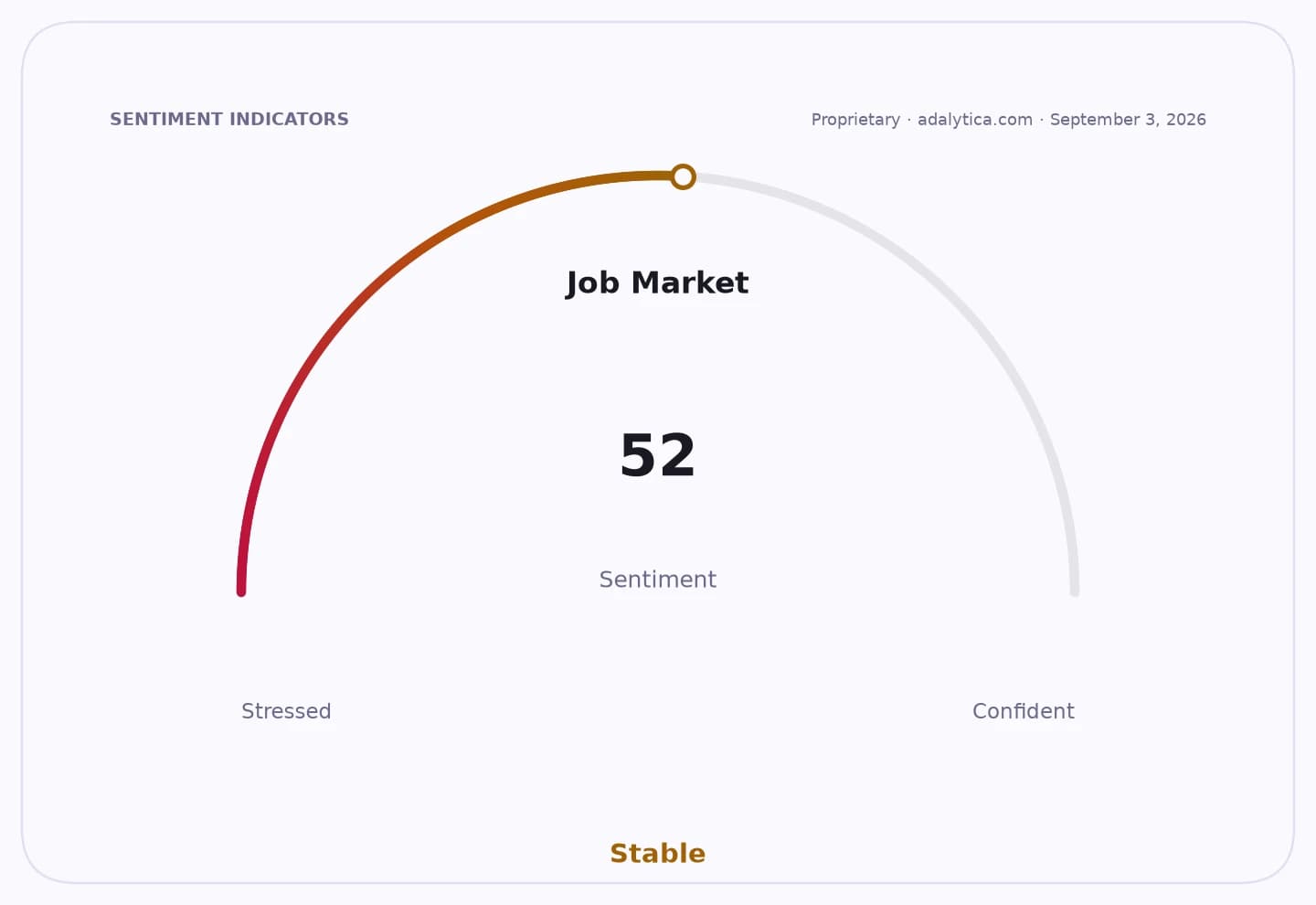
Employers are still hiring like the labor market is stuck in the pre-AI era, and that mismatch is becoming a real economic cost for companies and investors alike.
U.S. hiring shifts toward skills-based matching
The problem is not simply a shortage of workers. It is a shortage of the right skills being matched to the right jobs. Applications per opening have nearly doubled since 2022, yet two-thirds of hiring leaders still say it is harder to find qualified talent than a year ago. That tension tells you the labor market is not broken so much as miswired.
Sentiment IndicatorsⓘProprietary · adalytica.com · September 4, 2026
This is a snapshot — live sentiment, awareness and momentum for 130+ markets update continuously in the dashboard.Open AlphaPulse
For investors, that matters because mis-hiring slows execution, raises turnover and keeps wage pressure elevated in the wrong places. It also means companies that can recruit by skills rather than pedigree may build better teams faster, especially as artificial intelligence changes how work gets done. Firms that keep screening by old markers — school, title, prior employer, personal network — risk overlooking candidates who can actually do the job.
The macro backdrop reinforces that view. U.S. unemployment is low at 4.1%, payrolls remain high at nearly 159 million, and the job market still looks resilient on the surface. But the hiring engine is no longer operating the way it did in the last cycle. AI is lowering some barriers for applicants while forcing employers to rethink which tasks still need humans, which roles can be redesigned and which managers need new training of their own.
That is why this is more than an HR story. It is a productivity story. Companies that keep layering AI onto old org charts may only make old workflows faster, not better. The winners will be the employers that redesign jobs, strip out unnecessary degree and tenure requirements, and train managers to lead in a changing workplace. That should help them hire broader, adapt faster and get more output from each employee over time.
The stock market angle is straightforward. Workforce software, staffing and human capital management providers can benefit as employers search for better matching, reskilling and manager training tools. ADP and ManpowerGroup are already trading like investors expect labor-management demand to stay relevant, while Korn Ferry stands to gain if more companies focus on skills mapping and leadership development. The bigger long-term winners, though, may be the companies inside the economy that learn to recruit and organize around capabilities rather than credentials.
For long-term investors, the lesson is simple: the labor market is shifting from résumé-based hiring to skills-based hiring, and that transition should reward adaptable businesses. If you are building a portfolio for the next three to 10 years, this is the kind of structural change worth watching closely and, for the best operators, considering for the long haul.
| Entity | Gains | Losses |
|---|---|---|
| Skills-based employers | ▲Better talent match | ▼Less reliance on pedigree |
| Legacy hiring models | ▲Familiar processes | ▼Missed candidates |
| ADP, ManpowerGroup, Korn Ferry | ▲Demand for talent tools | ▼Old screening habits |
| Job seekers with nontraditional backgrounds | ▲Fairer access | ▼Degree-first filters |