The US is accelerating work on a next-generation hypersonic cruise missile as China’s latest scramjet-powered weapons display has sharpened pressure on Washington to close a widening strategic gap.
US Hypersonic Missile Program Advances
DARPA plans to meet defense contractors at the end of September to define early requirements for a Next Generation Hypersonic Cruise Missile program, with a focus on air-breathing propulsion. The move suggests the Pentagon is no longer content with incremental upgrades and is instead trying to build a new class of weapon that can fly farther, stay fast longer and be harder to intercept.
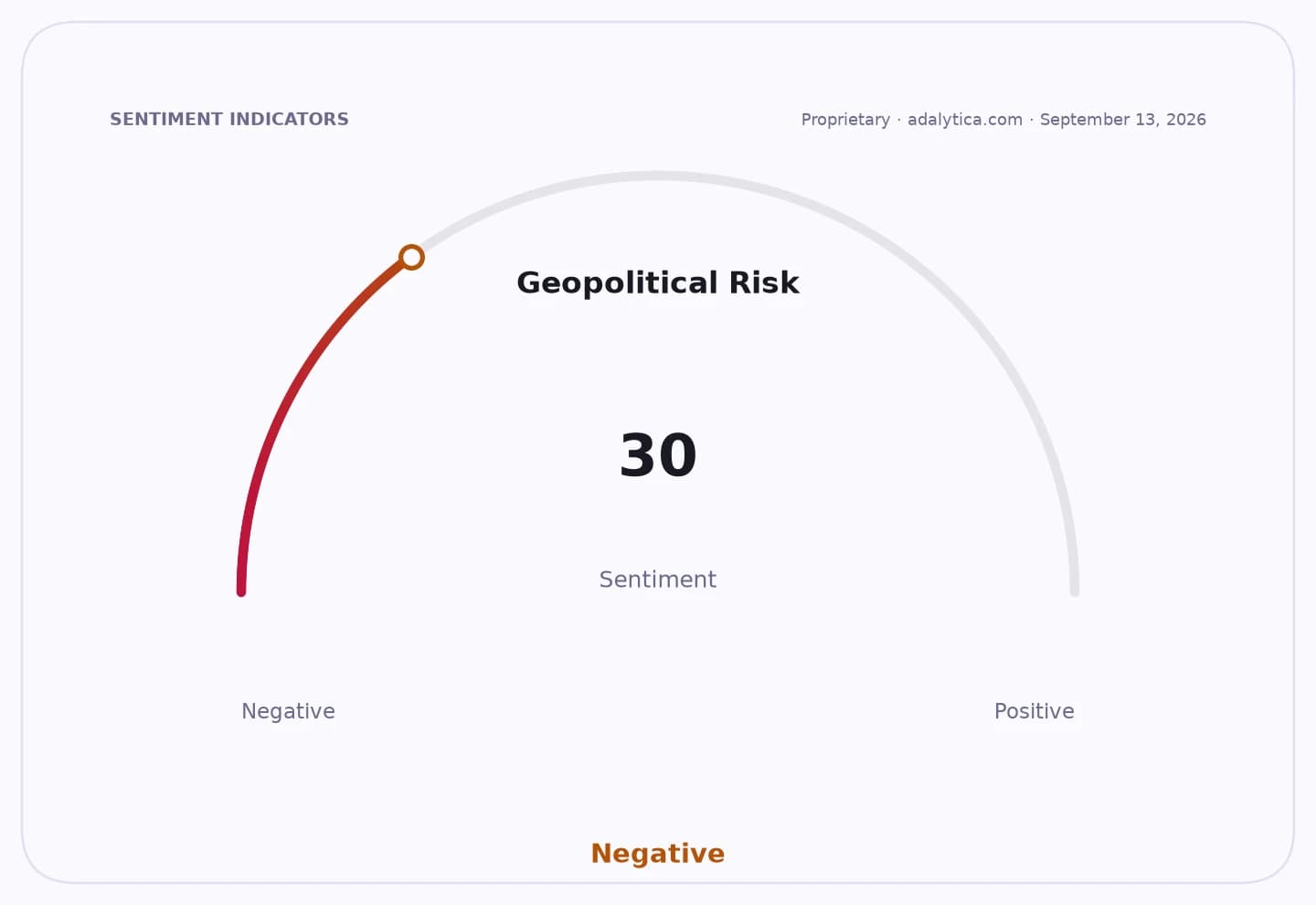
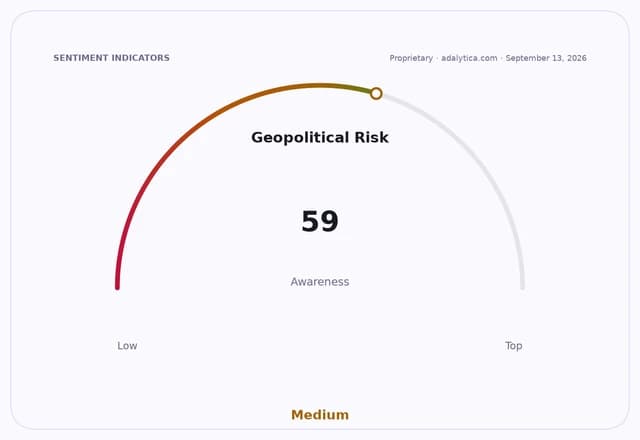
Sentiment IndicatorsⓘProprietary · adalytica.com · September 13, 2026
This is a snapshot — live sentiment, awareness and momentum for 130+ markets update continuously in the dashboard.Open AlphaPulse
That matters economically because hypersonic systems sit at the center of a broader rearmament cycle that is pushing the US defense-industrial base to expand production, invest in propulsion and thermal-management technologies, and absorb higher development risk. Hypersonic weapons are difficult to defend against because they compress detection and interception windows, forcing rivals to spend more on sensors, air defense and missile shields.
China’s September 2025 military parade in Beijing, where it unveiled the YJ-19 and the larger CJ-1000, underscored why the US is moving. Both are believed to use scramjet engines, which pull oxygen from the atmosphere instead of carrying oxidizer on board, allowing more room for fuel or payload and potentially longer high-speed flight.
The YJ-19 is seen as an anti-ship missile aimed at threatening large surface combatants from standoff distances, while the larger CJ-1000 is thought to be designed for long-range strikes against land, sea and air targets. If those capabilities mature, they would complicate naval defense planning across the Pacific and add pressure on US allies that rely on American missile defenses.
For investors, the story reinforces why defense primes tied to advanced weapons, propulsion and air and missile defense remain in focus. Lockheed Martin, Northrop Grumman and RTX all stand to benefit from sustained Pentagon demand for next-generation strike systems, interceptors and supporting sensors, even as investors watch whether development-heavy programs translate into margin pressure before production ramps.
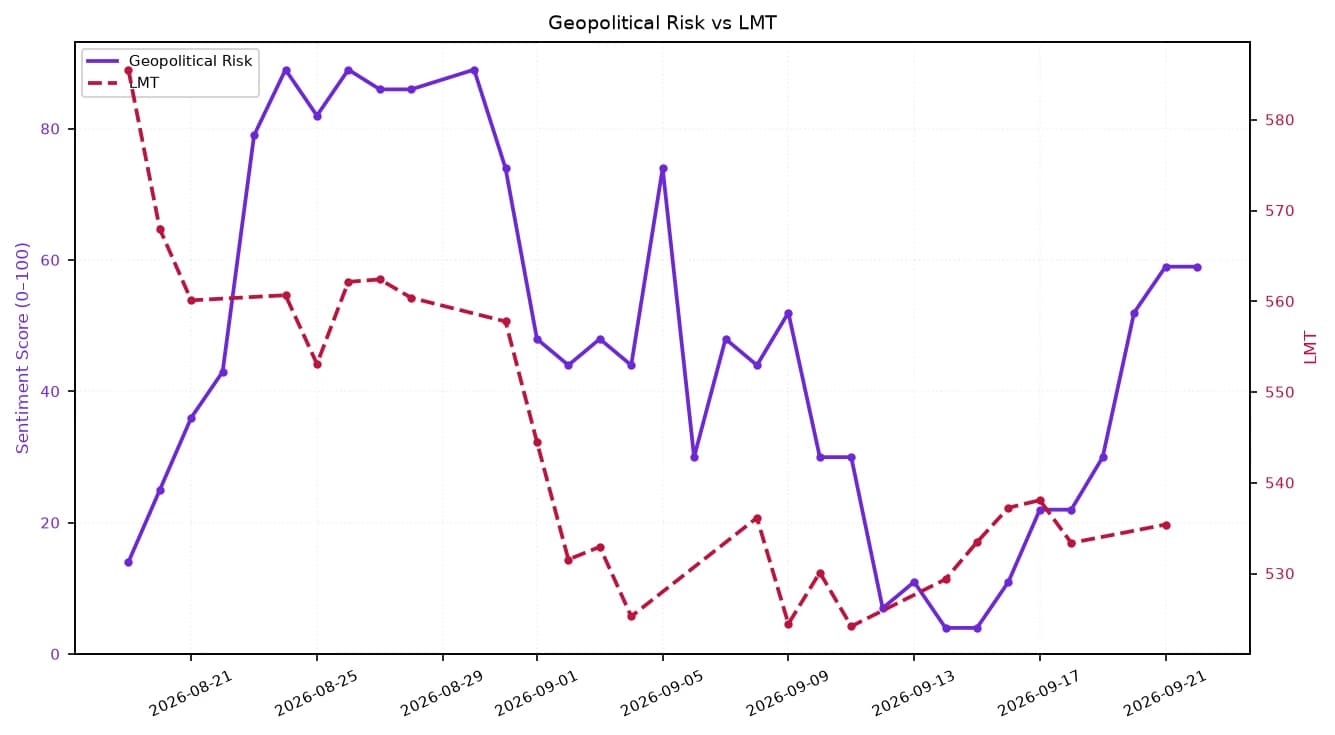
The technical setup in those names reflects that tension. Lockheed Martin has fallen to $524.19 from an August peak near $603, while its 50-day moving average sits at $553.51 and RSI readings are near 30, suggesting the stock has cooled sharply after an overbought stretch. Northrop Grumman has dropped to $518.97 from $567.62 on Aug. 17, with its share price below both the 50-day and 200-day moving averages, while RTX is down to $197.68 from $225.49 in mid-August.
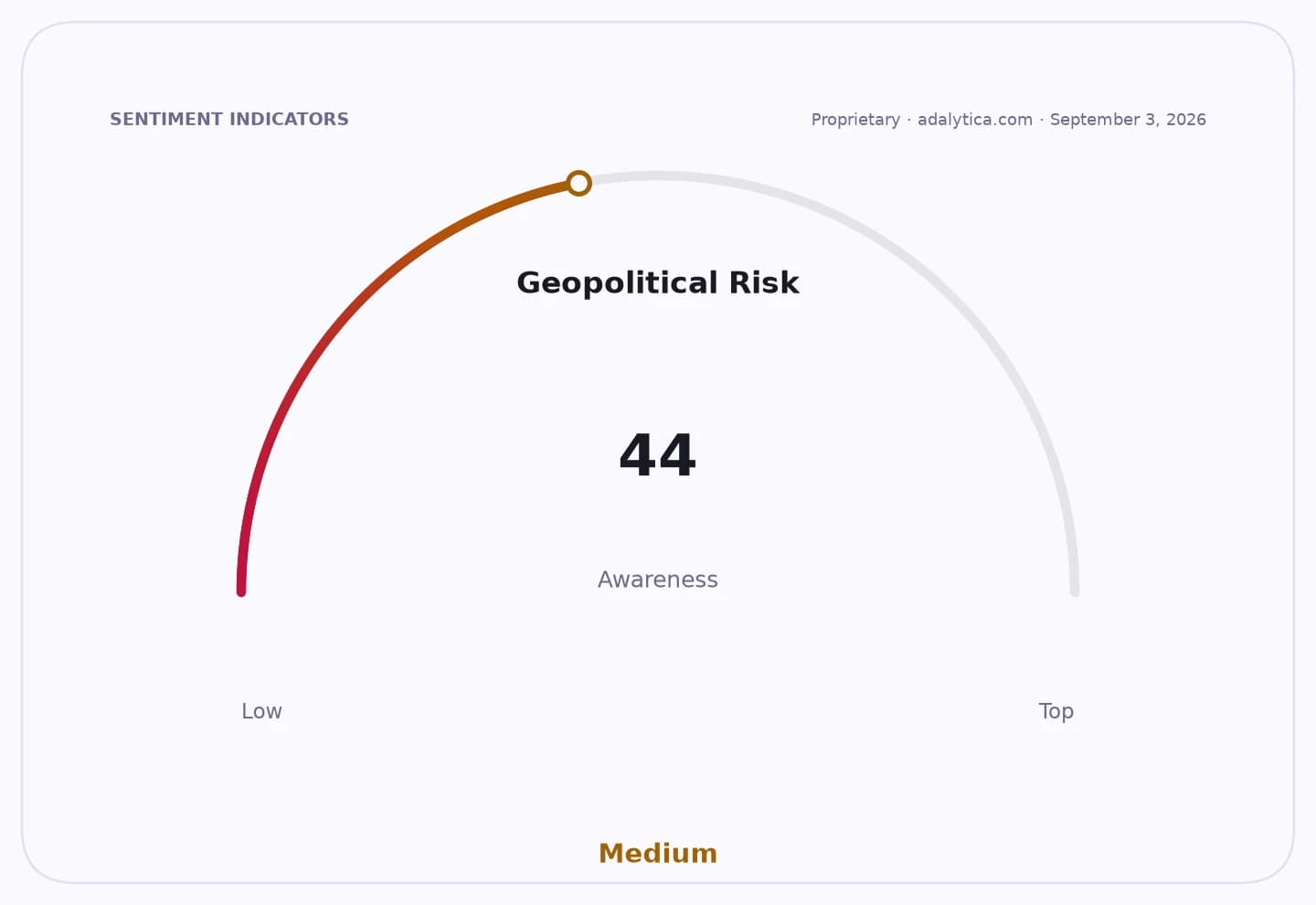
Adalytica’s US–China relations gauge shows extreme fear on the awareness side even as sentiment remains elevated, reflecting how geopolitical risk is increasingly priced into defense-related trading. The broader global stability snapshot also points to a more cautious backdrop, which tends to support spending on strategic deterrence and missile defense.
The next catalyst is DARPA’s September contractor meeting, which should clarify whether the US wants a demonstrator, a prototype or a longer procurement runway — a distinction that will shape which contractors win early work and how quickly the market revalues the hypersonics theme.
| Entity | Gains | Losses |
|---|---|---|
| Lockheed Martin | ▲Next-gen missile work | ▼Near-term margin pressure |
| Northrop Grumman | ▲Air and missile defense demand | ▼Funding competition |
| RTX | ▲Sensor/interceptor demand | ▼Slower program awards |
| China | ▲Strategic deterrence leverage | ▼US defense buildup |