U.S. industrial inflation remained subdued in July, with the producer price index for finished goods still restrained by softer food and electricity costs even as broader energy prices began to firm.
U.S. industrial inflation stays subdued in July
That matters because it suggests the inflation picture remains uneven: headline price pressures are no longer collapsing, but key input categories for manufacturers and consumers are not yet feeding through in a way that would force a broad reacceleration. For the Federal Reserve, the data support a view that disinflation is continuing in some parts of the economy even as commodity-driven volatility threatens to keep the path back to 2% bumpy.
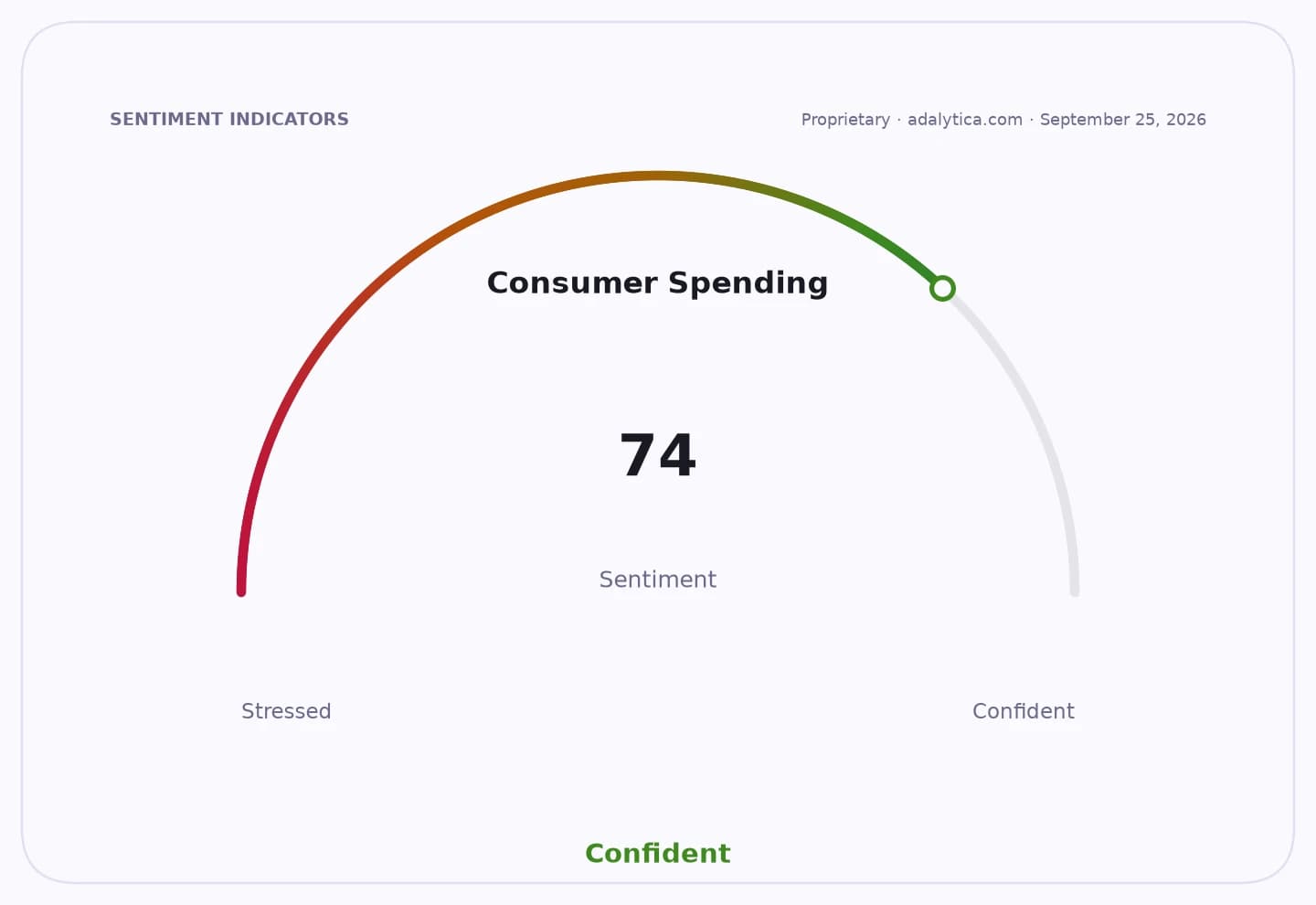
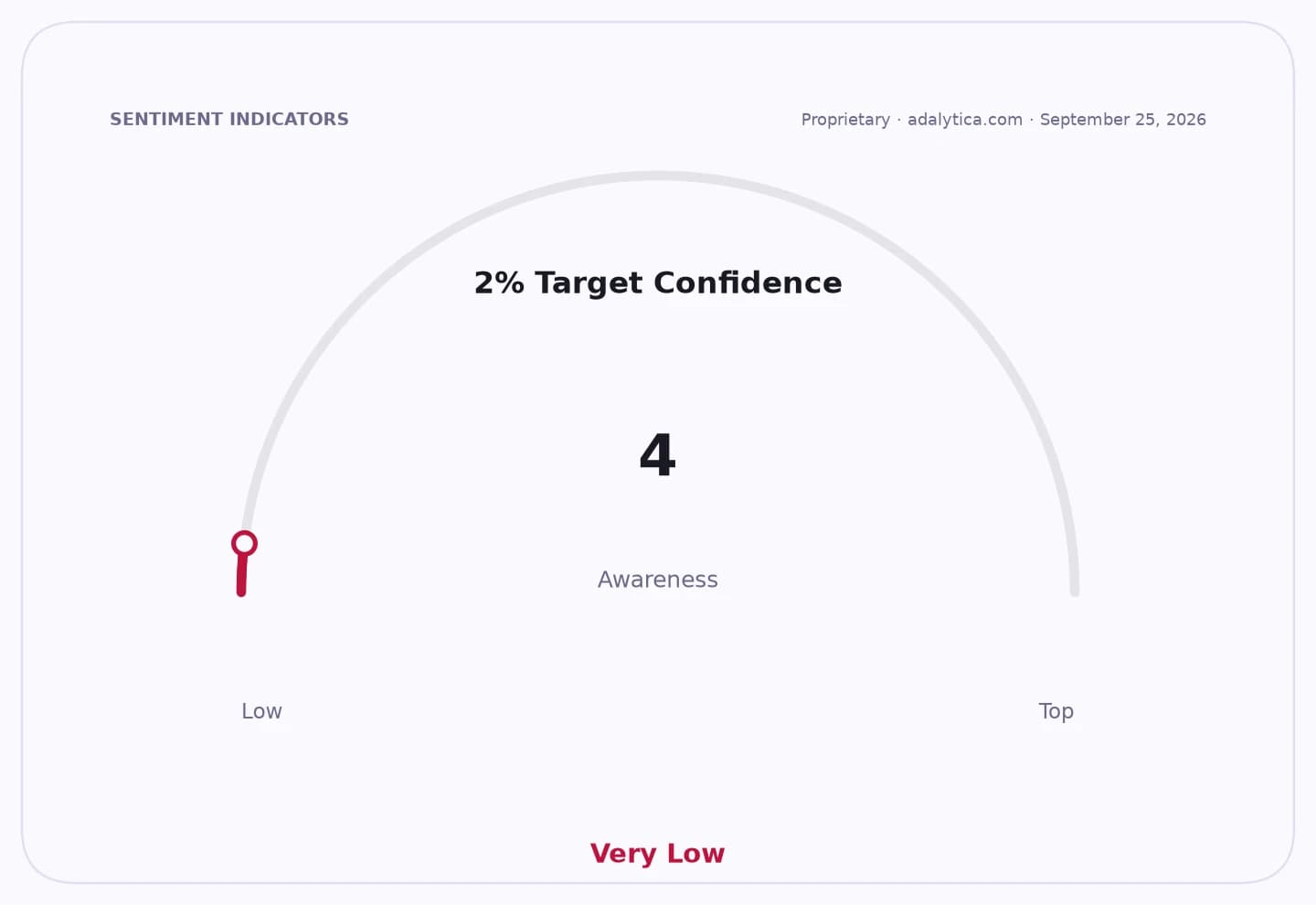
Sentiment IndicatorsⓘProprietary · adalytica.com · August 17, 2026
This is a snapshot — live sentiment, awareness and momentum for 130+ markets update continuously in the dashboard.Open AlphaPulse
The producer price index for all commodities, tracked in the PPIACO series, stood at 284.057 in July, down 0.8% from June and modestly below the 2022 peak of 280.251 before a broader run-up resumed this year. The forecast for August points to 289.769, a 2.01% increase, underscoring that price pressure at the wholesale level may be turning higher again after a mid-summer dip.
The consumer side looks calmer, at least for now. The CPI series was last at 332.813 in July, little changed from June’s 332.568, with the August forecast implying only a 0.35% rise. That gap between sticky consumer prices and more contained industrial inputs matters for margins: firms have had less room to pass through higher costs, which can squeeze profitability if raw materials and energy keep rising.
Oil is the main wildcard. West Texas Intermediate has rebounded from 79.77 a barrel on Aug. 7 to 84.77 on Aug. 11, and the August 12 forecast points to 87.05. That move is large enough to ripple through transport, chemicals, packaging and food production. But so far, the equity market is treating the inflation threat as manageable rather than systemic: the Energy Select Sector SPDR, XLE, has climbed to 61.91 from 57.31 just a week earlier, while the Industrial Select Sector SPDR, XLI, has also firmed to 186.51.
Defensive consumer shares have held up too. The Consumer Staples Select Sector SPDR, XLP, rose to 86.09 from 85.08 on Aug. 12, reflecting a market bias toward companies with pricing power and more stable demand if energy costs keep rising. That rotation suggests investors are still more focused on sector differentiation than on a blanket inflation shock.
The bigger economic takeaway is that industrial inflation is low for now because the most volatile input categories have not yet broadened out into a sustained surge. If electricity and food remain contained, manufacturers may preserve some margin relief even if oil stays elevated. If not, the next leg higher in energy could quickly show up in producer prices and revive concern that inflation is proving stickier than central banks want.
For investors, the key question is whether the current move in oil becomes a short-lived commodity swing or the start of a wider cost squeeze. Energy producers benefit if crude holds firm, while airlines, transport firms, industrials and packaged food companies are more exposed if input costs keep climbing without equivalent pricing power.
| Entity | Gains | Losses |
|---|---|---|
| Energy producers | ▲Higher revenue from crude rebound | ▼Risk of demand destruction if prices spike too far |
| Industrial firms | ▲Some relief from still-mild input inflation | ▼Margin pressure if oil feeds through to costs |
| Consumer staples | ▲Relative demand stability | ▼Higher packaging and logistics costs |
| Fed / policymakers | ▲More time to watch disinflation | ▼Less room if energy reignites inflation |