Low-skilled workers are facing a sharper deterioration in working conditions just as the labor market remains tight enough to keep payrolls rising, exposing a widening divide between headline employment strength and the quality of jobs on offer.
U.S. labor market split widens for low-skilled workers

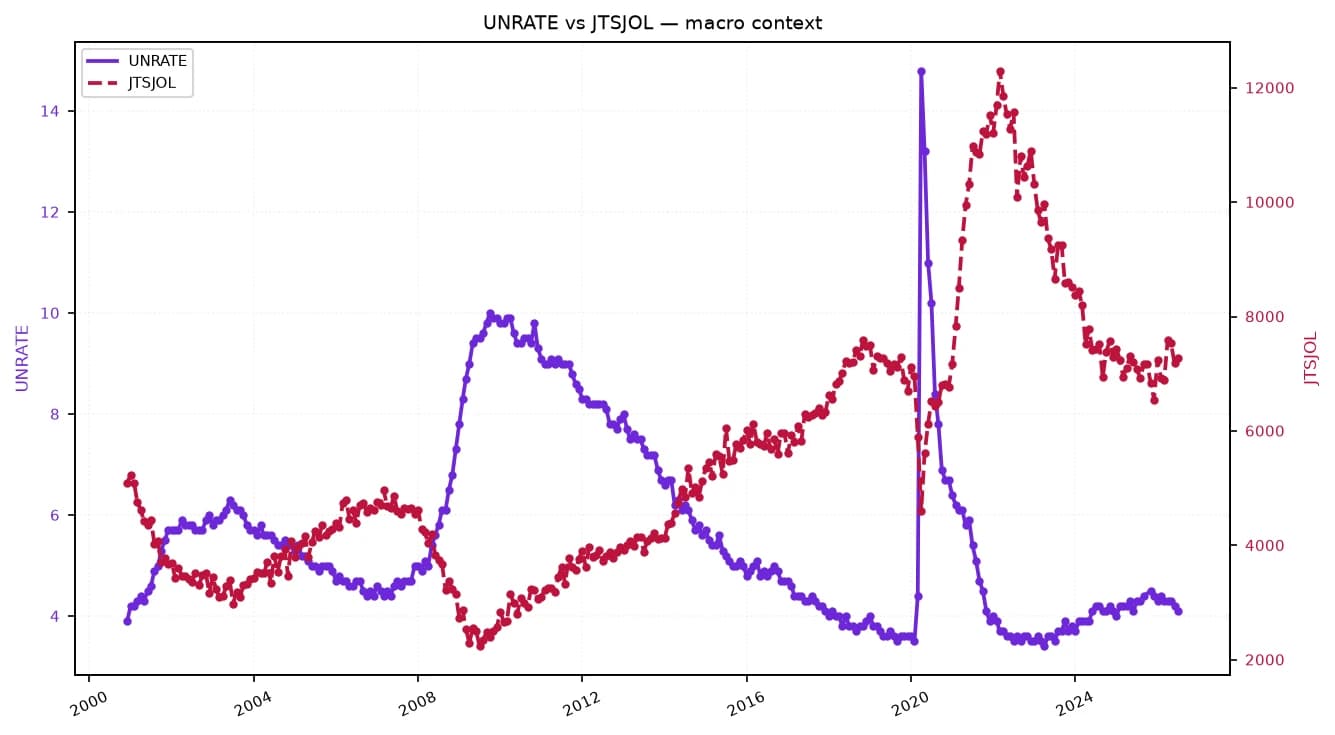
That gap matters because it points to a more fragile consumer economy than the unemployment rate alone suggests. In the U.S., nonfarm payrolls are still projected to edge up to 159.1 million in September from 159.1 million in August, while job openings are expected to rise to 7.4 million in August from 7.3 million in July and the unemployment rate is seen easing to 4.02% from 4.1%. On paper, that is not a collapse. But the strain is showing up where labor has the least bargaining power: in lower-paid, lower-skill roles where schedules are more volatile, staffing levels thinner and work more easily outsourced, automated or restructured.
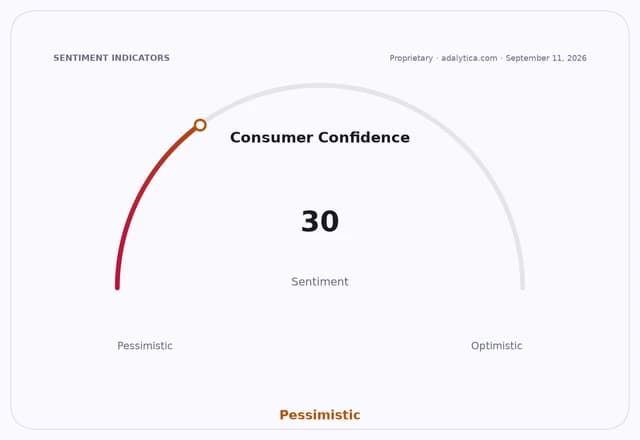
Sentiment IndicatorsⓘProprietary · adalytica.com · September 11, 2026
This is a snapshot — live sentiment, awareness and momentum for 130+ markets update continuously in the dashboard.Open AlphaPulse
Investors should read that as a margin story as much as a labor story. Companies are keeping costs under pressure by leaning harder on flexible labor, tighter staffing and productivity gains, a pattern that helps earnings in the near term but can erode service levels and eventually consumer demand. McDonald’s, for example, has already told investors it has struggled to staff some restaurants adequately, a problem that can hit speed of service and customer satisfaction. FedEx has also flagged workforce reduction plans and operational transformation costs, underscoring that employers across the economy are still pruning labor even as they talk up efficiency.
The market implication is that the winners are not the broad workforce, but the businesses selling labor-saving tools, automation and logistics efficiency. Industrials, which have been weak on a short-term technical basis, with XLI trading below its 50-day moving average and momentum indicators pointing down, remain a long-cycle beneficiary if firms keep substituting capital for labor. Small caps, as reflected by IWM, have also lost momentum, suggesting investors are not yet fully pricing in the pressure on labor-intensive businesses that rely on discretionary spending and abundant hiring.
UNRATE vs JTSJOL — macro contextadalytica.com
Explore this data interactively — full history, time series and cross-market comparisons.Open AlphaPulse
The narrative here is not simply “jobs are fine” or “jobs are bad.” It is that labor-market resilience is increasingly concentrated in quantity, not quality. A jobs market can stay statistically healthy while working conditions worsen for the people with the weakest negotiating power. That is politically sensitive, economically important and investable: the longer employers defend margins by compressing labor conditions, the more attractive automation, productivity software, warehouse robotics and payment infrastructure become.
The market is underestimating how durable that shift may be. If the next leg of growth comes from squeezing more output from fewer and cheaper labor hours, then the best-positioned investors will be those leaning into the picks-and-shovels of labor replacement, not the companies still exposed to staffing friction and wage pressure. That is where the asymmetric upside sits now.
| Entity | Gains | Losses |
|---|---|---|
| Automation and robotics firms | ▲Higher demand for labor-saving tools | ▼None from wage pressure |
| Large employers | ▲Better near-term margins | ▼Service quality and morale |
| Low-skilled workers | ▲Little near-term benefit | ▼Weaker conditions and bargaining power |
| Labor-intensive retailers and shippers | ▲Productivity pressure may force upgrades | ▼Higher staffing friction and operating risk |