US liquefied natural gas exports to Europe jumped by nearly 1 million tonnes in October as buyers rushed to secure supply before winter and took advantage of a wider price gap with Asia, underscoring how tight global gas markets are keeping Atlantic flows elevated.
US LNG exports to Europe rise to second-highest on record

Shipments to Europe rose to 6.89 million metric tons last month from 5.91 million in September, according to LSEG data, the second-highest monthly total on record. The increase comes as European gas prices hit multi-year highs, forcing utilities and traders to compete more aggressively for cargoes even as the region tries to refill storage ahead of peak heating demand.
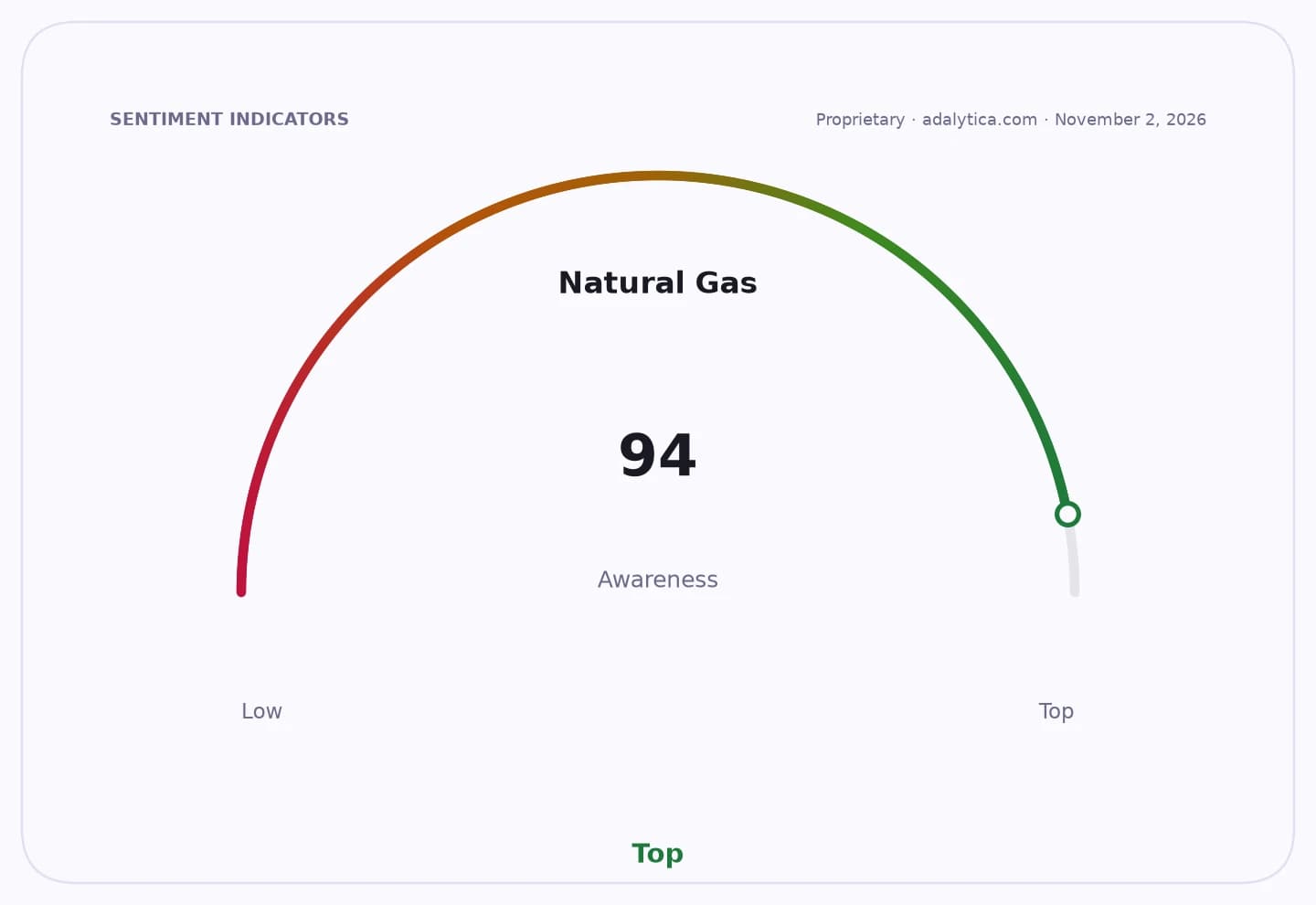
Sentiment Indicators
The shift matters economically because Europe remains structurally short of flexible gas supply and is still relying heavily on imports after cutting back Russian pipeline flows. Higher LNG imports help cushion the continent against winter shortages, but they also keep fuel costs elevated for households, industry and power generators, feeding into inflation and weighing on energy-intensive sectors.
For US exporters, the stronger European pull is a direct revenue tailwind. More cargoes are moving toward the Atlantic basin, and analysts said output gains at US plants helped meet the demand surge. Exports from the Golden Pass terminal in Texas, jointly owned by QatarEnergy and Exxon Mobil, doubled to four full cargoes in October, according to tanker-tracking data.
Asia, by contrast, took almost unchanged volumes despite October having one extra day, with imports at 2.73 million tonnes versus 2.84 million in September. That relative weakness suggests Europe briefly outbid Asian buyers for spot supply, a pattern that tends to support LNG pricing and shipping rates.
Egypt remained a key buyer of US LNG at 0.68 million tonnes, steady from September, while shipments to Latin America rose to 0.68 million tonnes from 0.53 million. About 0.59 million tonnes left US terminals without a fixed destination, floating offshore as traders waited for the best-priced market.
Cheniere Energy, the largest US LNG exporter, remains the obvious investor beneficiary as stronger Atlantic demand bolsters utilization and pricing power, while European buyers face higher energy bills and Asian importers risk being left with fewer cargoes if cold weather tightens supply further. The next catalyst is the pace of winter storage withdrawals and whether Europe can keep pulling in LNG without another price spike.
| Entity | Gains | Losses |
|---|---|---|
| US LNG exporters | ▲Higher cargo volumes, stronger pricing | ▼Limited spare capacity |
| Europe | ▲Better winter supply security | ▼Higher gas and power costs |
| Asian buyers | ▲— | ▼Less LNG availability |
| Cheniere Energy and peers | ▲Utilization and margin support | ▼Spot market volatility |