Europe’s failure to hit gas-storage targets for winter is the clearest sign yet that the continent enters the heating season with less of a buffer than policymakers want investors to believe.
Europe Gas Storage Miss Raises Winter Supply Risk
Natural Gas
That matters because gas storage is Europe’s shock absorber: when temperatures fall, inventories have to cover demand spikes, import disruptions and price swings. With underground reserves still historically low, the region is more exposed to volatility in power prices, industrial margins and heating costs if winter turns cold or supply tightens further. Germany’s regulator says supply remains secure, but the market is already pricing the risk.
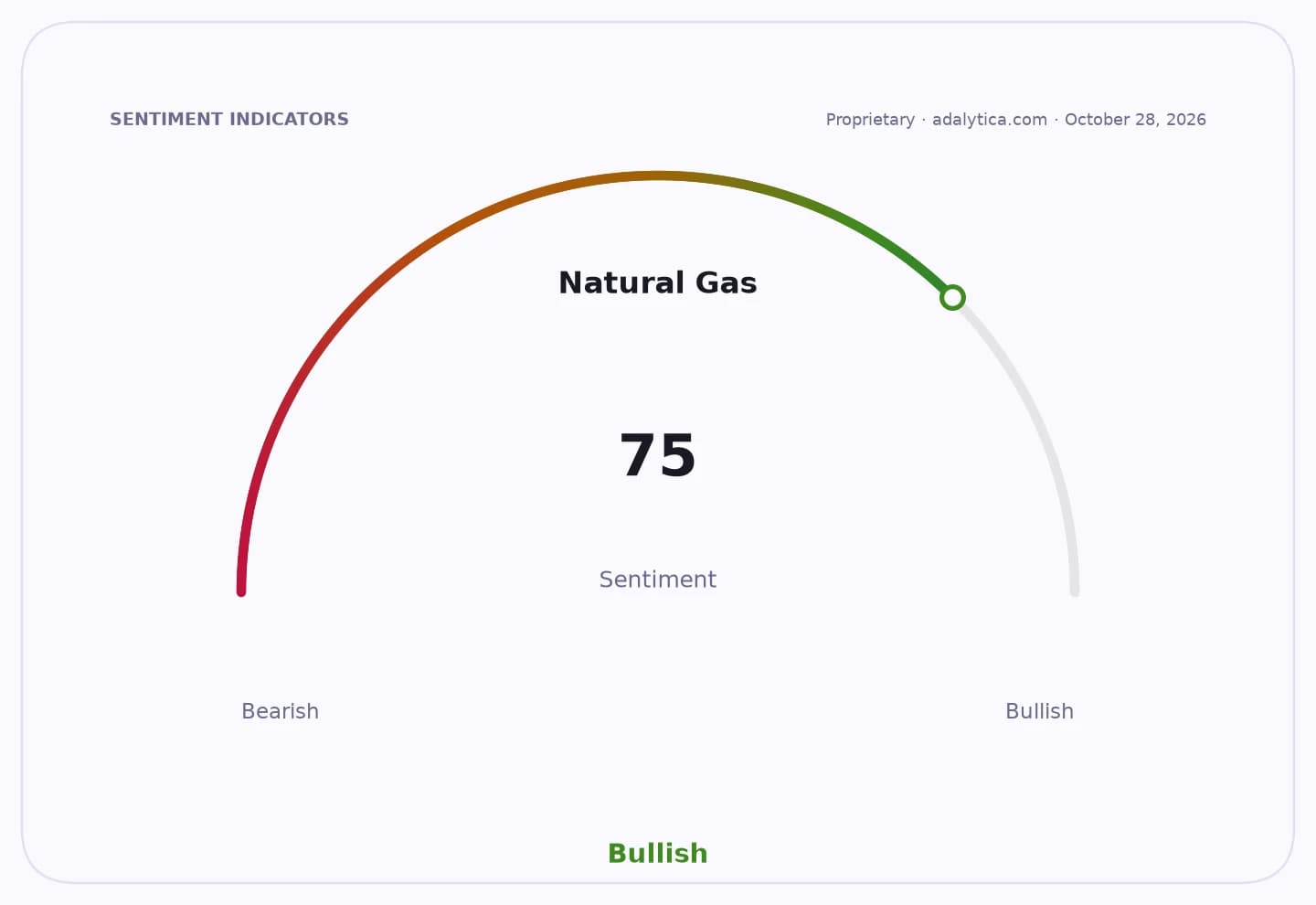
Sentiment Indicators
Natural gas has been unstable all year. The UNG exchange-traded fund, which tracks U.S. gas prices, has swung sharply and closed at $9.08 on Oct. 30 after touching $9.50 the day before, with its relative strength index near 20, a level that typically suggests oversold conditions. That tells you how quickly gas can reprice when weather, storage and geopolitics collide. Meanwhile, U.S. benchmark crude at $70.02 and the XLE energy ETF at $70.02 also show that the broader energy complex still has room to benefit if Europe’s gas weakness feeds into a wider risk premium.
The biggest winners are the companies that move, liquefy and export gas into Europe’s market. Cheniere Energy’s LNG stock has surged to $330.32, far above its 200-day moving average of $255.84, while its RSI sits at 79.5, a sign of strong momentum. That is the kind of setup investors should watch when Europe is short of storage and looking for cargoes. Pipeline and storage names also gain leverage from tighter inventories, while utilities, industrial gas users and European importers face the opposite: higher fuel costs, more hedging pressure and less room for error.
The market underestimates how quickly a storage miss can become a pricing event. If winter is mild, the damage may stay limited. If it is not, Europe’s gas deficit could reignite the same trade that has rewarded LNG exporters and punished energy consumers for two years: scarcity, not abundance, drives the next move.
If you want exposure to that asymmetry, the better long-term bet is still the infrastructure behind the molecule, not the commodity itself.
| Entity | Gains | Losses |
|---|---|---|
| LNG exporters | ▲Higher cargo demand | ▼Tighter margin visibility |
| Cheniere Energy (LNG) | ▲Europe pull for supply | ▼Overbought risk |
| U.S. gas benchmark / UNG | ▲Winter scarcity premium | ▼Volatility after sharp swings |
| European utilities / industrial users | ▲None | ▼Higher input costs |